
Flat washers are small but essential components used in almost every mechanical, construction, and engineering application. Despite their simple appearance, choosing the correct washer size is critical for load distribution, vibration resistance, and long-term fastening reliability. This guide provides a complete explanation of flat washer sizing, standards, and a practical size chart to help you select the right washer for any project.
What is a Flat Washer?
A flat washer is a thin, disc-shaped plate with a hole in the center, designed to be placed under a bolt, nut, or screw. Its main purpose is to distribute load evenly across a surface, preventing damage and loosening over time by improving fastening stability and joint strength in assemblies.
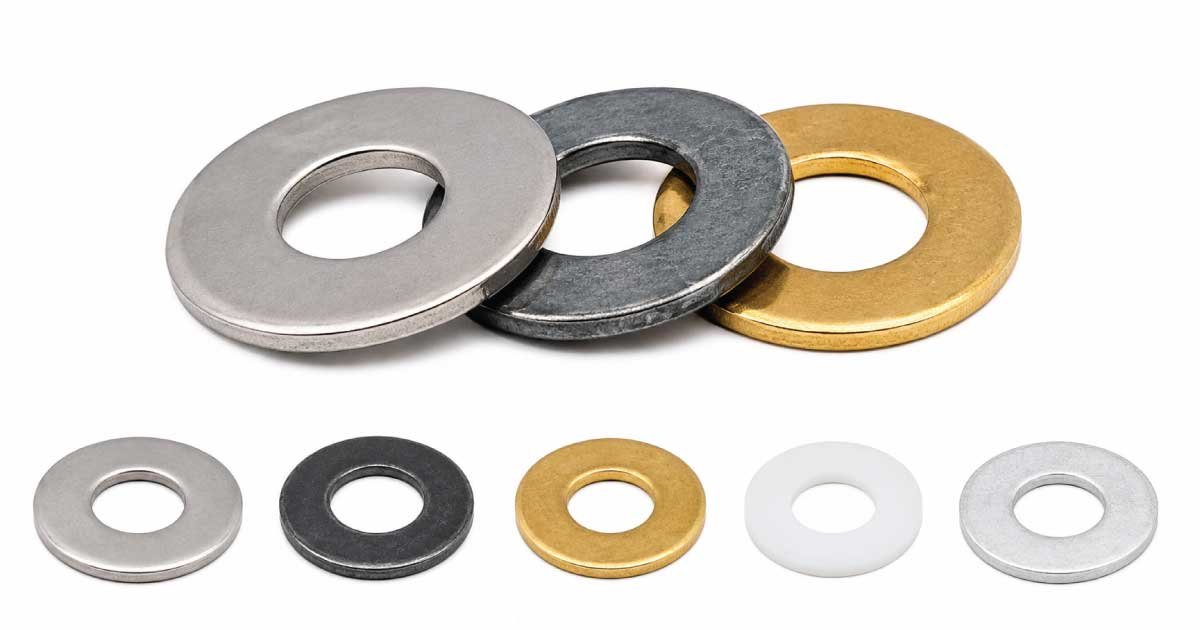
Flat washers are commonly made from materials such as:
- Stainless steel
- Carbon steel
- Brass
- Nylon
- Aluminum
They are used in construction, automotive assemblies, plumbing, machinery, and electrical installations.
Why Flat Washer Size Matters
Choosing the correct flat washer size is not just about matching the bolt diameter. It plays an important role in ensuring structural safety, load balance, and long-term performance of assemblies by improving fit accuracy, reducing stress concentration, and maintaining reliable fastening under different working conditions and mechanical environments.
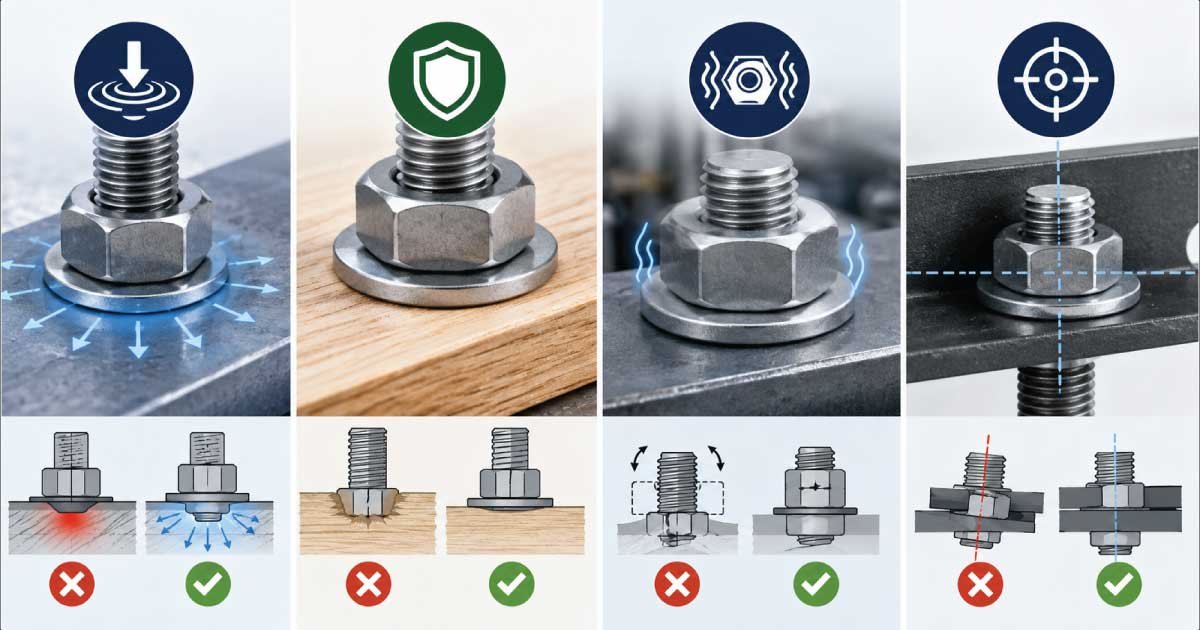
Load Distribution
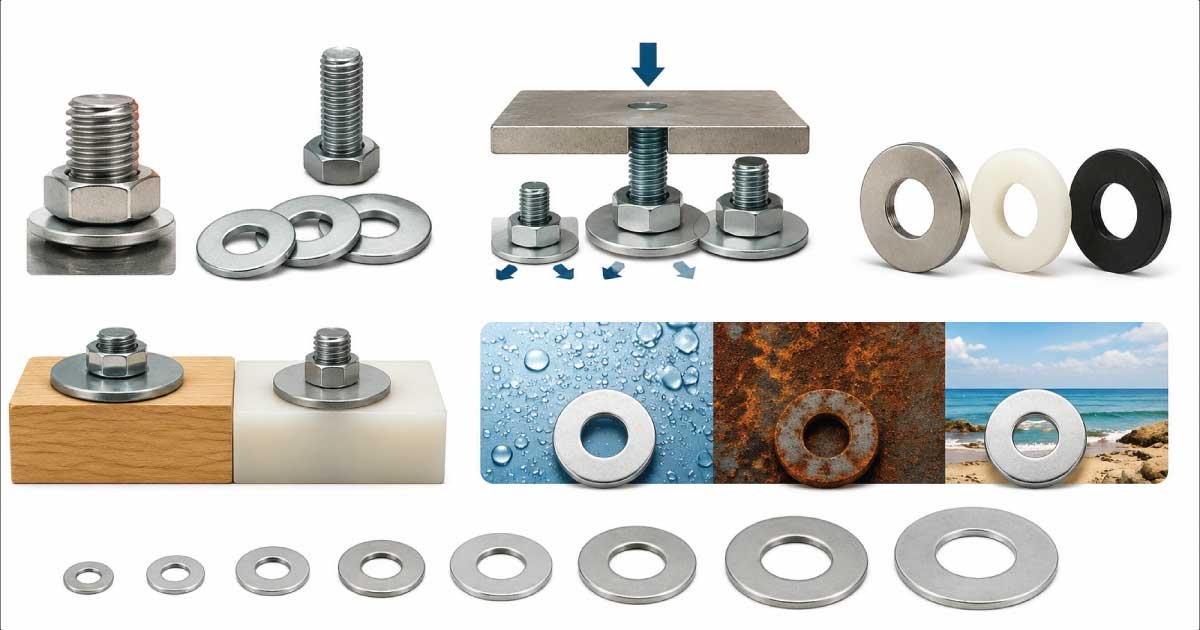
A properly sized washer spreads the force of a tightened bolt or nut across a wider surface area. This reduces concentrated stress on a single point, helping prevent bending, cracking, or permanent deformation of the material and ensuring a stronger, more stable and reliable joint over long-term use.
Surface Protection
It prevents bolts or nuts from digging into soft materials like wood or aluminum. By acting as a barrier between the fastener and the surface, it reduces direct contact damage, minimizes scratches, and helps maintain the integrity and appearance of the material, especially in delicate or softer applications.
Vibration Resistance
Correct sizing helps reduce loosening caused by vibration in machines or vehicles. A well-fitted washer improves grip and stability in the joint, allowing the fastener to stay securely in place even under continuous movement, shock, or mechanical stress experienced in industrial or automotive environments.
Alignment Stability
Washers help maintain proper alignment of fasteners in assemblies. They ensure that bolts and nuts sit evenly during tightening, preventing tilting or misalignment that could weaken the joint or affect performance, especially in precision-based mechanical and structural applications.
Key Dimensions of a Flat Washer
Flat washers are simple yet essential fastening components used to distribute load and prevent damage to surfaces. Their performance depends largely on precise dimensional characteristics that ensure proper fit with bolts and nuts. Understanding these key measurements helps in selecting the right washer for mechanical applications.
Flat washers are defined by three primary measurements:
Inner Diameter (ID)
The inner diameter (ID) of a flat washer refers to the size of the central hole through which the bolt or screw passes. It must closely match the fastener diameter or be slightly larger to ensure smooth installation, proper alignment, and secure fastening without unnecessary movement or looseness.
The hole size in the center, which must match or slightly exceed the bolt diameter.
Outer Diameter (OD)
The outer diameter (OD) represents the full width of the washer from one outer edge to the other. This dimension is important because it controls how effectively the washer spreads load pressure over a larger surface area, helping protect the material from deformation or damage under tightening force.
The total width of the washer, which determines load distribution area.
Thickness
Thickness refers to the vertical measurement of the washer, which directly influences its strength, durability, and resistance to bending under load. A thicker washer provides greater rigidity and stability, making it suitable for heavy-duty applications where higher pressure or vibration resistance is required.
The strength and rigidity of the washer.Each standard (ISO, SAE, DIN) defines these dimensions differently.
Flat Washer Size Standards
Flat washers are manufactured according to different international sizing systems to ensure compatibility with regional fasteners and engineering practices. These standards define exact dimensional relationships such as inner diameter, outer diameter, and thickness, allowing consistent performance in assembly, load distribution, and structural reliability across various industrial applications.
Different regions and industries use different washer sizing systems.
1. Metric (ISO DIN 125 Standard)
Metric flat washers following ISO DIN 125 standards are widely used across Europe, Asia, and many international industries due to their precise engineering and consistency. These washers are designed in millimeter-based sizing, ensuring compatibility with metric bolts and screws for accurate fitting, reliable load distribution, and standardized industrial applications.
Common in Europe and Asia. Sizes are based on millimeters.
2. SAE (Imperial Standard)
SAE flat washers are primarily used in the United States and other regions that follow the imperial measurement system. These washers are sized in inches and are commonly paired with imperial bolts and fasteners, offering dependable performance in automotive, construction, and machinery applications where inch-based standards are required.
Used mainly in the United States, based on inches.
3. USS (United States Standard)
USS flat washers are designed for heavy-duty applications where increased load-bearing capacity is required. Compared to SAE washers, they feature a slightly larger outer diameter, allowing better force distribution and enhanced surface protection. These washers are commonly used in structural and industrial environments demanding stronger fastening support.
Slightly larger outer diameter than SAE washers for heavier load applications.
Flat Washer Size Chart (Metric – ISO DIN 125)
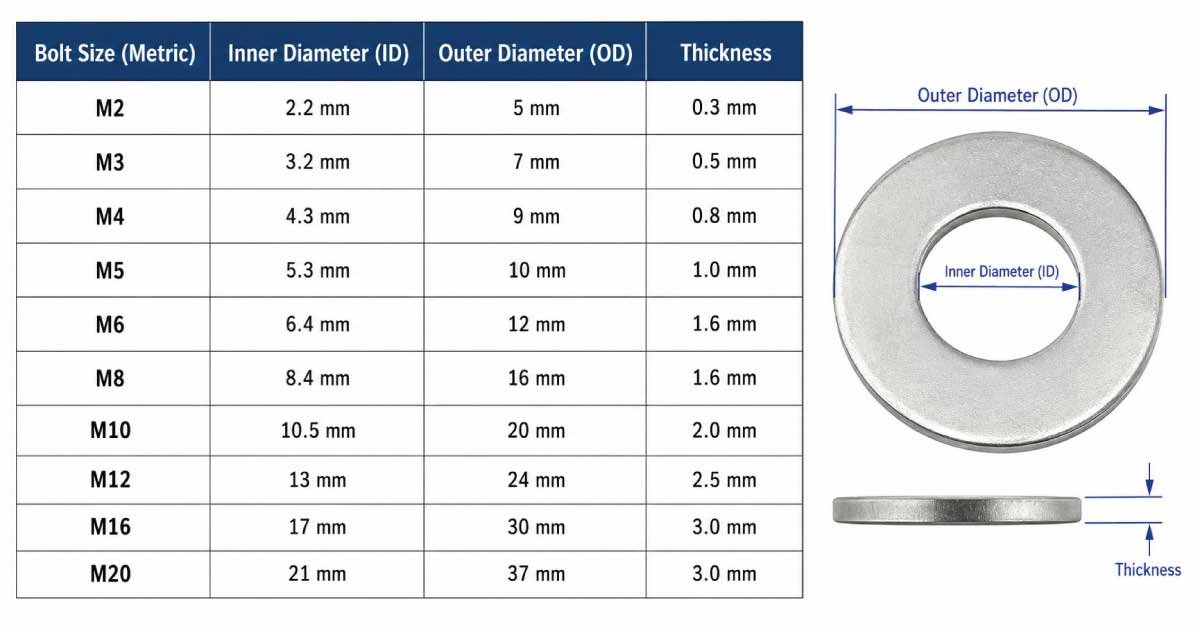
| Bolt Size (Metric) | Inner Diameter (ID) | Outer Diameter (OD) | Thickness |
|---|---|---|---|
| M2 | 2.2 mm | 5 mm | 0.3 mm |
| M3 | 3.2 mm | 7 mm | 0.5 mm |
| M4 | 4.3 mm | 9 mm | 0.8 mm |
| M5 | 5.3 mm | 10 mm | 1.0 mm |
| M6 | 6.4 mm | 12 mm | 1.6 mm |
| M8 | 8.4 mm | 16 mm | 1.6 mm |
| M10 | 10.5 mm | 20 mm | 2.0 mm |
| M12 | 13 mm | 24 mm | 2.5 mm |
| M16 | 17 mm | 30 mm | 3.0 mm |
| M20 | 21 mm | 37 mm | 3.0 mm |
This metric chart is widely used in mechanical and construction industries worldwide.
Flat Washer Size Chart (Imperial – SAE Standard)
SAE flat washers are standard imperial hardware used to distribute load under bolt heads and nuts. They are generally slightly smaller in diameter and thinner than USS washers. The chart below lists common SAE washer dimensions by bolt size, including inner diameter, outer diameter, and thickness values.
| Bolt Size (Inch) | Inner Diameter (ID) | Outer Diameter (OD) | Thickness |
|---|---|---|---|
| 1/4″ | 0.281″ | 0.625″ | 0.065″ |
| 5/16″ | 0.344″ | 0.812″ | 0.065″ |
| 3/8″ | 0.438″ | 0.875″ | 0.065″ |
| 7/16″ | 0.500″ | 1.000″ | 0.065″ |
| 1/2″ | 0.562″ | 1.062″ | 0.065″ |
| 5/8″ | 0.688″ | 1.375″ | 0.083″ |
| 3/4″ | 0.813″ | 1.500″ | 0.083″ |
| 1″ | 1.062″ | 2.000″ | 0.083″ |
SAE washers are slightly smaller and lighter compared to USS washers.
USS Flat Washer Size Chart (Heavy Duty)
| Bolt Size | Inner Diameter | Outer Diameter |
|---|---|---|
| 1/4″ | 0.281″ | 0.750″ |
| 3/8″ | 0.438″ | 1.000″ |
| 1/2″ | 0.562″ | 1.375″ |
| 5/8″ | 0.688″ | 1.750″ |
| 3/4″ | 0.813″ | 2.000″ |
| 1″ | 1.062″ | 2.500″ |
USS washers are ideal for construction, bridges, and heavy machinery.
How to Choose the Right Flat Washer Size
Selecting the right flat washer size is important for ensuring proper load distribution, secure fastening, and long-term durability. The correct choice depends on matching bolt diameter, load requirements, material type, surface condition, and environmental exposure. Proper selection prevents damage, loosening, and failure in mechanical and structural applications.
Common Applications of Flat Washers
- Automotive engines and chassis
- Household appliances
- Industrial machinery
- Construction frameworks
- Electrical panel assemblies
- Plumbing systems
They are often used alongside lock washers and spring washers for better fastening stability.
Common Mistakes When Selecting Washers
Common mistakes when selecting flat washers can lead to poor fastening performance, premature wear, or even joint failure. One of the most frequent issues is choosing the wrong size, where an undersized washer fails to properly distribute the load and protect the surface.
1. Using the Wrong Size
Choosing an incorrect washer size is one of the most common installation errors. If the washer is too small, it cannot properly distribute the load, leading to concentrated stress around the bolt area. This can cause surface damage, loosening, or even structural failure over time in mechanical assemblies.
A washer too small will not distribute load properly.
2. Ignoring Material Type
Material selection is critical for long-term performance and reliability. Using the wrong material, especially carbon steel in corrosive environments, can quickly lead to rust formation, weakening of the washer, and eventual joint failure. Proper material choice ensures durability and prevents premature maintenance or replacement issues in demanding conditions.
Using carbon steel in corrosive environments leads to rust and failure.
3. Overlooking Thickness
Washer thickness plays an important role in load-bearing performance. Thin washers may bend, compress, or deform when subjected to heavy pressure, reducing their effectiveness. This can compromise the stability of the joint and increase the risk of loosening or damage in high-stress applications.
Thin washers may deform under heavy pressure.
4. Mixing Standards
Using incompatible sizing standards is a frequent but avoidable mistake. Mixing metric washers with imperial bolts often results in improper fit, reduced load distribution, and mechanical instability. Ensuring consistent standards across all fasteners is essential for safety, precision, and long-term reliability in assemblies.
Using metric washers with imperial bolts can lead to poor fitting.
Tips for Proper Washer Installation
Proper washer installation is essential for achieving strong, stable, and long-lasting joints. Incorrect placement or handling can reduce load distribution efficiency and lead to premature failure of fasteners. Following correct installation practices ensures safety, reliability, and improved performance in both light-duty and heavy-duty mechanical applications.
- Always place the washer under the nut or bolt head, not in between threads.
- Ensure the washer sits flat against the surface.
- Avoid reusing deformed washers.
- Use multiple washers only when necessary for spacing adjustments.
Maintenance and Inspection
Regular maintenance and inspection of washers are important in industrial environments where equipment operates under continuous stress. Over time, washers may degrade due to load, friction, or environmental exposure. Routine checks help identify early signs of damage, ensuring system reliability and preventing unexpected breakdowns or safety hazards in machinery.
In industrial applications, washers should be checked regularly for:
- Wear and tear
- Rust or corrosion
- Deformation
- Cracks under high stress
Replacing damaged washers improves safety and extends equipment life.
Conclusion
Flat washers may seem like minor components, but they play a crucial role in fastening systems across industries. Understanding washer size charts whether metric ISO, SAE, or USS ensures you select the right component for strength, durability, and safety.
By paying attention to inner diameter, outer diameter, thickness, and material type, you can significantly improve the reliability of any bolted joint. Whether you’re working on household repairs or large-scale engineering projects, using the correct flat washer size is a small step that makes a big difference in performance and longevity.
👉 Want to understand how dowel pins ensure accurate alignment? This Dowel Pin Size Chart explains standard dimensions, types, materials, tolerances, applications, and selection tips. Read the full guide to learn how to choose the right dowel pin for precise positioning and reliable mechanical assembly.

Engineer Hassan is a Mechanical Engineer with 16+ years of hands-on experience in mechanical hardware, fasteners, and workshop tools. He focuses on size selection, thread identification, and measurement, helping users choose the correct components with accuracy and safety.