
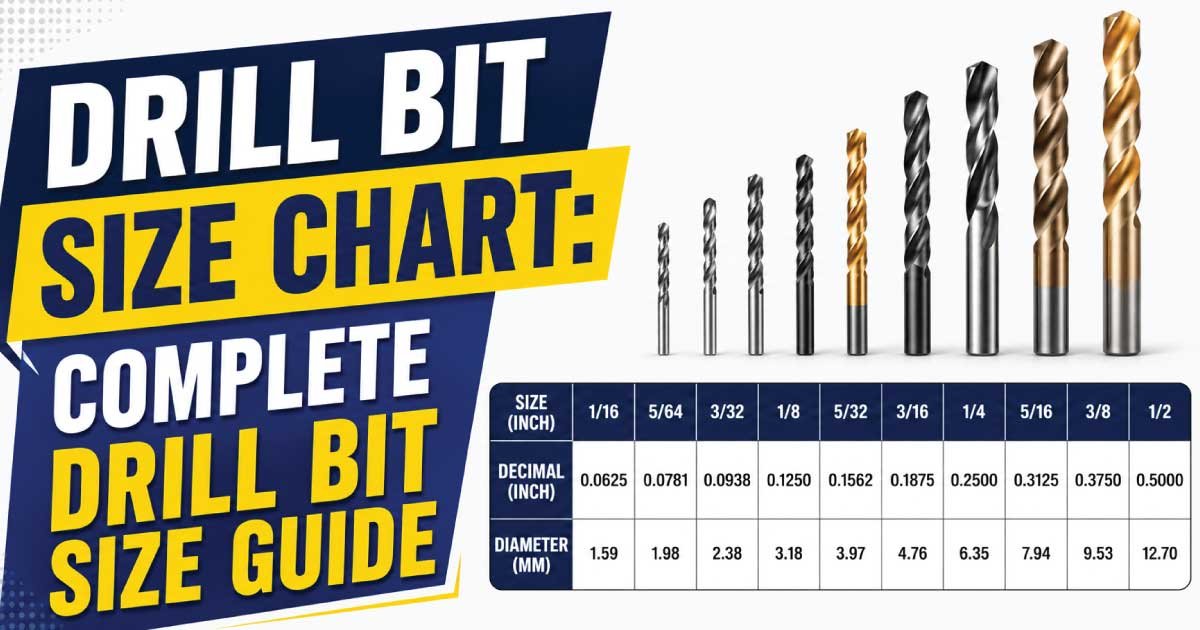
Drill bits are cutting tools used to create holes in wood, metal, plastic, concrete, masonry, and other materials. They are available in metric, fractional inch, number, and letter sizes, allowing users to select the most accurate bit for a specific application. Choosing the correct drill bit size is essential for producing clean holes, ensuring proper fastener fit, and preventing damage to both the workpiece and the drill bit.
This guide provides a standard drill bit size chart, explains how to measure drill bits, discusses common drill bit types, and offers practical tips for selecting the right size.
Standard Metric Drill Bit Size Chart
| Drill Bit Size (mm) | Decimal (in.) | Fraction (Approx.) | Common Applications |
|---|---|---|---|
| 1 mm | 0.0394″ | 1/32″ | Electronics, precision drilling |
| 2 mm | 0.0787″ | 5/64″ | Small pilot holes |
| 3 mm | 0.1181″ | 1/8″ | Light-duty fastening |
| 4 mm | 0.1575″ | 5/32″ | Wood and plastic |
| 5 mm | 0.1969″ | 13/64″ | General-purpose drilling |
| 6 mm | 0.2362″ | 15/64″ | Bolts and anchors |
| 8 mm | 0.3150″ | 5/16″ | Masonry anchors |
| 10 mm | 0.3937″ | 25/64″ | Structural fasteners |
| 12 mm | 0.4724″ | 15/32″ | Heavy-duty drilling |
| 16 mm | 0.6299″ | 5/8″ | Large mounting holes |
Fractional Drill Bit Size Chart
| Fractional Size | Decimal (in.) | Metric (mm) | Typical Applications |
|---|---|---|---|
| 1/16″ | 0.0625″ | 1.59 mm | Small pilot holes |
| 3/32″ | 0.0938″ | 2.38 mm | Woodworking |
| 1/8″ | 0.1250″ | 3.18 mm | General-purpose drilling |
| 5/32″ | 0.1563″ | 3.97 mm | Furniture assembly |
| 3/16″ | 0.1875″ | 4.76 mm | Metal drilling |
| 1/4″ | 0.2500″ | 6.35 mm | Bolt clearance holes |
| 5/16″ | 0.3125″ | 7.94 mm | Anchors |
| 3/8″ | 0.3750″ | 9.53 mm | Heavy-duty woodworking |
| 1/2″ | 0.5000″ | 12.70 mm | Pipe and conduit holes |
| 5/8″ | 0.6250″ | 15.88 mm | Large industrial holes |
Number Drill Bit Size Chart
| Number Size | Diameter (in.) | Diameter (mm) |
|---|---|---|
| #80 | 0.0135″ | 0.34 mm |
| #70 | 0.0280″ | 0.71 mm |
| #60 | 0.0400″ | 1.02 mm |
| #50 | 0.0700″ | 1.78 mm |
| #40 | 0.0980″ | 2.49 mm |
| #30 | 0.1285″ | 3.26 mm |
| #20 | 0.1610″ | 4.09 mm |
| #10 | 0.1935″ | 4.92 mm |
| #5 | 0.2055″ | 5.22 mm |
| #1 | 0.2280″ | 5.79 mm |
Why Drill Bit Size Matters
Selecting the correct drill bit size improves hole accuracy, prevents material damage, and ensures proper fastener installation. Using an incorrect bit size can result in loose screws, cracked materials, or excessive wear on the drill.
Benefits of choosing the correct drill bit include:
- Accurate hole diameter
- Better fastener fit
- Cleaner drilling results
- Reduced material splitting
- Longer drill bit life
- Improved drilling efficiency
- Professional-quality workmanship
How to Measure a Drill Bit
Accurate measurements help identify replacement drill bits.
Follow these steps:
- Measure the drill bit diameter with a caliper.
- Check the overall bit length.
- Measure the flute length.
- Identify the shank diameter.
- Determine the point angle.
- Verify the bit type.
- Compare the measurements with a drill bit size chart.
Using a digital caliper provides the most precise measurements.
Also Read: Retaining Ring Sizes Explained with Uses (Complete Guide)
Common Types of Drill Bits
Different drill bit designs are made for specific materials.
Twist Drill Bits
The most common type, suitable for wood, metal, and plastic.
Brad Point Bits
Designed for woodworking, providing clean and accurate holes.
Masonry Bits
Feature carbide tips for drilling into brick, concrete, and stone.
Spade Bits
Ideal for drilling large holes in wood quickly.
Forstner Bits
Produce smooth, flat-bottom holes in woodworking projects.
Step Drill Bits
Perfect for enlarging holes in sheet metal and thin materials.
Hole Saws
Used to cut large-diameter holes for pipes, electrical boxes, and fixtures.
Common Drill Bit Materials
The material determines cutting performance and durability.
High-Speed Steel (HSS): Suitable for general-purpose drilling in wood, plastic, and mild steel.
Cobalt Steel: Designed for drilling stainless steel and hardened metals.
Carbide-Tipped: Ideal for masonry, concrete, and abrasive materials.
Titanium-Coated: Offers reduced friction and improved wear resistance.
How to Choose the Right Drill Bit Size
Consider these factors before selecting a drill bit:
- Match the bit to the fastener size.
- Consider the material being drilled.
- Choose the correct drill bit type.
- Verify the required hole diameter.
- Select the proper point angle.
- Match the drill chuck capacity.
- Follow manufacturer recommendations for specialty applications.
Also Read: Pliers Size Chart: Complete Guide 2027
Common Applications of Drill Bits
Drill bits are used across many industries and DIY projects.
Typical applications include:
- Woodworking
- Metal fabrication
- Concrete drilling
- Plumbing
- Electrical installations
- Furniture assembly
- Automotive repairs
- HVAC installations
- Cabinet making
- Home improvement projects
Installation and Usage Tips
Proper drilling techniques improve accuracy and extend tool life.
- Secure the workpiece firmly.
- Use the correct drill speed.
- Apply steady pressure.
- Use cutting fluid when drilling metal.
- Clear chips regularly during deep drilling.
- Replace dull drill bits.
- Wear appropriate safety equipment.
Correct drilling practices improve hole quality and reduce tool wear.
Common Mistakes to Avoid
Avoid these common drilling errors:
- Using the wrong drill bit size
- Selecting the wrong bit type
- Drilling at excessive speed
- Applying too much pressure
- Failing to secure the workpiece
- Using dull drill bits
- Ignoring lubrication when drilling metal
These mistakes can reduce drilling accuracy and shorten the lifespan of the drill bit.
Also Read: Screwdriver Size Selection for All Screws
Benefits of Properly Sized Drill Bits
Using the correct drill bit size provides several advantages.
- Cleaner holes
- Better fastener alignment
- Improved drilling accuracy
- Reduced material damage
- Longer tool life
- Faster drilling
- More professional results
Proper drill bit selection improves both efficiency and finished work quality.
Maintenance Tips
Routine maintenance helps maximize drill bit performance.
- Clean drill bits after use.
- Store bits in an organized case.
- Sharpen dull cutting edges.
- Remove rust promptly.
- Lubricate bits when appropriate.
- Replace chipped or cracked bits.
- Inspect shanks for wear before use.
Proper maintenance extends the lifespan of drill bits and ensures consistent drilling performance.
FAQs
1. How do I choose the correct drill bit size?
Choose a drill bit based on the required hole diameter, fastener size, and material being drilled. The correct bit creates a clean, accurate hole with proper clearance or thread engagement, improving fastening performance while reducing the risk of material damage or excessive tool wear.
2. What type of drill bit should I use for different materials?
Different materials require different drill bits. Twist bits work for wood, plastic, and metal, masonry bits are designed for concrete and brick, brad point bits provide clean holes in wood, Forstner bits create flat-bottom holes, and step bits are ideal for sheet metal.
3. Can I use the same drill bit for wood and metal?
A standard high-speed steel (HSS) twist drill bit can drill both wood and mild metal. However, specialized bits often produce better results. For example, cobalt bits are better for hardened metals, while brad point bits provide cleaner and more accurate holes in woodworking projects.
4. Why is selecting the correct drill bit size important?
Selecting the correct drill bit size ensures accurate hole dimensions, proper fastener fit, and cleaner drilling results. It also helps prevent material splitting, reduces wear on the drill bit, improves drilling efficiency, and produces stronger, more professional-quality installations in a wide range of applications.
Conclusion
Choosing the correct drill bit size is essential for creating accurate, clean, and reliable holes in wood, metal, plastic, masonry, and other materials.
By understanding metric, fractional, and number drill bit sizes, selecting the appropriate bit type and material, and following proper drilling techniques, you can achieve professional-quality results while extending the life of your tools.
Always refer to a drill bit size chart before starting a project to ensure the best fit for your application.

Engineer Hassan is a Mechanical Engineer with 16+ years of hands-on experience in mechanical hardware, fasteners, and workshop tools. He focuses on size selection, thread identification, and measurement, helping users choose the correct components with accuracy and safety.