
Split pins, also known as cotter pins, are simple but highly effective mechanical fasteners used to secure nuts, bolts, and other components in place. They are widely used in automotive systems, machinery, agriculture equipment, and structural assemblies where vibration resistance and safety are important.
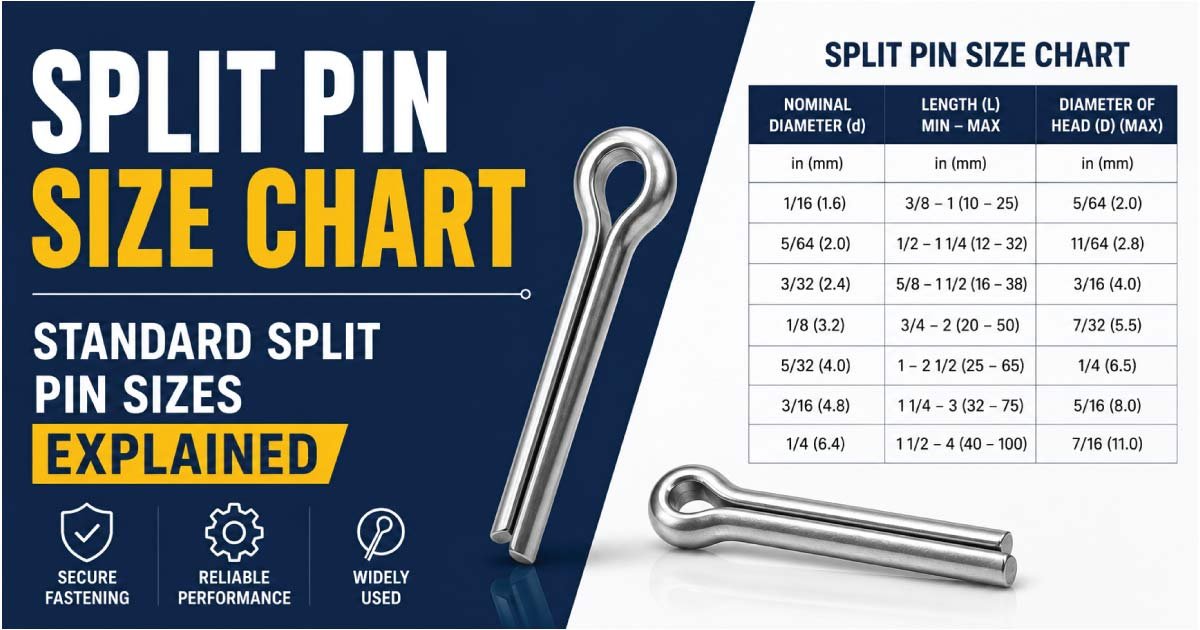
Understanding a Split Pin Size Chart helps you choose the correct pin diameter and length for secure locking and proper fit. In this guide, you will learn everything about split pin sizes, dimensions, types, materials, applications, and how to select the right one.
Split Pin Size Chart
Below is a standard Split Pin Size Chart showing common diameters along with their metric equivalents and recommended length ranges. Proper size selection ensures secure locking and reliable performance in mechanical assemblies.
| Pin Diameter | Diameter (Inches) | Diameter (mm) | Common Length Range |
|---|---|---|---|
| 1/32″ | 0.031″ | 0.8 mm | 1/4″ – 1/2″ |
| 3/64″ | 0.047″ | 1.2 mm | 1/4″ – 3/4″ |
| 1/16″ | 0.062″ | 1.6 mm | 3/8″ – 1″ |
| 5/64″ | 0.078″ | 2.0 mm | 1/2″ – 1-1/4″ |
| 3/32″ | 0.094″ | 2.4 mm | 3/4″ – 1-1/2″ |
| 1/8″ | 0.125″ | 3.2 mm | 1″ – 2″ |
| 5/32″ | 0.156″ | 4.0 mm | 1-1/4″ – 2-1/2″ |
| 3/16″ | 0.188″ | 4.8 mm | 1-1/2″ – 3″ |
These sizes are widely used across mechanical, automotive, and industrial applications where secure locking is required.
Split Pin Length Selection Guide
Selecting the correct split pin length is just as important as choosing the right diameter. The length determines how effectively the pin can be bent and secured after installation.
| Application Type | Recommended Length |
|---|---|
| Light-duty joints | 1/2″ – 1″ |
| Medium-duty machinery | 1″ – 2″ |
| Heavy-duty equipment | 2″ – 3″ |
| Agricultural machinery | 1-1/2″ – 3″ |
A properly selected length ensures there is enough material available to bend the ends securely, preventing loosening or accidental removal during operation.
Types of Split Pins
Split pins are available in different designs to suit varying strength requirements, environmental conditions, and ease of installation needs. Each type is designed for specific mechanical applications where secure locking is essential.
1. Standard Split Pin
The standard split pin is the most commonly used type. It features a simple folded wire design that provides reliable locking for general-purpose applications at a low cost.
Features:
- Simple folded wire design
- Easy installation
- Low cost
Applications:
- Machinery assemblies
- Automotive systems
- General fastening
2. Heavy-Duty Split Pin
Heavy-duty split pins are designed with a thicker wire diameter to provide higher strength and improved resistance to vibration and load.
Features:
- Thicker wire diameter
- Higher strength
- Better vibration resistance
Applications:
- Construction equipment
- Agricultural machines
- Industrial gear systems
3. Stainless Steel Split Pin
Stainless steel split pins offer excellent corrosion resistance and long service life, making them suitable for harsh and outdoor environments.
Features:
- Corrosion resistant
- Long service life
- Suitable for outdoor use
Applications:
- Marine equipment
- Outdoor machinery
- Food processing equipment
4. Quick Release Split Pin (R-Clip Style)
Quick release split pins, also known as R-clips, are designed for easy installation and removal. Their spring-like structure makes them reusable and ideal for applications requiring frequent assembly changes.
Features:
- Easy removal and reinstallation
- Spring-like design
- Reusable
Applications:
- Trailers
- Lawn equipment
- Temporary assemblies
Split Pin Materials
Split pins are manufactured from different materials depending on strength requirements, environmental conditions, and corrosion resistance needs. Proper material selection ensures safe performance and long service life in mechanical applications.
1. Mild Steel
Mild steel is the most commonly used material for split pins due to its affordability and adequate strength for general applications. It is often coated with zinc to improve resistance against rust and corrosion.
Features:
- Most commonly used
- Economical
- Often zinc plated for rust protection
2. Stainless Steel
Stainless steel split pins offer excellent resistance to corrosion, making them suitable for harsh environments where moisture, chemicals, or outdoor exposure are present.
Features:
- Excellent corrosion resistance
- Ideal for harsh environments
- Used in marine and outdoor applications
3. Brass
Brass split pins are used in specialized applications where corrosion resistance, non-sparking properties, and electrical safety are important. They are suitable for light-duty and sensitive environments.
Features:
- Corrosion resistant
- Non-sparking
- Used in electrical and specialized applications
How to Read a Split Pin Size
Split pin sizes are written in a simple format that shows both the diameter and the length. Understanding this format is important for selecting the correct pin for secure locking in mechanical assemblies.
1. Imperial Size Example
A typical split pin size is written as:
1/8″ × 1-1/2″
Meaning:
- Diameter = 1/8 inch
- Length = 1.5 inches
The diameter indicates the thickness of the split pin, which affects its strength and resistance to deformation under load.
2. Metric Size Example
A metric split pin size may appear as:
3 mm × 40 mm
Meaning:
- Diameter = 3 mm
- Length = 40 mm
In this format, the first value represents the diameter, while the second value represents the total length of the pin.
3. Understanding Size Selection
The diameter determines the strength and durability of the split pin, while the length determines how much material is available for bending and securing the fastener properly after installation. Choosing the correct combination ensures safe and reliable locking performance.
How to Choose the Correct Split Pin Size
Selecting the correct split pin (cotter pin) size is important for ensuring secure locking, preventing loosening, and maintaining safety in mechanical assemblies. Proper selection depends on hole size, load, vibration, material, and application type. Each factor ensures reliable performance under working conditions.
1. Hole Diameter
Hole diameter is the primary factor when selecting a split pin. The pin must pass through the hole smoothly while still maintaining a secure fit. If it is too loose, it may shift during operation; if too tight, it may be difficult to install or may damage the assembly components.
2. Load Conditions
Load conditions determine the required thickness and strength of the split pin. Heavier loads place more stress on the locking system, requiring stronger and thicker pins. Proper sizing ensures the pin can withstand force without bending or failing, maintaining safety and stability in mechanical connections.
3. Vibration Levels
High-vibration environments require split pins that are not only correctly sized but also properly secured by bending the ends correctly. Continuous vibration can loosen poorly fitted pins over time. Stronger pins with proper installation help maintain tight locking and prevent accidental disengagement during machine operation.
4. Material Selection
Material choice is essential for durability and corrosion resistance. In humid, outdoor, or marine environments, stainless steel split pins are preferred due to their resistance to rust. Selecting the right material ensures long-term performance, reduces maintenance needs, and prevents weakening caused by environmental exposure.
5. Application Type
Different applications require different split pin sizes and strengths. Light-duty applications can use smaller pins, while heavy-duty machinery requires larger and stronger pins for secure locking. Matching the pin to the application ensures proper performance, improved safety, and long-lasting reliability in mechanical systems.
Applications of Split Pins
Split pins are widely used across multiple industries because they provide a simple and reliable safety locking mechanism. Their main function is to prevent nuts, bolts, and pins from loosening due to vibration, load, or movement.
1. Automotive Industry
In automotive systems, split pins are used to secure critical moving components and ensure safe operation under continuous vibration and load conditions.
Used in:
- Wheel hubs
- Suspension systems
- Steering linkages
2. Agricultural Equipment
Split pins are commonly used in agricultural machinery where components are frequently assembled and disassembled under heavy working conditions.
Used in:
- Tractor joints
- Harvesters
- Plows and attachments
3. Construction Machinery
Heavy-duty construction equipment relies on split pins for secure locking of mechanical joints exposed to high stress and vibration.
Used in:
- Loaders
- Excavators
- Cranes
4. Marine Industry
In marine applications, split pins are used to secure fittings and rotating parts that are exposed to moisture and constant movement.
Used in:
- Boat fittings
- Shafts and propeller systems
- Rigging components
5. Industrial Machinery
Split pins are widely used in industrial equipment to lock rotating and moving parts, ensuring safe and stable mechanical operation.
Used in:
- Gear systems
- Shaft locking
- Moving mechanical assemblies
Common Installation Mistakes
Correct installation of split pins is essential for ensuring secure locking, safety, and long-term reliability in mechanical assemblies. Small errors in sizing, bending, or material selection can lead to loosening, corrosion, or complete joint failure. Understanding these common mistakes helps improve performance and reduce maintenance risks.
1. Incorrect Size Selection
Choosing the wrong split pin size is a common installation mistake. If the pin is too small, it may slip out of the hole under vibration or load. If it is too large, it may not fit properly or could damage the assembly. Correct sizing ensures secure locking and stable performance.
2. Improper Bending
Improper bending of split pin ends can significantly reduce locking effectiveness. If the ends are not bent correctly, the pin may gradually loosen due to vibration or movement. Proper bending locks the pin in place, prevents rotation or withdrawal, and ensures long-term stability in mechanical fastening applications.
3. Reusing Damaged Pins
Reusing split pins that are already bent, worn, or weakened is unsafe. Damaged pins lose their structural integrity and may fail unexpectedly under load or vibration. Even minor deformation reduces performance. For safety and reliability, split pins should always be replaced with new ones after removal.
4. Wrong Material Choice
Using unsuitable materials such as mild steel in wet or corrosive environments can lead to rust and premature failure. Corrosion weakens the pin and reduces its holding capacity. Selecting stainless steel or corrosion-resistant materials ensures durability, longer service life, and improved safety in harsh operating conditions.
Maintenance and Inspection
Regular maintenance and inspection of split pins are essential to ensure safe operation and long-term reliability of mechanical assemblies. Continuous exposure to vibration, load, and environmental conditions can gradually affect their performance.
1. Inspection Checklist
Split pins should be carefully examined during routine maintenance to identify any signs of damage or wear that may compromise their locking ability.
Check for:
- Corrosion or rust
- Loose or bent pins
- Wear or thinning
- Improper installation
2. Replacement Guidelines
Any damaged, weakened, or improperly installed split pin should be replaced immediately. Timely replacement helps prevent mechanical loosening, component failure, and ensures the overall safety and stability of the assembly.
Conclusion
A Split Pin Size Chart is an essential reference for selecting the correct diameter and length of split pins used in mechanical systems. Whether in automotive, agricultural, industrial, or marine applications, choosing the right split pin ensures safe locking, vibration resistance, and long-term reliability.
By understanding split pin sizes, materials, types, and applications, you can confidently select the right fastener for any project and ensure strong, secure mechanical performance in all working conditions.
👉 Nut Size Chart: Complete Guide to Nut Types and Sizes is an essential resource for understanding nut dimensions, thread sizes, wrench sizes, and fastening applications. Learn how to choose the correct nut for bolts, machinery, construction, and mechanical assemblies. Read the full guide for detailed size charts, common nut types, standards, and expert selection tips.

Engineer Hassan is a Mechanical Engineer with 16+ years of hands-on experience in mechanical hardware, fasteners, and workshop tools. He focuses on size selection, thread identification, and measurement, helping users choose the correct components with accuracy and safety.