
Thread taps are cutting tools used to create internal threads in pre-drilled holes so that screws, bolts, and threaded fasteners can be securely installed. Taps are essential in metalworking, woodworking, automotive repair, manufacturing, construction, and machine shops.
They are available in both metric and imperial sizes, with each tap requiring a specific drill bit size to produce accurate, strong threads.
Choosing the correct tap size is critical for ensuring proper thread engagement, preventing broken taps, and achieving durable threaded holes. This guide provides a standard tap size chart, explains how to measure taps, discusses common tap types, and offers practical tips for selecting the right tap.
Metric Tap Size Chart
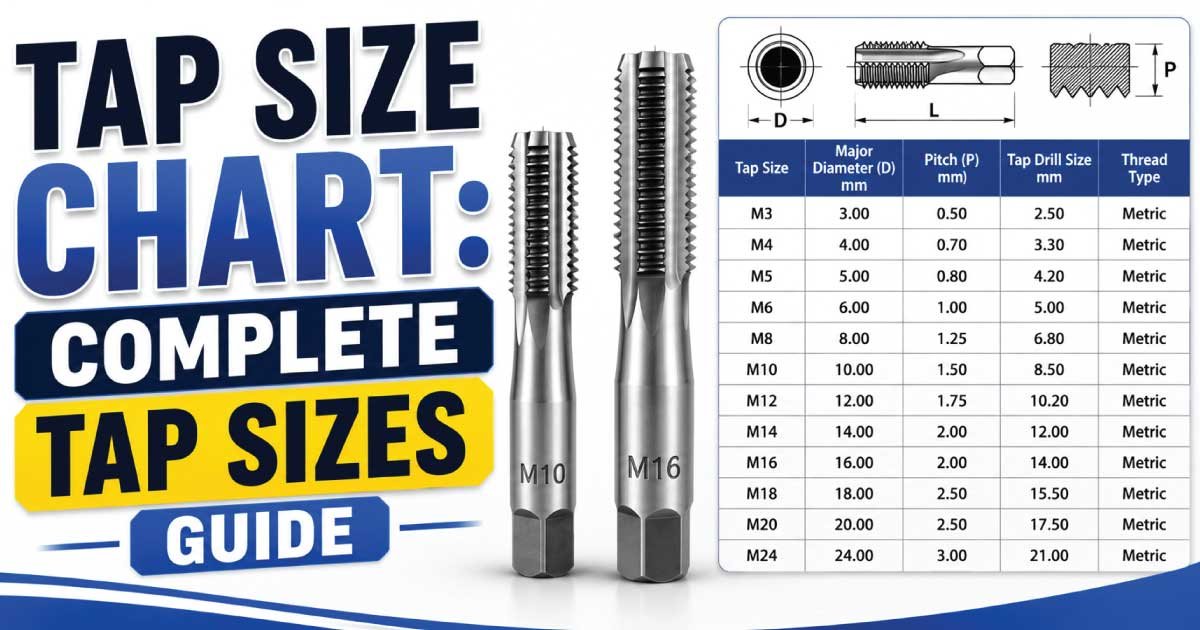
The following chart lists common metric tap sizes with their standard thread pitches and recommended tap drill sizes.
| Tap Size | Thread Pitch | Tap Drill Size | Drill Size (mm) | Common Applications |
|---|---|---|---|---|
| M3 | 0.5 mm | 2.5 mm | 2.5 mm | Electronics, small machinery |
| M4 | 0.7 mm | 3.3 mm | 3.3 mm | General hardware |
| M5 | 0.8 mm | 4.2 mm | 4.2 mm | Automotive components |
| M6 | 1.0 mm | 5.0 mm | 5.0 mm | Machine assemblies |
| M8 | 1.25 mm | 6.8 mm | 6.8 mm | Industrial equipment |
| M10 | 1.5 mm | 8.5 mm | 8.5 mm | Structural fasteners |
| M12 | 1.75 mm | 10.2 mm | 10.2 mm | Heavy machinery |
| M16 | 2.0 mm | 14.0 mm | 14.0 mm | Industrial fabrication |
| M20 | 2.5 mm | 17.5 mm | 17.5 mm | Heavy-duty applications |
| M24 | 3.0 mm | 21.0 mm | 21.0 mm | Large equipment |
Imperial Tap Size Chart
| Tap Size | Threads Per Inch (TPI) | Tap Drill | Drill Decimal | Typical Applications |
|---|---|---|---|---|
| #4-40 | 40 | #43 | 0.0890″ | Small equipment |
| #6-32 | 32 | #36 | 0.1065″ | Electronics |
| #8-32 | 32 | #29 | 0.1360″ | Machinery |
| #10-24 | 24 | #25 | 0.1495″ | General repairs |
| 1/4″-20 | 20 | #7 | 0.2010″ | Automotive |
| 5/16″-18 | 18 | F | 0.2570″ | Equipment assembly |
| 3/8″-16 | 16 | 5/16″ | 0.3125″ | Structural work |
| 1/2″-13 | 13 | 27/64″ | 0.4219″ | Heavy machinery |
| 5/8″-11 | 11 | 17/32″ | 0.5313″ | Industrial fabrication |
| 3/4″-10 | 10 | 21/32″ | 0.6563″ | Large mechanical assemblies |
Why Tap Size Matters
Selecting the correct tap size is essential for creating strong and accurate internal threads. Using the wrong tap or drill size can result in weak threads, poor fastener engagement, or broken taps during cutting.
Benefits of choosing the correct tap size include:
- Accurate thread dimensions
- Strong fastener engagement
- Reduced risk of tap breakage
- Longer thread life
- Improved assembly strength
- Easier fastener installation
- Better machining accuracy
How to Measure a Tap
Accurate measurements help identify the correct replacement or matching tap.
Follow these steps:
- Measure the tap’s major diameter.
- Determine the thread pitch or TPI.
- Measure the threaded cutting length.
- Measure the overall tap length.
- Check the shank diameter.
- Identify the square drive size.
- Verify the thread standard.
Using a thread pitch gauge and digital caliper provides the most accurate results.
Also Read: Standard Needle Bearing Size Chart with PDF 2026
Common Types of Taps
Different tap designs are available for specific threading applications.
Taper Tap
Features a gradual cutting lead and is ideal for starting new threads by hand.
Plug Tap
The most commonly used tap for general-purpose threading in through holes and blind holes.
Bottoming Tap
Has very little taper and is used to cut threads close to the bottom of blind holes.
Spiral Point Tap
Pushes chips forward, making it ideal for threading through holes.
Spiral Flute Tap
Pulls chips upward, making it suitable for blind holes.
Machine Tap
Designed for high-speed production using tapping machines or CNC equipment.
Also Read: Drill Size Chart: Complete Guide To Standard Drill Sizes
Common Tap Materials
The material of a tap affects durability and cutting performance.
High-Speed Steel (HSS): Suitable for general-purpose threading in steel, aluminum, brass, and plastic.
Cobalt High-Speed Steel: Offers greater heat resistance and is ideal for stainless steel and hardened materials.
Carbide: Provides exceptional wear resistance for high-volume production and abrasive materials.
Powder Metal: Combines high toughness with excellent wear resistance for demanding industrial applications.
How to Choose the Right Tap Size
Consider these factors before selecting a tap:
- Match the tap to the fastener size.
- Verify the thread pitch or TPI.
- Select the recommended tap drill size.
- Consider the material being threaded.
- Choose the correct tap type.
- Use compatible cutting fluid.
- Follow the thread standard required by the application.
Selecting the correct tap improves thread quality and reduces machining problems.
Common Applications of Taps
Thread taps are widely used in many industries.
Typical applications include:
- Automotive repair
- Machine manufacturing
- Metal fabrication
- Aerospace components
- Plumbing fittings
- Construction equipment
- Maintenance workshops
- CNC machining
- Tool and die manufacturing
- DIY mechanical projects
Installation and Tapping Tips
Proper tapping techniques improve thread quality and extend tool life.
- Drill the correct tap hole size.
- Secure the workpiece firmly.
- Apply cutting fluid.
- Keep the tap aligned with the hole.
- Turn the tap slowly and evenly.
- Reverse periodically to break chips.
- Clean the threads after tapping.
Correct tapping practices reduce tool wear and produce cleaner threads.
Also Read: Pipe Size Chart: Complete Guide to Dimensions 2026
Common Mistakes to Avoid
Avoid these common tapping errors:
- Using the wrong drill bit size
- Choosing the incorrect thread pitch
- Skipping cutting lubricant
- Applying excessive force
- Misaligning the tap
- Failing to remove chips
- Using a worn or damaged tap
These mistakes can lead to broken taps, damaged threads, and poor assembly quality.
Benefits of Properly Sized Taps
Using the correct tap size provides several advantages.
- Strong, accurate threads
- Better fastener fit
- Improved machining efficiency
- Reduced tool breakage
- Longer thread lifespan
- Professional-quality results
- Lower production costs
Proper tap selection improves both manufacturing quality and equipment reliability.
Maintenance Tips
Routine maintenance extends the lifespan of thread taps.
- Clean taps after each use.
- Store taps in protective cases.
- Inspect cutting edges regularly.
- Replace chipped or worn taps.
- Apply rust protection during storage.
- Use proper cutting fluid.
- Avoid dropping taps to prevent edge damage.
Regular maintenance helps maintain cutting accuracy and prolongs tool life.
Conclusion
Choosing the correct tap size is essential for producing accurate, durable, and reliable internal threads. By matching the tap to the correct drill size, thread pitch, and material, you can create high-quality threaded holes for automotive, industrial, construction, and manufacturing applications.
Whether using hand taps or machine taps, proper sizing and correct tapping techniques improve thread strength, reduce tool wear, and ensure long-lasting performance. Always consult a tap size chart before drilling and tapping to achieve the best results.

Engineer Hassan is a Mechanical Engineer with 16+ years of hands-on experience in mechanical hardware, fasteners, and workshop tools. He focuses on size selection, thread identification, and measurement, helping users choose the correct components with accuracy and safety.