
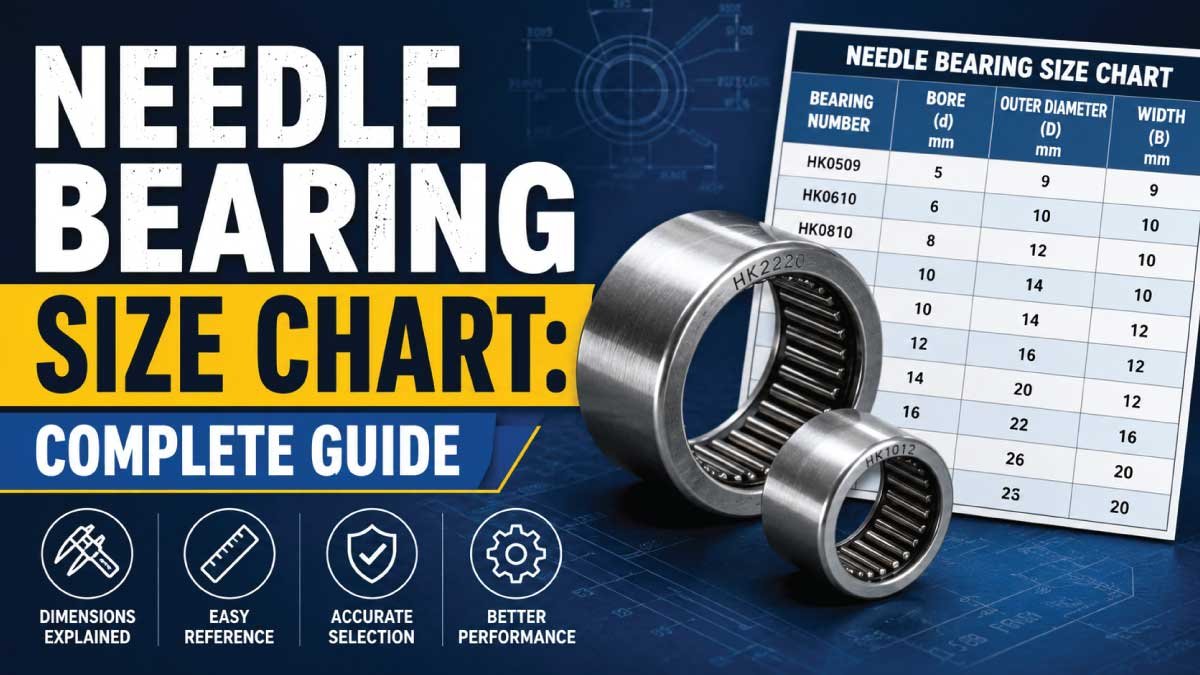
Needle bearings are compact roller bearings designed to handle high radial loads while using very little space. They are widely used in automotive systems, industrial machinery, motorcycles, gearboxes, power tools, and heavy equipment. Their slim cylindrical rollers provide excellent load-carrying capacity compared to standard ball bearings.
Understanding needle bearing sizes is important for proper fit, smooth rotation, long service life, and efficient machine performance. In this complete guide, you will learn about needle bearing dimensions, types, applications, measurement methods, and standard needle bearing size charts.
What Is a Needle Bearing?
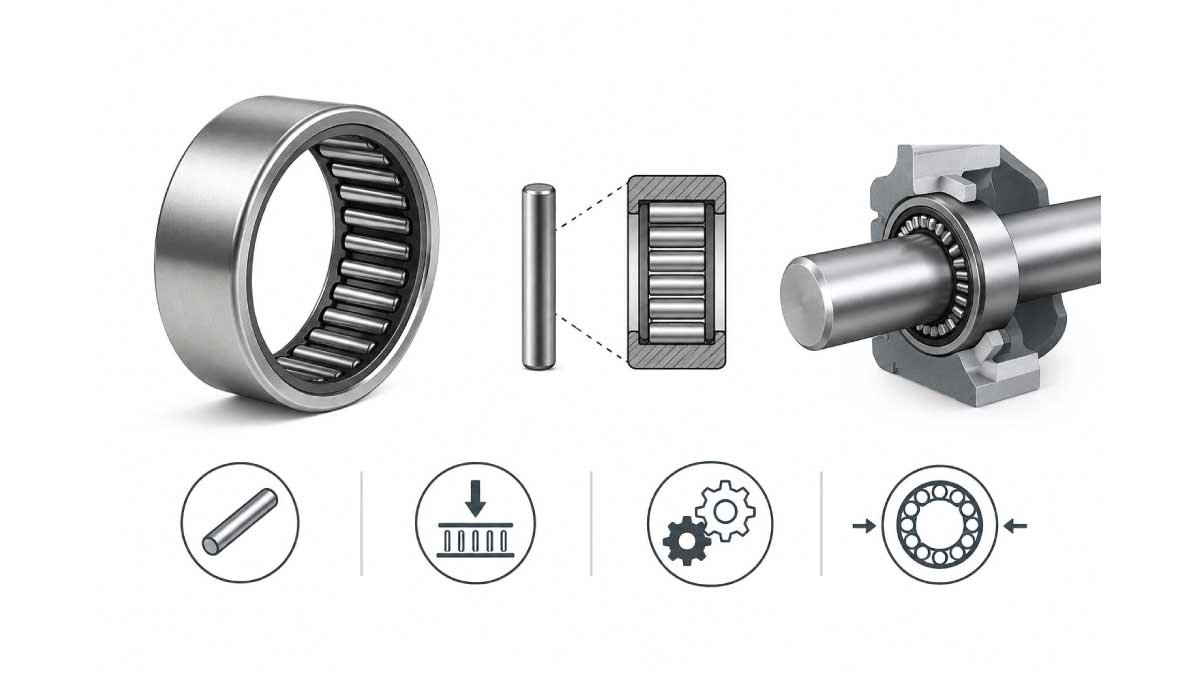
A needle bearing, also called a needle roller bearing, uses long and thin cylindrical rollers that resemble needles. These rollers reduce friction between moving parts while supporting heavy radial loads.
Compared to ball bearings, needle bearings:
- Have smaller cross-sections
- Support higher radial loads
- Save installation space
- Operate efficiently at high speeds
They are ideal for compact mechanical systems where space is limited.
How Needle Bearings Work
Needle bearings contain small cylindrical rollers positioned between an inner and outer race. As the shaft rotates, the rollers reduce friction and distribute loads evenly.
Main components include:
- Needle rollers
- Inner ring
- Outer ring
- Cage or retainer
Some needle bearings operate without an inner ring, using the shaft itself as the raceway.
Standard Needle Bearing Size Chart
Below is a common needle bearing size chart showing bore diameter, outside diameter, and width.
| Bearing Number | Bore Diameter | Outside Diameter | Width |
|---|---|---|---|
| HK0408 | 4 mm | 8 mm | 8 mm |
| HK0509 | 5 mm | 9 mm | 9 mm |
| HK0608 | 6 mm | 10 mm | 8 mm |
| HK0810 | 8 mm | 12 mm | 10 mm |
| HK1010 | 10 mm | 14 mm | 10 mm |
| HK1212 | 12 mm | 18 mm | 12 mm |
| HK1412 | 14 mm | 20 mm | 12 mm |
| HK1616 | 16 mm | 22 mm | 16 mm |
| HK1816 | 18 mm | 24 mm | 16 mm |
| HK2020 | 20 mm | 26 mm | 20 mm |
| HK2520 | 25 mm | 32 mm | 20 mm |
| HK3020 | 30 mm | 37 mm | 20 mm |
| HK3520 | 35 mm | 42 mm | 20 mm |
| HK4020 | 40 mm | 47 mm | 20 mm |
Metric Needle Bearing Size Chart
Metric bearings are commonly used in automotive and industrial machinery.
| Metric Size | Bore (mm) | OD (mm) | Width (mm) |
|---|---|---|---|
| 6 × 10 × 8 | 6 | 10 | 8 |
| 8 × 12 × 10 | 8 | 12 | 10 |
| 10 × 14 × 10 | 10 | 14 | 10 |
| 12 × 18 × 12 | 12 | 18 | 12 |
| 15 × 21 × 12 | 15 | 21 | 12 |
| 20 × 26 × 20 | 20 | 26 | 20 |
| 25 × 32 × 20 | 25 | 32 | 20 |
| 30 × 37 × 20 | 30 | 37 | 20 |
Standard Needle Bearing Size Chart PDF
A standard needle bearing size chart PDF helps users quickly find bearing dimensions, inner diameter, outer diameter, width, and load capacity for different applications. These charts are widely used in automotive, industrial, and machinery systems to ensure proper bearing selection and smooth performance. A printable PDF format makes reference and comparison easier during maintenance and installation work.
Needle Bearing Dimensions Explained
Understanding needle bearing dimensions is essential for selecting the correct bearing for a shaft and housing system. Each dimension directly affects fit, load capacity, and performance. Proper knowledge ensures smooth rotation, reduced wear, and reliable operation in mechanical applications.
1. Bore Diameter
The bore diameter is the inner diameter of the needle bearing that fits directly onto the shaft. It is one of the most critical measurements because it determines shaft compatibility and ensures a secure fit without slipping or misalignment during operation.
It matches the shaft size.
Example:
A 10 mm bore bearing fits a 10 mm shaft.
2. Outside Diameter (OD)
The outside diameter refers to the total external width of the bearing. It determines how the bearing fits inside the housing or casing. Accurate OD selection is important to ensure proper installation and stable performance under load conditions.
3. Width
Width refers to the thickness of the bearing from one side to the other. It affects load distribution and overall stability. Wider bearings can generally handle heavier loads and provide better support in demanding mechanical systems.
Types of Needle Bearings
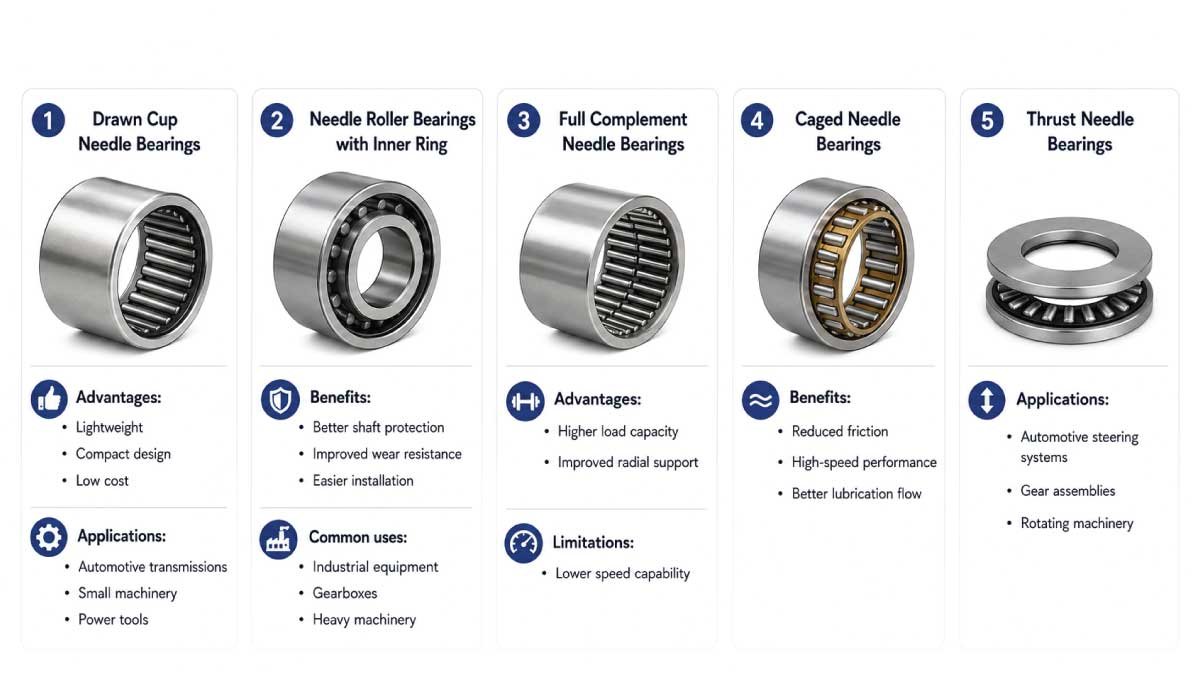
Different needle bearing designs are used to meet specific load, speed, and space requirements. Each type offers unique advantages depending on the application, making them suitable for a wide range of mechanical systems.
1. Drawn Cup Needle Bearings
These bearings have thin outer shells made from drawn steel, making them lightweight and compact. They are commonly used where space is limited and cost efficiency is important without compromising basic performance.
Advantages:
- Lightweight
- Compact design
- Low cost
Applications:
- Automotive transmissions
- Small machinery
- Power tools
2. Needle Roller Bearings with Inner Ring
These bearings include a hardened inner ring that provides better shaft protection and improved durability. They are designed for applications where higher wear resistance and easier installation are required.
Benefits:
- Better shaft protection
- Improved wear resistance
- Easier installation
Common uses:
- Industrial equipment
- Gearboxes
- Heavy machinery
3. Full Complement Needle Bearings
Full complement needle bearings contain the maximum number of rollers, allowing them to carry heavy radial loads. They are ideal for applications where strength is more important than speed.
Advantages:
- Higher load capacity
- Improved radial support
Limitations:
- Lower speed capability
4. Caged Needle Bearings
Caged needle bearings use a separator (cage) to keep rollers evenly spaced. This reduces friction and allows smoother high-speed operation with improved lubrication flow.
Benefits:
- Reduced friction
- High-speed performance
- Better lubrication flow
5. Thrust Needle Bearings
Thrust needle bearings are designed to handle axial loads instead of radial loads. They are used in systems where force is applied along the shaft axis.
Applications:
- Automotive steering systems
- Gear assemblies
- Rotating machinery
Needle Bearing Materials
Material selection plays a major role in bearing performance, affecting durability, speed, and resistance to corrosion. Different materials are chosen based on operating conditions and application requirements.
1. Chrome Steel Bearings
Chrome steel is the most commonly used material for needle bearings due to its high strength and durability. It provides excellent resistance to wear and long service life under heavy loads.
Advantages:
- High hardness
- Excellent wear resistance
- Long lifespan
2. Stainless Steel Bearings
Stainless steel bearings are designed for environments where corrosion resistance is critical. They perform well in moisture-rich or hygienic applications where standard steel may fail.
Best for:
- Wet environments
- Food processing
- Marine equipment
3. Plastic Cage Bearings
Plastic cages are used to reduce overall weight and noise while improving high-speed performance. They are suitable for lightweight and precision applications.
Applications:
- Lightweight machinery
- High-speed systems
Needle Bearing Applications
Needle bearings are widely used in many industries because of their compact size, high load capacity, and ability to perform efficiently in limited space. They are especially suitable for systems that require smooth rotation, durability, and reliable performance under varying loads and speeds.
1. Automotive Industry
Automotive systems rely heavily on needle bearings for smooth and efficient power transmission. Their compact design allows them to fit into tight spaces while handling significant loads in moving components.
Automotive systems use needle bearings in:
- Transmissions
- Universal joints
- Rocker arms
- Gearboxes
Their compact size makes them ideal for limited spaces.
2. Motorcycle Systems
Motorcycles use needle bearings in components that require smooth motion and durability under constant vibration and load changes. They help improve performance while maintaining compact mechanical design.
Motorcycles use needle bearings in:
- Swingarms
- Gearboxes
- Clutch assemblies
3. Industrial Machinery
Industrial equipment depends on needle bearings for reliable operation in heavy-duty and continuous-use environments. They support high loads while maintaining smooth rotational movement in machinery.
Industrial equipment uses needle bearings for:
- Conveyor systems
- Machine tools
- Hydraulic pumps
- Compressors
4. Aerospace Industry
Aerospace systems require lightweight and highly reliable components. Needle bearings are used where precision, low weight, and high performance are essential for safe and efficient operation.
Applications include:
- Gear mechanisms
- Control systems
- Actuators
5. Power Tools
Needle bearings improve efficiency and performance in handheld and electric tools by reducing friction and ensuring smooth motion even under heavy use conditions.
Used in:
- Drills
- Grinders
- Electric motors
You May Also Like This:
Advantages of Needle Bearings
Needle bearings offer several important advantages that make them suitable for a wide range of mechanical applications. Their design improves efficiency, reduces space requirements, and enhances load-handling capability.
1. Compact Design
Needle bearings have a slim and compact structure that allows them to fit into tight spaces where other bearings cannot be used effectively.
2. High Load Capacity
Despite their small size, needle bearings can handle high radial loads due to their long, thin rollers that distribute weight evenly.
3. Reduced Friction
These bearings reduce friction between moving parts, improving energy efficiency and ensuring smoother rotational movement.
4. Lightweight Construction
Their compact design reduces overall system weight, making them ideal for applications where weight reduction is important.
5. Excellent Performance at High Speeds
Caged needle bearing designs are capable of operating smoothly at high rotational speeds with reduced wear and heat generation.
Needle Bearing Load Ratings
Load ratings define how much force a bearing can safely handle during operation. Selecting the correct rating is essential for ensuring performance, durability, and long service life.
Load Type | Description
Dynamic Load Rating – Load during rotation
Static Load Rating – Maximum stationary load
Selecting the correct load rating improves bearing lifespan.
Needle Bearing Clearance
Clearance refers to the internal space between rollers and raceways inside the bearing. It affects movement, heat generation, and performance under different operating conditions.
Common clearance classes include:
- Standard clearance
- C3 clearance
- C4 clearance
Higher clearance is often used for high-temperature or high-speed applications.
Needle Bearing Lubrication
Proper lubrication is essential for reducing friction, preventing wear, and extending bearing life. The choice between grease and oil depends on speed, load, and operating environment.
1. Grease Lubrication
Grease is commonly used in sealed or low-maintenance bearings. It stays in place for longer periods and provides good protection against contamination.
Advantages:
- Simple maintenance
- Good contamination protection
2. Oil Lubrication
Oil lubrication is used in high-speed or high-temperature systems where better cooling and continuous lubrication are required.
Benefits:
- Better cooling
- Reduced heat buildup
How to Measure a Needle Bearing
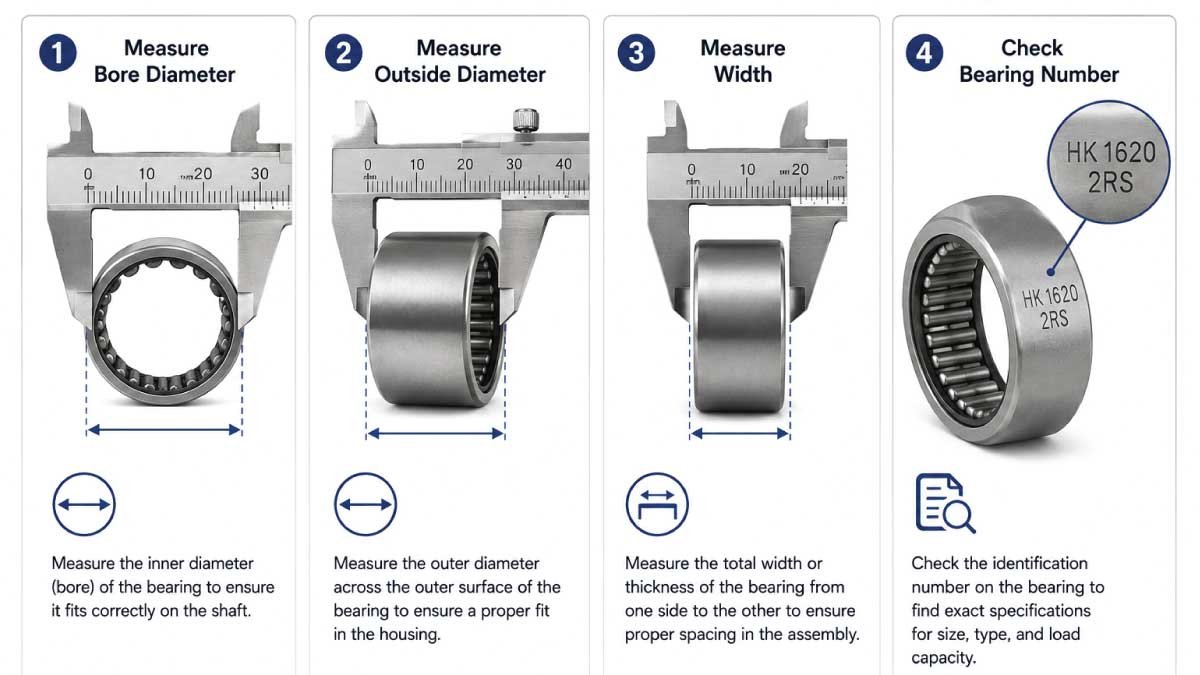
Correct measurement of a needle bearing is very important to ensure proper fit and smooth performance in machinery. Accurate sizing prevents installation issues, reduces wear, and helps in selecting the correct replacement bearing for industrial, automotive, and mechanical applications.
Step 1: Measure Bore Diameter
Measure the bore diameter using a precise caliper to determine the inner diameter of the needle bearing. This measurement ensures the bearing fits correctly on the shaft. Even small errors can cause misalignment, vibration, or early failure, so accuracy is essential for proper installation and long-term performance.
Step 2: Measure Outside Diameter
The outside diameter is measured across the outer surface of the bearing using a caliper or micrometer. This measurement ensures the bearing fits securely inside the housing. A correct outer diameter prevents looseness or tight fitting issues, which can affect rotation efficiency and overall machine stability during operation.
Step 3: Measure Width
Measure the total width or thickness of the bearing from one side to the other. This dimension is important for ensuring proper spacing inside the assembly. Incorrect width can lead to pressure imbalance, poor alignment, or mechanical failure, especially in high-speed or heavy-load applications where precision is critical.
Step 4: Check Bearing Number
Most needle bearings have identification numbers engraved or printed on them. These numbers help identify exact specifications such as size, type, and load capacity. Checking the bearing number is often the fastest way to find a replacement without manual measurement, especially when original dimensions are difficult to determine.
You May Also Like This:
Needle Bearing Installation Tips
Proper installation of needle bearings is essential to ensure long service life and reliable performance. Incorrect handling during installation can damage the bearing surface, reduce efficiency, and lead to premature failure in mechanical systems.
1. Clean the Housing
Before installation, thoroughly clean the housing to remove dust, dirt, and metal particles. Any contamination can cause improper seating or internal damage. A clean surface ensures smooth fitting, reduces friction, and helps the bearing operate efficiently without unnecessary stress or wear during continuous operation.
2. Use Proper Tools
Always use correct installation tools such as bearing presses or drivers instead of hammering directly. Improper tools can damage the bearing structure and reduce lifespan. Controlled pressure ensures even installation, preventing cracks, distortion, or misalignment that could affect machine performance and long-term durability.
3. Avoid Misalignment
Proper alignment during installation is very important for smooth operation. Misalignment can cause uneven load distribution, excessive vibration, and early wear. Carefully position the bearing to ensure it sits straight within the housing and on the shaft, allowing stable rotation and reducing mechanical stress during use.
4. Apply Correct Lubrication
Adequate lubrication reduces friction and prevents overheating inside the bearing. Using the correct type and amount of lubricant ensures smooth movement and protects against wear. Too little or too much lubrication can cause problems, so always follow manufacturer recommendations for optimal performance and longer bearing life.
Common Needle Bearing Problems
Improper installation, poor maintenance, or incorrect operating conditions can significantly reduce the lifespan of needle bearings. These issues affect performance, increase friction, and may eventually lead to complete bearing failure if not addressed in time. Understanding common problems helps in preventing breakdowns and improving machine reliability.
1. Excessive Wear
Excessive wear occurs when the bearing surfaces gradually degrade due to continuous friction and load stress. It reduces efficiency and can lead to poor performance or failure of the entire system if ignored.
Caused by:
- Poor lubrication
- Dirt contamination
- Overloading
2. Overheating
Overheating happens when the bearing temperature rises beyond safe operating limits. This weakens the material and increases wear rate, eventually reducing bearing efficiency and lifespan.
High temperatures may result from:
- Excessive speed
- Improper lubrication
- Incorrect clearance
3. Corrosion
Corrosion is a serious issue in needle bearings exposed to moisture, chemicals, or humid environments. It damages the surface of rollers and raceways, leading to rough operation and early failure. Stainless steel bearings are often used to prevent rust and improve durability in such conditions.
4. Bearing Noise
Unusual noise during operation is a common sign of internal bearing problems. It usually indicates mechanical issues that require immediate attention to prevent further damage.
Noise may indicate:
- Misalignment
- Contamination
- Worn rollers
You May Also Like This:
Needle Bearing vs Ball Bearing
Many people compare needle bearings and ball bearings.
| Feature | Needle Bearing | Ball Bearing |
|---|---|---|
| Roller Type | Cylindrical rollers | Spherical balls |
| Load Capacity | Higher radial load | Moderate load |
| Space Requirement | Compact | Larger |
| Speed Capability | Moderate to high | High |
| Friction | Very low | Low |
Needle bearings are preferred when space is limited and radial load is high.
Needle Bearing Standards
Several standards define bearing dimensions and quality.
| Standard | Description |
|---|---|
| ISO Standards | International bearing dimensions |
| DIN Standards | German industrial standards |
| ABEC Ratings | Precision tolerance system |
These standards improve compatibility and performance.
Choosing the Right Needle Bearing Size
Selecting the correct needle bearing size is essential for ensuring smooth performance, long service life, and safe operation of machinery. The right choice depends on mechanical load, space limitations, speed requirements, and environmental conditions where the bearing will operate.
1. Load Requirements
Load capacity is one of the most important factors when choosing a needle bearing. Heavy-duty applications such as industrial machines or automotive systems require larger bearings that can handle higher stress. If the load exceeds the bearing capacity, it can lead to deformation, overheating, and premature failure of the system.
2. Available Space
Space constraints play a major role in bearing selection. Needle bearings are often chosen for compact designs because of their slim and elongated shape. In tight mechanical assemblies where standard bearings cannot fit, needle bearings provide an efficient solution without compromising performance or strength in limited installation areas.
3. Rotational Speed
Rotational speed affects the type of needle bearing used in a system. High-speed applications typically require caged needle bearings, which reduce friction and improve stability during rotation. These designs help maintain proper spacing between rollers, ensuring smoother operation and reducing heat generation at higher RPM levels in machinery.
4. Environmental Conditions
The working environment significantly impacts bearing performance and lifespan. In corrosive or moisture-rich environments, stainless steel needle bearings are preferred due to their resistance to rust and chemical damage. Choosing the right material ensures durability, reliability, and consistent performance even in harsh industrial or outdoor conditions.
5. Maintenance Requirements
Maintenance needs should also be considered when selecting needle bearings. Sealed or pre-lubricated bearings are ideal for reducing maintenance frequency and preventing contamination from dust or debris. These types improve efficiency, extend service life, and are especially useful in applications where regular servicing is difficult or costly.
You May Also Like This:
Needle Bearing Maintenance Tips
Regular maintenance is essential for ensuring long service life, smooth operation, and reliable performance of needle bearings. Proper care helps reduce wear, prevent breakdowns, and maintain efficiency in mechanical systems. Following basic maintenance practices can significantly extend bearing durability and reduce costly repairs.
1. Inspect Bearings Regularly
Regular inspection helps identify early signs of damage before serious failure occurs. Monitoring bearing condition ensures timely maintenance and prevents unexpected machine downtime.
Check for:
- Noise
- Wear
- Corrosion
- Vibration
2. Keep Bearings Clean
Cleanliness is critical for bearing performance because even small particles of dust or dirt can damage roller surfaces. Keeping bearings clean ensures smooth operation and reduces friction and wear over time.
3. Replace Worn Bearings Early
Worn or damaged bearings should be replaced immediately to avoid further damage to connected components. Delayed replacement can lead to system failure and higher repair costs.
4. Use Correct Lubricants
Proper lubrication is one of the most important factors in bearing maintenance. Always use lubricants recommended by the manufacturer to ensure optimal performance, reduced friction, and longer bearing life.
Conclusion
Needle bearings are compact, efficient, and highly durable components used in automotive systems, industrial machinery, power tools, and aerospace equipment. Their slim cylindrical rollers provide excellent load capacity while saving valuable installation space.
Understanding needle bearing sizes, dimensions, load ratings, materials, and lubrication methods helps ensure proper performance and long service life. Using a reliable needle bearing size chart also makes bearing selection easier and prevents costly equipment failures.
FAQs:
What are needle bearings used for?
Needle bearings are used in mechanical systems that require high radial load support in limited space. They are commonly found in transmissions, gearboxes, automotive engines, and industrial machinery. Their slim design allows them to fit in compact assemblies while still handling heavy loads efficiently, making them ideal for precision engineering applications.
How are needle bearings measured?
Needle bearings are measured using three key dimensions: bore diameter, outside diameter, and width. The bore diameter ensures proper shaft fit, the outside diameter matches the housing, and the width confirms correct spacing. Accurate measurement is essential to avoid fitting issues, vibration, and premature wear in mechanical systems.
What is the advantage of needle bearings?
The main advantage of needle bearings is their ability to handle high radial loads while occupying very little space. Their small and compact design makes them perfect for lightweight and tight mechanical assemblies. They also provide smooth operation, improved efficiency, and are widely used in modern machines requiring space-saving solutions.
Can needle bearings handle axial loads?
Standard needle bearings are mainly designed to handle radial loads, not axial loads. However, specialized thrust needle bearings are engineered to support axial forces effectively. In applications where both radial and axial loads are present, engineers often combine bearing types to ensure stability, durability, and balanced load distribution.
Which lubrication is best for needle bearings?
The best lubrication depends on application type and operating conditions. Grease lubrication is commonly used in sealed or low-maintenance systems because it stays in place longer. Oil lubrication is preferred for high-speed applications as it provides better cooling and reduces friction. Proper lubrication ensures longer bearing life and smoother performance.

Engineer Hassan is a Mechanical Engineer with 16+ years of hands-on experience in mechanical hardware, fasteners, and workshop tools. He focuses on size selection, thread identification, and measurement, helping users choose the correct components with accuracy and safety.