
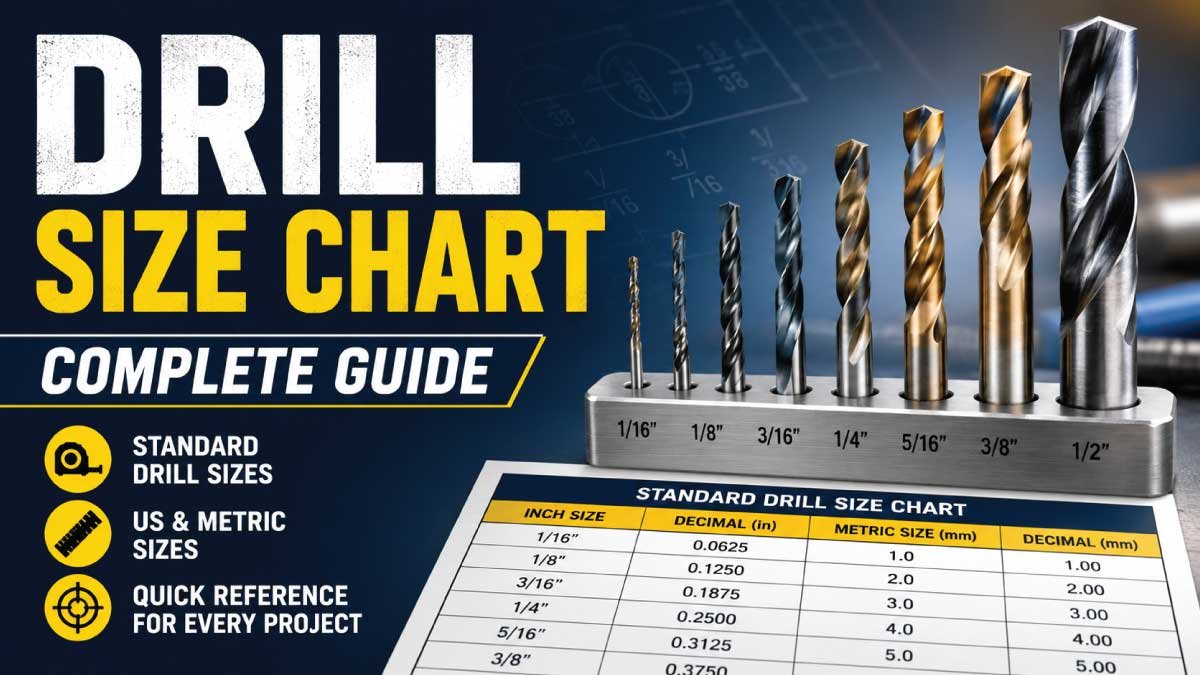
A drill size chart is an essential reference tool used in woodworking, metalworking, construction, and DIY projects. It helps users select the correct drill bit size for holes, screws, bolts, tapping, and precision drilling. Whether you are using fractional, metric, wire gauge, or letter drill bits, understanding drill sizes improves accuracy and prevents material damage.
In this complete guide, you will learn about standard drill bit sizes, measurement systems, drill size conversion charts, common applications, and tips for choosing the correct drill bit.
What Is a Drill Size Chart?
A drill size chart is a reference guide that shows drill bit dimensions in multiple measurement systems, helping users select the correct drill bit for accurate drilling. These charts are essential in machining, woodworking, construction, and repair work because they simplify size comparison and reduce drilling mistakes during professional or DIY projects.
Drill size charts are commonly used in:
- Mechanical workshops
- Woodworking projects
- Construction industries
- Automotive repair
- Metal fabrication
- DIY home improvement
The chart usually includes:
- Fractional sizes
- Metric sizes
- Number drill sizes
- Letter drill sizes
- Decimal equivalents
Using the wrong drill bit size can cause loose fittings, broken fasteners, or damaged materials. That is why professionals always rely on accurate drill charts.
Standard Fractional Drill Size Chart
Standard fractional drill bits are widely used in the United States and are measured in inches. These drill bits are common in construction, woodworking, plumbing, and general maintenance tasks. Fractional sizes are easy to identify and are suitable for everyday drilling operations involving wood, plastic, and soft metals.
| Fractional Size | Decimal Equivalent | Metric Equivalent |
|---|---|---|
| 1/64″ | 0.0156 | 0.40 mm |
| 1/32″ | 0.0313 | 0.79 mm |
| 1/16″ | 0.0625 | 1.59 mm |
| 3/32″ | 0.0938 | 2.38 mm |
| 1/8″ | 0.1250 | 3.18 mm |
| 5/32″ | 0.1563 | 3.97 mm |
| 3/16″ | 0.1875 | 4.76 mm |
| 1/4″ | 0.2500 | 6.35 mm |
| 5/16″ | 0.3125 | 7.94 mm |
| 3/8″ | 0.3750 | 9.53 mm |
| 1/2″ | 0.5000 | 12.70 mm |
These drill bits are widely available and suitable for general-purpose drilling.
Metric Drill Size Chart
Metric drill bits are measured in millimeters and are commonly used in engineering, manufacturing, and international industries. These drill bits provide precise sizing and are ideal for applications requiring exact measurements. Metric drill systems are popular because they simplify calculations and ensure compatibility with modern machinery and equipment.
| Metric Size | Decimal Inches | Common Use |
|---|---|---|
| 1 mm | 0.0394″ | Electronics |
| 2 mm | 0.0787″ | Small hardware |
| 3 mm | 0.1181″ | Plastic drilling |
| 4 mm | 0.1575″ | Sheet metal |
| 5 mm | 0.1969″ | Woodworking |
| 6 mm | 0.2362″ | General drilling |
| 8 mm | 0.3150″ | Anchor holes |
| 10 mm | 0.3937″ | Heavy-duty drilling |
| 12 mm | 0.4724″ | Industrial applications |
| 16 mm | 0.6299″ | Structural drilling |
Metric drill bits provide precise measurements and are preferred in engineering and manufacturing industries.
Number Drill Size Chart
Number drill sizes range from #80 to #1 and are mainly used in machining, metalworking, and precision engineering. In this system, smaller numbers represent larger drill bits. Number drill bits are useful when highly accurate hole sizes are required for threading, tapping, and specialized manufacturing operations.
| Drill Number | Decimal Size | Metric Equivalent |
|---|---|---|
| #80 | 0.0135″ | 0.34 mm |
| #70 | 0.0280″ | 0.71 mm |
| #60 | 0.0400″ | 1.02 mm |
| #50 | 0.0700″ | 1.78 mm |
| #40 | 0.0980″ | 2.49 mm |
| #30 | 0.1285″ | 3.26 mm |
| #20 | 0.1610″ | 4.09 mm |
| #10 | 0.1935″ | 4.92 mm |
| #1 | 0.2280″ | 5.79 mm |
These drill bits are commonly used for precision machining and tapping holes.
Letter Drill Size Chart
Letter drill bits range from A to Z and are commonly used in machine shops and industrial drilling applications. These drill sizes fill the gap between fractional and number drill sizes, providing additional intermediate options for accurate drilling and threading operations in mechanical and engineering projects.
| Letter Size | Decimal Equivalent | Metric Equivalent |
|---|---|---|
| A | 0.2340″ | 5.94 mm |
| D | 0.2460″ | 6.25 mm |
| F | 0.2570″ | 6.53 mm |
| H | 0.2660″ | 6.76 mm |
| J | 0.2770″ | 7.04 mm |
| M | 0.2950″ | 7.49 mm |
| Q | 0.3320″ | 8.43 mm |
| T | 0.3580″ | 9.09 mm |
| W | 0.3860″ | 9.80 mm |
| Z | 0.4130″ | 10.49 mm |
Letter drill bits are useful when exact intermediate sizes are needed.
Drill Size Chart PDF
A Standard Fractional Drill Size Chart PDF is a useful reference guide that displays common fractional drill bit sizes along with their decimal and metric equivalents. It helps machinists, mechanics, woodworkers, and DIY users quickly identify the correct drill size for accurate drilling, tapping, and fastening applications in both professional workshops and home projects.
Also Read:
How to Measure Drill Bit Size
Measuring a drill bit correctly is important for creating accurate holes in wood, metal, plastic, and other materials. Proper measurement helps ensure the drill bit matches the required hole diameter, fastener size, or tapping requirement. Different measuring methods are available, including drill gauges, calipers, manufacturer markings, and conversion charts for identifying drill sizes quickly and accurately.
1. Using a Drill Gauge
A drill gauge is one of the easiest tools for identifying drill bit sizes accurately. It contains multiple pre-sized holes labeled with standard drill dimensions. Simply insert the drill bit into the matching hole until it fits properly. Drill gauges are commonly used in workshops, machine shops, and construction projects for quick size verification.
2. Measuring with Calipers
Digital or manual calipers provide highly accurate drill bit measurements in both inches and millimeters. To measure correctly, place the caliper jaws around the widest part of the drill bit and read the displayed value. Calipers are especially useful when drill bit markings are worn off or when precision measurements are required for engineering tasks.
3. Checking Manufacturer Markings
Most drill bits include engraved or stamped size markings on the shank area near the end of the bit. These markings may display fractional, metric, letter, or number sizes depending on the drill standard. Checking the manufacturer markings is a fast and convenient way to identify drill sizes without using additional measuring tools.
4. Using Conversion Charts
Drill size conversion charts help users compare different sizing systems, including metric, fractional, number, and letter drill sizes. These charts are extremely useful when converting measurements between standards used in various countries or industries. Mechanics, machinists, and DIY users often rely on conversion charts to select the correct drill bit quickly.
Drill Size Conversion Chart
Sometimes you need to convert between inch and metric sizes.
| Inches | Millimeters |
|---|---|
| 1/16″ | 1.59 mm |
| 1/8″ | 3.18 mm |
| 3/16″ | 4.76 mm |
| 1/4″ | 6.35 mm |
| 5/16″ | 7.94 mm |
| 3/8″ | 9.53 mm |
| 1/2″ | 12.70 mm |
Conversion charts help avoid mistakes when using international tools or equipment.
Common Drill Sizes and Their Uses
Different drill sizes are designed for different drilling tasks and materials. Selecting the correct drill bit size improves accuracy, prevents material damage, and ensures better fastener fitting. Small, medium, and large drill bits are commonly used across industries such as woodworking, metalworking, construction, manufacturing, and home improvement projects.
1. Small Drill Bits (1 mm – 3 mm)
Small drill bits are mainly used for delicate and precision drilling applications where accuracy is extremely important. These drill bits create tiny holes in soft materials, electronics, and lightweight components. Because of their thin size, they require careful handling to avoid bending or breakage during drilling operations.
Used for:
- Electronics
- Jewelry making
- Precision drilling
- Small screws
2. Medium Drill Bits (4 mm – 10 mm)
Medium drill bits are the most commonly used sizes for everyday drilling tasks in homes, workshops, and construction sites. They are suitable for drilling wood, plastic, sheet metal, and other general materials. These drill bits offer a balance between strength, versatility, and drilling efficiency for multiple applications.
Used for:
- Woodworking
- Plastic drilling
- Home repairs
- General construction
3. Large Drill Bits (12 mm and Above)
Large drill bits are designed for heavy-duty drilling operations involving thick materials, industrial equipment, and structural components. These bits usually require powerful drill machines and slower drilling speeds for better control. Large drill sizes are commonly used in construction, fabrication, plumbing, and industrial manufacturing environments.
Used for:
- Heavy machinery
- Structural steel
- Pipe installations
- Industrial fabrication
Also Read:
How To Choose the Correct Drill Bit Size
Choosing the correct drill bit size is essential for achieving clean, accurate, and safe drilling results. The right drill bit improves hole quality, prevents material damage, and ensures proper fastener fitting. Several factors affect drill bit selection, including the material being drilled, required hole diameter, drilling depth, fastener compatibility, and the level of precision needed for the project.
1. Material Type
Different materials require different drill bit types and drilling techniques. Hard materials such as metal, stainless steel, or concrete usually need stronger drill bits made from cobalt, carbide, or titanium-coated steel. Softer materials like wood or plastic can use standard high-speed steel bits. Drilling speed should also match the material to reduce overheating and improve cutting performance.
2. Hole Diameter
The desired hole diameter directly determines the drill bit size you should use. Small variations in drill size can affect the fit of screws, bolts, pipes, or other components. For accurate results, users often compare measurements with a drill size chart before drilling to ensure the selected bit matches the required hole dimensions perfectly.
3. Fastener Compatibility
When drilling pilot holes for screws, bolts, or anchors, choosing the correct drill bit size is extremely important. A hole that is too small may split the material, while a hole that is too large can weaken the fastener grip. Manufacturers usually provide recommended drill sizes for specific fasteners and threading applications.
4. Drilling Depth
Projects requiring deep holes may need extra-long drill bits for improved reach and stability. Standard drill bits work well for shallow holes, but deeper drilling applications often require extended-length bits or specialized designs. Proper drill length selection helps maintain drilling accuracy, reduces vibration, and improves chip removal during heavy-duty operations.
5. Precision Requirements
High-precision tasks such as machining, metal fabrication, and engineering often require exact drill sizes using number or letter drill systems. Even small measurement differences can affect part fitting and tolerances. Precision drilling commonly involves measuring tools, conversion charts, and carefully selected drill bits to achieve highly accurate and consistent hole sizes.
Pilot Hole Drill Size Guide
Pilot holes prevent wood splitting and improve screw installation.
| Screw Size | Recommended Pilot Drill |
|---|---|
| #4 Screw | 3/32″ |
| #6 Screw | 7/64″ |
| #8 Screw | 1/8″ |
| #10 Screw | 9/64″ |
| #12 Screw | 5/32″ |
Using the proper pilot drill size ensures strong fastening.
Tap Drill Size Chart
Tap drill charts help determine correct hole sizes for threading.
| Tap Size | Tap Drill Size |
|---|---|
| 6-32 | #36 |
| 8-32 | #29 |
| 10-24 | #25 |
| 1/4-20 | #7 |
| 5/16-18 | F |
| 3/8-16 | 5/16″ |
Correct tap drilling improves thread quality and reduces tool breakage.
Conclusion
A drill size chart is an important tool for professionals, mechanics, woodworkers, and DIY users. Understanding fractional, metric, number, and letter drill sizes helps improve drilling precision and prevents costly mistakes.
Choosing the correct drill bit size ensures accurate holes, better fastener fitting, and improved project quality. Whether you are drilling wood, metal, concrete, or plastic, using the right drill size chart simplifies the entire process.
By understanding drill bit measurements, materials, and applications, you can complete drilling tasks safely, efficiently, and professionally.
Also Read:
FAQs:
What do drill sizes mean?
Drill sizes represent the diameter of the hole a drill bit creates. They are available in metric units (millimeters), fractional inches, number sizes, and letter sizes. Choosing the correct drill size is important for accurate holes, proper screw fitting, and successful tapping or fastening in woodworking, metalworking, and construction projects.
What size is a 12mm drill?
A 12 mm drill bit creates a hole with a diameter of 12 millimeters. It is commonly used for larger bolts, anchors, and industrial fastening applications. This size is suitable for drilling through metal, wood, plastic, and masonry when the correct type of drill bit is selected for the material.
What does 10mm drill mean?
A 10 mm drill refers to a drill bit with a cutting diameter of 10 millimeters. It creates a 10 mm wide hole and is widely used in mechanical work, furniture assembly, and construction. This size is suitable for medium-duty drilling tasks and works with different materials depending on the drill bit design.
What is drill size 7?
Drill size 7 usually refers to a numbered drill bit in the wire gauge drill size system. A No. 7 drill bit has a diameter of approximately 0.201 inches or 5.1 mm. It is commonly used in machining and tapping operations where precise hole sizing is required for threaded fasteners.
How to check drill size?
Drill size can be checked by reading the size markings on the drill bit shank or by using a drill gauge. A vernier caliper or micrometer can also measure the diameter accurately. Checking drill size before use helps ensure precision, proper fit, and prevents damage during drilling operations.
What is the most common drill bit size?
The most commonly used drill bit sizes are 1/8 inch, 1/4 inch, and 3/8 inch because they are suitable for general-purpose drilling tasks. These sizes are widely used in home repairs, woodworking, and metalworking. They provide versatility for creating pilot holes, fastening holes, and medium-sized openings.
Are metric and fractional drill bits the same?
No, metric and fractional drill bits are not the same. Metric drill bits are measured in millimeters, while fractional drill bits are measured in inches. Although some sizes may be close in diameter, they are based on different measurement systems and are used according to project requirements and regional standards.
What drill size should I use for screws?
The correct drill size for screws depends on the screw diameter, thread type, and material being drilled. A pilot hole should be slightly smaller than the screw diameter to ensure proper grip. Many professionals use pilot hole charts to choose the correct drill bit size for accurate and secure fastening.
What are letter drill sizes used for?
Letter drill sizes are mainly used in machining, metalworking, and tapping applications where standard fractional sizes may not provide enough precision. These drill bits are labeled from A to Z and offer intermediate hole sizes. They are commonly used when creating threaded holes or achieving exact tolerances.
How do I know if a drill bit is dull?
A dull drill bit usually produces rough or uneven holes, creates excessive heat, and requires extra pressure while drilling. It may also make unusual noises or leave burn marks on the material. Replacing or sharpening dull drill bits improves drilling performance, accuracy, and overall safety during operation.

Engineer Hassan is a Mechanical Engineer with 16+ years of hands-on experience in mechanical hardware, fasteners, and workshop tools. He focuses on size selection, thread identification, and measurement, helping users choose the correct components with accuracy and safety.