
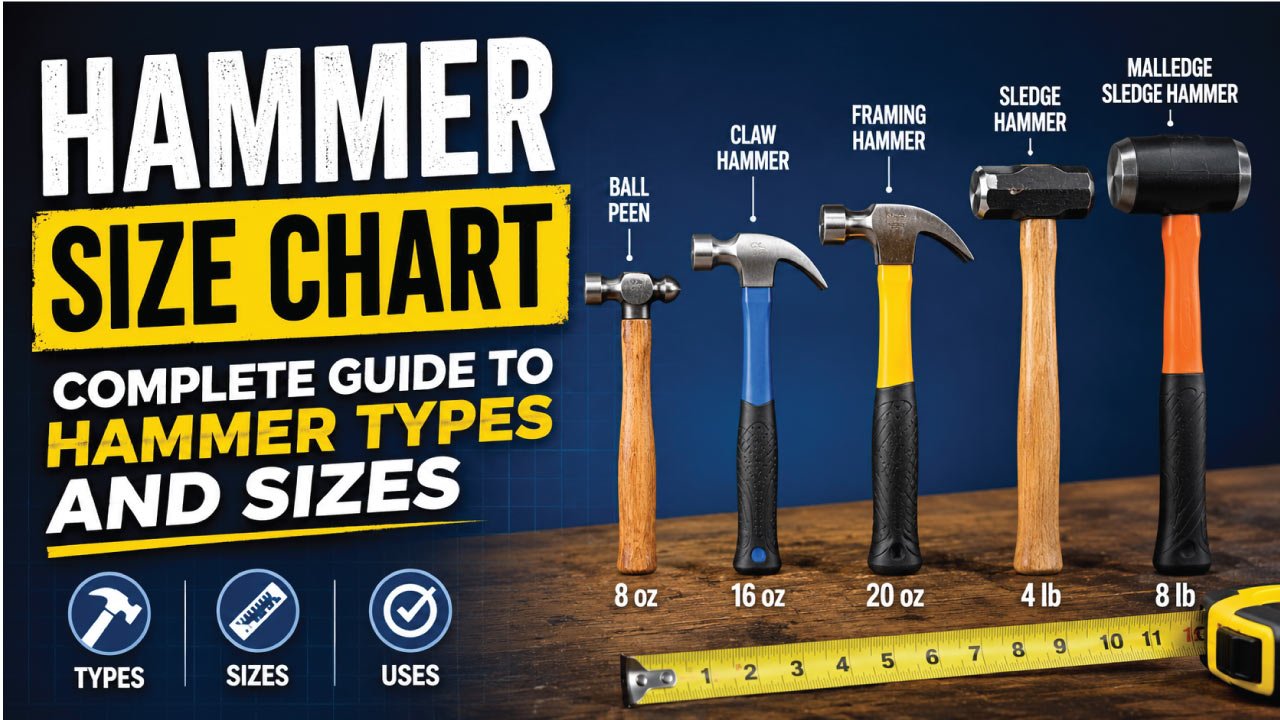
Hammers are one of the most commonly used hand tools in construction, woodworking, metalworking, automotive repair, and DIY projects. Choosing the correct hammer size is important because the wrong hammer can damage materials, reduce accuracy, and increase user fatigue.
This complete hammer size chart explains hammer sizes, hammer weight measurements, common hammer types, applications, and how to choose the right hammer for different tasks.
What Is Hammer Size?
Hammer size usually refers to the weight of the hammer head, which directly affects striking power and control during work. The handle length, grip design, and overall hammer dimensions also influence balance, comfort, and performance. Choosing the correct hammer size helps improve efficiency and reduces unnecessary strain during repeated use.
Hammer sizes are commonly measured in:
- Ounces (oz)
- Pounds (lb)
- Grams (g)
Examples:
- 8 oz hammer
- 16 oz claw hammer
- 3 lb sledge hammer
Lighter hammers provide better precision for delicate tasks, while heavier hammers deliver stronger impact force for construction, demolition, and heavy-duty applications.
Why Hammer Size Matters
Using the correct hammer size is important for achieving better accuracy, safety, and overall work quality. A properly sized hammer allows smoother strikes, reduces wasted effort, and helps prevent damage to nails, wood, metal, or other materials during different types of projects and repair work.
Using the correct hammer size helps:
- Improve striking accuracy
- Reduce hand fatigue
- Prevent material damage
- Increase work efficiency
- Improve safety
- Deliver proper force
A hammer that is too heavy can become difficult to control and may cause user fatigue, while a hammer that is too light may require extra strikes and provide insufficient impact force.
Hammer Size Chart
Choosing the correct hammer size is important because different hammer types are designed for specific tasks and materials. The hammer weight affects striking force, control, comfort, and efficiency. This hammer size chart helps beginners and professionals quickly identify the most suitable hammer for construction, woodworking, metalworking, automotive repair, and general household projects.
| Hammer Type | Common Weight | Typical Use |
|---|---|---|
| Tack Hammer | 4–8 oz | Small nails, crafts |
| Ball Peen Hammer | 8–32 oz | Metalworking |
| Claw Hammer | 10–20 oz | Carpentry |
| Framing Hammer | 20–32 oz | Framing work |
| Club Hammer | 2–4 lb | Masonry, demolition |
| Sledge Hammer | 6–20 lb | Heavy demolition |
| Dead Blow Hammer | 1–5 lb | Automotive work |
| Rubber Mallet | 8 oz–3 lb | Soft striking |
This hammer weight chart helps identify the correct tool for specific tasks.
Claw Hammer Size Chart
Claw hammers are among the most widely used hand tools in carpentry, woodworking, construction, and household repair work. Their dual-purpose design allows users to both drive nails and remove them efficiently. Choosing the correct claw hammer weight improves comfort, striking accuracy, and overall work performance for different applications.
| Claw Hammer Weight | Recommended Use |
|---|---|
| 10 oz | Light household tasks |
| 12 oz | DIY projects |
| 16 oz | General carpentry |
| 20 oz | Framing |
| 24 oz | Heavy construction |
Claw hammers are the most common hammer type because they can both drive and remove nails.
Ball Peen Hammer Size Chart
Ball peen hammers are specially designed for metalworking, engineering, fabrication, and automotive repair applications. Their rounded peen end allows users to shape metal, strike punches, and perform riveting work more effectively. Choosing the correct ball peen hammer size improves precision, safety, and working efficiency during metal fabrication tasks.
| Ball Peen Hammer Size | Typical Application |
|---|---|
| 8 oz | Light metal shaping |
| 12 oz | Small metalwork |
| 16 oz | General metalworking |
| 24 oz | Automotive repairs |
| 32 oz | Heavy-duty metal shaping |
Ball peen hammers are widely used in engineering, machining, blacksmithing, and metal fabrication because they provide controlled force for shaping and working with metal surfaces.
Sledge Hammer Size Chart
Sledge hammers are heavy-duty striking tools designed for demolition, construction, masonry, and industrial work. Their large hammer heads generate powerful impact force, making them ideal for breaking concrete, driving stakes, and handling difficult demolition tasks that require maximum striking power.
| Sledge Hammer Weight | Best Use |
|---|---|
| 6 lb | Fence posts |
| 8 lb | Breaking concrete |
| 10 lb | Heavy demolition |
| 12–20 lb | Industrial demolition |
Sledge hammers provide massive striking force for demanding demolition projects, making them essential tools for construction workers, contractors, and industrial applications.
Rubber Mallet Size Chart
Rubber mallets are soft-faced hammers designed to deliver controlled impact without damaging surfaces. They are commonly used in woodworking, tile installation, automotive repair, and assembly work where metal hammers may leave marks, dents, or scratches on delicate materials.
| Rubber Mallet Weight | Common Use |
|---|---|
| 8 oz | Crafts |
| 16 oz | Tile installation |
| 24 oz | Wood assembly |
| 32 oz | Automotive work |
Rubber mallets help prevent surface damage while still providing enough striking force for positioning, fitting, and assembly applications that require gentle impact control.
Hammer Handle Length Chart
Hammer handle length affects leverage, striking force, swing control, and user comfort during operation. Longer handles generate more power because they increase swing momentum, while shorter handles offer better precision and control for delicate or detailed work.
| Hammer Type | Typical Handle Length |
|---|---|
| Tack Hammer | 6–10 inches |
| Claw Hammer | 12–14 inches |
| Framing Hammer | 16–18 inches |
| Sledge Hammer | 24–36 inches |
Longer handles provide more striking power due to increased leverage, making them suitable for framing, demolition, and heavy-duty construction applications.
Also Read ☝️ Drill Size Chart: Complete Guide To Standard Drill Sizes helps you understand drill bit measurements, standard drill sizes, conversions, and proper applications for woodworking, metalworking, and construction. Read the full post to choose accurate drill sizes, improve drilling precision, and avoid common drilling mistakes in projects.
Types of Hammers
Different hammer types are designed for specific tasks such as woodworking, metalworking, construction, demolition, and automotive repair. Choosing the correct hammer type improves safety, efficiency, striking accuracy, and overall work quality. Each hammer has unique features that make it suitable for particular applications and materials.
1. Claw Hammer
The claw hammer is the most common and widely used hammer type in carpentry and household repair work. It is designed for driving nails into wood and removing them easily using the curved claw section located on the back of the hammer head.
Features:
- Flat striking face
- Curved claw for nail removal
Best for:
- Woodworking
- Household repairs
- Carpentry
Claw hammers are popular because they combine versatility, ease of use, and efficient nail-driving performance for everyday construction and DIY tasks.
2. Ball Peen Hammer
Ball peen hammers are specially designed for metalworking, fabrication, and engineering applications. Their rounded peen end allows users to shape metal surfaces, strike punches, and perform riveting work with controlled force and improved durability during demanding industrial tasks.
Features:
- Rounded peen end
- Hardened steel head
Used for:
- Riveting
- Metal shaping
- Automotive repair
Ball peen hammers are commonly found in workshops, machine shops, automotive garages, and metal fabrication industries due to their strong and durable design.
3. Framing Hammer
A framing hammer is a heavy-duty hammer designed mainly for construction and structural carpentry work. It features a larger hammer head and longer handle to deliver greater striking force, helping workers drive large nails quickly and efficiently into framing lumber.
Features:
- Longer handle
- Heavier head
- Milled striking face
Ideal for:
- Framing
- Deck building
- Structural work
Framing hammers are widely used by professional construction workers because they improve speed and productivity during demanding building projects.
4. Sledge Hammer
A sledge hammer is a large and powerful hammer designed for demolition, construction, and industrial applications. Its heavy hammer head generates strong impact force, making it suitable for breaking concrete, driving stakes, and handling difficult demolition tasks effectively.
Uses include:
- Breaking concrete
- Driving stakes
- Demolition projects
Sledge hammers are essential tools for heavy-duty jobs that require maximum striking power and deep impact force on hard materials.
5. Rubber Mallet
A rubber mallet is a soft-faced hammer used when controlled impact is needed without damaging surfaces. It is commonly used in woodworking, tile installation, automotive repair, and furniture assembly where standard metal hammers may leave dents or scratches.
Used for:
- Tile work
- Furniture assembly
- Automotive repairs
Rubber mallets provide gentle striking force while protecting delicate materials and finished surfaces from visible damage during assembly or adjustment work.
6. Dead Blow Hammer
Dead blow hammers contain internal shot material that reduces rebound after impact, allowing better strike control and improved user comfort. These hammers are commonly used in automotive, machinery, and mechanical repair work where controlled force is important.
Advantages:
- Reduced bounce
- Better strike control
- Less user fatigue
Common in automotive and machinery work, dead blow hammers help improve accuracy and reduce unwanted movement during repeated striking applications.
Also Read ☝️ Punch Size Chart: Complete Guide 2026 + PDF explains standard punch sizes, types, measurements, and common applications for metalworking, machining, woodworking, and DIY projects. Read the full guide to understand punch selection, improve accuracy, avoid material damage, and download the helpful punch size chart PDF easily.
Hammer Materials
Hammer materials play an important role in durability, strength, comfort, vibration absorption, and overall tool performance. Different hammer head and handle materials are designed for specific work environments, helping users choose the right combination for construction, woodworking, metalworking, and industrial applications.
Hammer heads are usually made from:
- Forged steel
- Carbon steel
- Stainless steel
Handle materials include:
- Wood
- Fiberglass
- Steel
- Rubber-coated steel
Each material affects comfort, durability, grip quality, vibration control, and long-term performance depending on the type of work being performed.
Steel Handle vs Fiberglass vs Wood
Different hammer handle materials affect comfort, durability, vibration control, grip quality, and overall tool performance. Choosing the right handle type depends on the work environment, frequency of use, and user preference. Wood, fiberglass, and steel handles each provide unique advantages and disadvantages for different applications.
1. Wood Handle
Wood handles are traditional and commonly used in carpentry and woodworking tools because they provide a natural feel and excellent shock absorption. Many professionals prefer wooden handles for comfort during extended use and their classic appearance in hand tools.
Advantages:
- Traditional feel
- Good shock absorption
Disadvantages:
- Can crack over time
Wood handles may require more maintenance than modern materials, especially when exposed to moisture, heavy impacts, or rough job site conditions.
2. Fiberglass Handle
Fiberglass handles are widely used in modern construction and industrial tools because they offer a strong balance between durability, lightweight performance, and vibration reduction. They are resistant to weather, moisture, and corrosion, making them reliable for heavy-duty applications.
Advantages:
- Lightweight
- Durable
- Reduced vibration
Common in modern construction tools, fiberglass handles help reduce hand fatigue and provide comfortable handling during long working hours.
3. Steel Handle
Steel handles are extremely strong and durable, making them suitable for heavy-duty industrial, demolition, and construction applications. They can withstand high impact forces and rough working conditions better than many traditional handle materials.
Advantages:
- Extremely durable
- Strong impact resistance
Disadvantages:
- More vibration transfer
Steel handles often include rubber grips to improve comfort and reduce vibration, helping users maintain better control during demanding tasks.
How to Choose the Right Hammer Size
Choosing the correct hammer size is important for improving safety, comfort, striking accuracy, and overall work efficiency. The right hammer helps reduce user fatigue, prevents material damage, and allows smoother performance during woodworking, construction, metalworking, household repairs, and various DIY projects.
1. Consider the Task
The type of work being performed is one of the most important factors when selecting a hammer size. Small repair jobs and delicate work usually require lightweight hammers, while heavy-duty construction and demolition tasks demand larger hammers with greater striking force and durability. Light tasks require smaller hammers. Heavy construction requires larger hammers.
2. Consider User Strength
Hammer weight should match the user’s physical comfort and working ability. Extremely heavy hammers may become difficult to control during extended use, causing arm, wrist, and shoulder fatigue. Proper balance and comfortable handling improve productivity and reduce unnecessary strain. Heavy hammers can quickly cause fatigue if used continuously.
3. Match Nail Size
The size and type of nail also affect hammer selection. Larger nails generally require heavier hammers to provide enough force for efficient driving, while smaller nails work better with lightweight hammers that offer improved control and reduced risk of bending nails. Larger nails require heavier hammers for efficient driving.
4. Check Work Material
Different materials require different levels of striking force and precision. Soft materials such as finished wood or tiles need controlled impact to avoid surface damage, while harder materials like concrete or thick lumber may require stronger hammer blows. Soft materials need controlled force. Hard materials may require stronger impact.
Also Read ☝️ Reamer Size Chart: Complete Guide 2026 with PDF helps you understand standard reamer sizes, tolerances, hole finishing, and machining applications. Read the full guide to learn accurate reamer selection, improve hole precision, avoid fitting issues, and download the useful reamer size chart PDF for quick reference.
Hammer Weight vs Swing Speed
Hammer performance depends not only on hammer weight but also on swing speed and user control. A heavier hammer can generate greater striking force, while a faster swing increases momentum and impact energy. Finding the right balance between hammer weight and swing speed improves efficiency, accuracy, and user comfort during different construction, woodworking, and demolition tasks.
A heavier hammer creates more striking force, but swing speed also matters.
Formula concept:
- Heavier head = more force
- Faster swing = greater momentum
Proper balance improves efficiency by helping users deliver strong and controlled strikes without excessive fatigue or loss of accuracy during repeated hammering tasks.
Best Hammer Sizes for Common Jobs
Different jobs require different hammer sizes to achieve proper striking force, accuracy, and efficiency. Choosing the correct hammer for specific tasks helps reduce user fatigue, improves safety, and prevents unnecessary damage to materials. This hammer size guide makes it easier to select the right tool for common household, construction, woodworking, and demolition applications.
| Job | Recommended Hammer |
|---|---|
| Hanging pictures | 8–12 oz |
| DIY home repairs | 12–16 oz |
| Woodworking | 16 oz |
| Framing | 20–28 oz |
| Metalworking | Ball peen 16–24 oz |
| Demolition | 8–12 lb sledge |
Using the right hammer improves safety and work quality.
Hammer Safety Tips
Following proper hammer safety practices helps prevent injuries, improves work accuracy, and increases tool lifespan. Using a hammer incorrectly can lead to damaged materials, bent nails, hand strain, or serious accidents. These simple hammer safety tips help both beginners and professionals work more safely and efficiently.
1. Wear Safety Glasses
Safety glasses help protect the eyes from flying debris, broken materials, metal fragments, and dust particles created during hammering tasks. Protective eyewear is especially important during demolition, metalworking, masonry, and construction work where high-impact striking can create dangerous debris.
2. Inspect Hammer Regularly
Regular hammer inspection helps identify damage before accidents occur. A damaged hammer can slip, break, or lose control during use, increasing the risk of injury. Checking the tool frequently improves safety and ensures reliable performance during demanding work conditions.
Check for:
- Loose heads
- Cracked handles
- Damaged striking faces
3. Use Correct Hammer Type
Different hammer types are designed for specific applications, materials, and impact levels. Using the wrong hammer can damage the tool, reduce efficiency, and create safety hazards. Selecting the proper hammer improves work quality and prevents unnecessary accidents during use. Never use a claw hammer for heavy demolition.
4. Maintain Proper Grip
Proper grip technique improves control, balance, and striking accuracy while reducing wrist strain and user fatigue. Holding the hammer correctly also helps generate better leverage and more effective striking force during construction, woodworking, and repair tasks. Hold near the end of the handle for better leverage.
Common Hammer Problems
Hammer-related problems can affect work quality, reduce efficiency, and damage materials if not corrected properly. Understanding common hammer issues helps users improve technique, choose the right hammer, and avoid unnecessary mistakes during woodworking, construction, and repair work.
1. Hammer Marks on Wood
Hammer marks on wood surfaces usually occur when excessive striking force is used or when the hammer accidentally slips during impact. These dents can damage finished surfaces and reduce the appearance quality of woodworking or carpentry projects. Caused by excessive force or poor accuracy.
Solution:
- Use smooth-face hammer
- Reduce striking force
2. Bent Nails
Bent nails are a common problem during hammering tasks and usually result from incorrect striking angles or insufficient impact force. Poor hammer control and using the wrong hammer size can also increase the chances of bending nails during installation.
Usually caused by:
- Incorrect striking angle
- Weak hammer impact
3. Handle Fatigue
Long periods of hammer use can place stress on the wrist, hand, arm, and shoulder muscles. Heavy hammers and excessive vibration may increase user fatigue, especially during framing, demolition, and repetitive construction work. Long periods of use can strain the wrist and arm. Use vibration-reducing handles when possible.
Also Read ☝️ Feeler Gauge Sizes and Their Practical Uses explains feeler gauge measurements, thickness charts, and real-world applications in automotive, engineering, machining, and maintenance work. Read the full post to learn accurate gap measurement techniques, proper gauge selection, and how feeler gauges improve precision and equipment performance.
Hammer Maintenance Tips
Proper hammer maintenance improves durability, safety, and overall tool performance. Regular cleaning, correct storage, and routine inspection help prevent rust, handle damage, and premature wear. Maintaining hammers properly also ensures safer and more efficient operation over time.
1. Keep Hammer Dry
Moisture exposure can cause rust and corrosion on metal hammer heads, reducing tool lifespan and performance. Keeping hammers dry helps maintain their strength, appearance, and safe working condition for long-term use.
2. Clean After Use
Cleaning hammers after use removes dust, dirt, oil, and debris that may affect performance or damage the striking surface over time. Regular cleaning also helps identify cracks, wear, or loose parts before they become serious problems. Remove dirt and debris from the striking face.
3. Store Properly
Proper hammer storage helps protect the tool from moisture, accidental damage, and unnecessary wear. Organized storage also improves workplace safety and makes tools easier to access when needed for different projects. Hang hammers or store in toolboxes.
4. Replace Damaged Handles
Damaged or cracked handles can weaken hammer control and increase the risk of accidents during use. Replacing worn handles immediately helps maintain safety, comfort, and reliable hammer performance in both light and heavy-duty applications. Broken handles can be dangerous.
Metric Hammer Weight Conversion Chart
| Pounds | Kilograms |
|---|---|
| 1 lb | 0.45 kg |
| 2 lb | 0.91 kg |
| 4 lb | 1.81 kg |
| 8 lb | 3.63 kg |
| 10 lb | 4.54 kg |
Useful for international tool measurements.
Conclusion
Choosing the correct hammer size is essential for safety, efficiency, and work quality. From lightweight tack hammers to heavy sledge hammers, every hammer type serves a specific purpose.
This hammer size chart helps beginners and professionals understand hammer weights, applications, handle types, and proper tool selection for woodworking, metalworking, construction, and DIY projects.

Engineer Hassan is a Mechanical Engineer with 16+ years of hands-on experience in mechanical hardware, fasteners, and workshop tools. He focuses on size selection, thread identification, and measurement, helping users choose the correct components with accuracy and safety.