
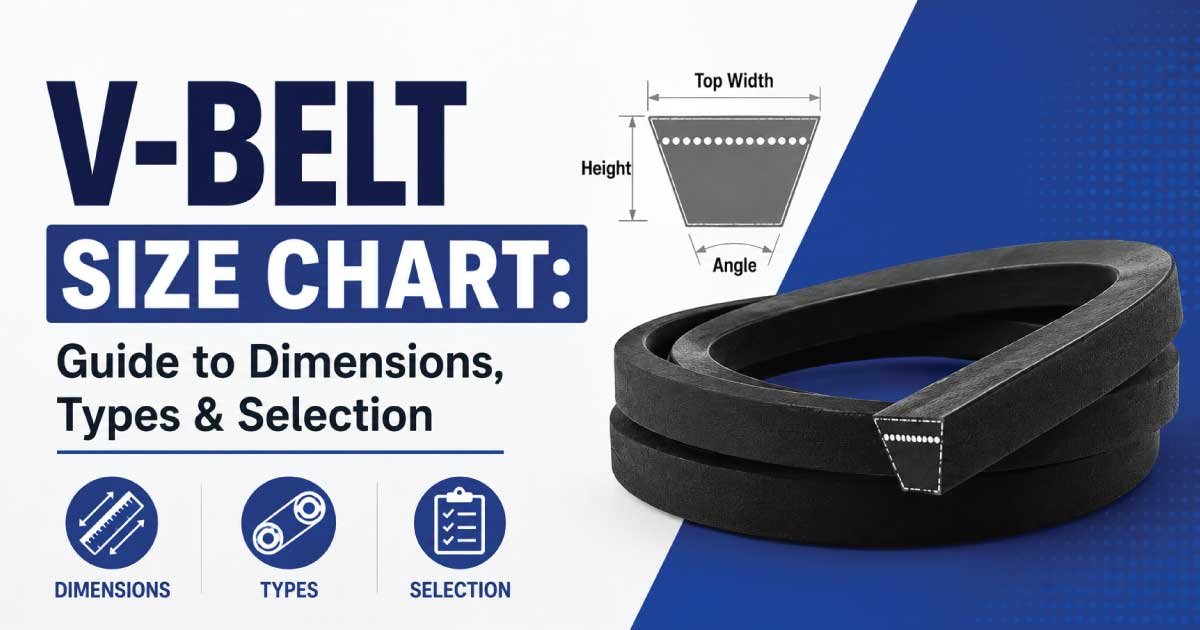
V-belts are among the most commonly used power transmission components in industrial machinery, automotive systems, agricultural equipment, and HVAC applications. Their simple design, affordability, and efficiency make them a preferred choice for transferring power between rotating shafts.
Selecting the correct belt size is essential for maximizing performance, reducing wear, and preventing costly downtime. A V-belt size chart helps users identify the proper belt dimensions based on width, thickness, length, and belt profile.
This comprehensive guide explains V-belt sizes, types, measurements, applications, and how to use a V-belt size chart for accurate belt selection.
What Is a V-Belt?
A V-belt is a flexible rubber belt with a trapezoidal cross-section designed to fit into matching pulley grooves. The V-shaped design creates friction between the belt and pulley, allowing efficient power transmission.
Unlike flat belts, V-belts provide greater grip and reduced slippage, making them ideal for high-load applications.
Common Applications of V-Belts
- Industrial machinery
- Air compressors
- Agricultural equipment
- Automotive engines
- HVAC systems
- Pumps
- Generators
- Conveyor systems
- Machine tools
Why V-Belt Size Matters
Selecting the correct V-belt size is critical for ensuring efficient power transmission and smooth machine operation. The belt must properly match the pulley system to maintain correct tension and grip. If the size is incorrect, it can lead to performance issues, increased maintenance costs, and premature failure of both the belt and connected components.
Using the wrong belt size can cause several problems:
- Reduced power transmission
- Excessive belt wear
- Increased vibration
- Pulley damage
- Belt slipping
- Reduced equipment efficiency
Proper belt sizing ensures smooth operation and longer service life. A correctly fitted V-belt maintains consistent tension, reduces energy loss, minimizes mechanical stress, and improves overall system reliability. It also helps prevent unexpected breakdowns, making machinery safer and more cost-effective to operate over time.
Standard V-Belt Size Chart
The following chart shows common classical V-belt dimensions.
| Belt Section | Top Width | Thickness | Typical Length Range |
|---|---|---|---|
| A | 1/2 inch (13 mm) | 5/16 inch (8 mm) | 20–400 inches |
| B | 21/32 inch (17 mm) | 13/32 inch (11 mm) | 25–500 inches |
| C | 7/8 inch (22 mm) | 17/32 inch (14 mm) | 40–600 inches |
| D | 1-1/4 inch (32 mm) | 3/4 inch (19 mm) | 80–700 inches |
| E | 1-1/2 inch (38 mm) | 7/8 inch (23 mm) | 100–800 inches |
These dimensions represent standard classical V-belts used in industrial power transmission systems.
Classical V-Belt Sections Explained
V-belts are classified into different sections based on their cross-sectional dimensions. Each section is designed to transmit a specific range of power efficiently. Choosing the correct belt section is essential for ensuring proper grip, reducing slippage, and maintaining smooth power transmission in various mechanical and industrial systems.
1. A Section Belt
The A section V-belt is the smallest standard classical belt type. It is designed for light-duty applications where power transmission requirements are low. Its compact size makes it suitable for small machines that operate under moderate loads and require efficient but low-capacity drive systems.
Dimensions:
- Width: 13 mm
- Thickness: 8 mm
Applications:
- Small motors
- Fans
- Pumps
- Light machinery
2. B Section Belt
The B section V-belt is a medium-sized belt designed for moderate power transmission applications. It provides better strength and load-carrying capacity compared to A section belts, making it suitable for industrial and agricultural machinery that operates under higher stress conditions.
Dimensions:
- Width: 17 mm
- Thickness: 11 mm
Applications:
- Compressors
- Industrial drives
- Agricultural equipment
3. C Section Belt
The C section V-belt is designed for heavy-duty applications requiring higher power transmission and durability. Its larger size allows it to handle increased loads and torque, making it suitable for robust industrial machines that operate continuously under demanding conditions.
Dimensions:
- Width: 22 mm
- Thickness: 14 mm
Applications:
- Heavy-duty machinery
- Large pumps
- Industrial equipment
4. D Section Belt
The D section V-belt is used in very heavy-duty applications where high power transmission is required. Its strong construction allows it to handle extreme loads and torque, making it ideal for large-scale industrial and mining operations.
Dimensions:
- Width: 32 mm
- Thickness: 19 mm
Applications:
- Crushers
- Mining equipment
- Heavy industrial drives
5. E Section Belt
The E section V-belt is the largest standard classical belt type. It is designed for extremely high-power transmission systems and heavy industrial operations. Its robust structure ensures maximum strength, stability, and reliability under continuous heavy loads.
Dimensions:
- Width: 38 mm
- Thickness: 23 mm
Applications:
- Large industrial systems
- Heavy-duty conveyors
- High-horsepower drives
Fractional Horsepower (FHP) V-Belt Size Chart
Fractional horsepower (FHP) V-belts are designed for light-duty power transmission in small machines and household equipment. These belts are compact, efficient, and commonly used where low to moderate power transfer is required. Their standardized sizing makes them easy to select and replace in small mechanical systems.
FHP V-Belt Size Chart
| Belt Type | Top Width | Thickness |
|---|---|---|
| 2L | 1/4 inch | 5/32 inch |
| 3L | 3/8 inch | 7/32 inch |
| 4L | 1/2 inch | 5/16 inch |
| 5L | 21/32 inch | 3/8 inch |
Applications
- Household appliances
- Small pumps
- Lawn equipment
- Fans
- Workshop machinery
Narrow V-Belt Size Chart
Narrow V-belts are designed to transmit higher power compared to classical V-belts of similar width. Their improved grip, efficiency, and compact design make them ideal for modern industrial systems where space saving and high performance are important. These belts are commonly used in heavy-duty and high-speed applications.
Narrow V-Belt Size Chart
| Belt Section | Width (mm) | Height (mm) |
|---|---|---|
| SPZ | 10 | 8 |
| SPA | 13 | 10 |
| SPB | 17 | 14 |
| SPC | 22 | 18 |
Advantages
- Higher power transmission
- Reduced space requirements
- Improved efficiency
- Longer service life
Narrow V-belts are widely used in modern industrial systems because they offer better performance in compact drive setups. Their design allows smoother operation, reduced slippage, and improved energy efficiency, making them suitable for compressors, conveyors, machine tools, and other high-performance mechanical equipment.
Understand The V-Belt Numbers
V-belt numbers are standardized codes that describe important details such as belt profile (section) and effective length. These markings help technicians and engineers quickly identify the correct replacement belt without confusion. Proper understanding of these codes ensures accurate selection, correct fitting, and efficient power transmission in mechanical systems.
Example: A45
- A = Belt section
- 45 = Length in inches
The “A” section indicates a classical narrow belt profile used in light to medium-duty applications. The number “45” represents the belt’s approximate effective length in inches, which helps match it with the correct pulley system for proper tension and operation.
Example: B72
- B = Belt profile
- 72 = Belt length
The “B” section is a larger classical V-belt profile designed for higher power transmission than A section belts. The number “72” indicates the belt length in inches, ensuring compatibility with properly spaced pulley arrangements in industrial and agricultural machinery.
Example: SPA 1250
- SPA = Narrow belt profile
- 1250 = Length in millimeters
The SPA designation refers to a narrow V-belt type commonly used in modern industrial systems. The number “1250” indicates the belt’s effective length in millimeters, making it suitable for precise, high-efficiency applications requiring compact drive systems.
Importance of Understanding V-Belt Codes
Understanding V-belt numbering systems helps in quick identification and accurate replacement. It reduces downtime, prevents incorrect installation, and ensures optimal performance of machines. Correct belt selection also improves efficiency, reduces wear, and extends the lifespan of both belts and pulley systems.
How to Measure a V-Belt
Proper measurement of a V-belt is essential when replacing an existing belt. It ensures the new belt fits correctly, maintains proper tension, and delivers efficient power transmission. Accurate measurement also helps prevent common issues such as slipping, vibration, overheating, and premature belt failure in mechanical systems.
1. Measure Belt Width
Use a caliper or precise measuring tool to measure the top width of the belt accurately. This step is important because belt width determines the belt section type. Correct width identification ensures proper engagement with pulley grooves and stable power transfer during operation.
- Use a caliper for accurate measurement
- Measure across the top surface of the belt
- Helps identify correct belt section (A, B, C, etc.)
- Ensures proper pulley groove fit
2. Measure Belt Length
Belt length measurement is necessary to ensure proper installation and correct tension in the drive system. It can be measured using different tools or reference data depending on availability. Accurate length selection prevents slippage, excessive strain, or looseness in the belt system.
- Flexible measuring tape
- Belt measuring tool
- Manufacturer specifications
3. Measure Belt Thickness
Thickness measurement helps verify the correct belt profile and ensures the belt sits properly inside the pulley groove. Proper thickness is important for maintaining grip, reducing vibration, and ensuring smooth power transmission. Incorrect thickness can lead to inefficient operation and faster wear.
- Helps verify correct belt profile
- Ensures proper pulley groove seating
- Maintains grip and stability
- Prevents slipping and uneven wear
4. Check Belt Markings
Most V-belts have identification numbers printed on the outer surface. These markings provide quick and reliable information about belt type, size, and length. Checking these codes helps simplify replacement and reduces the chances of selecting the wrong belt.
- Printed identification codes on belt surface
- Shows belt type and size
- Includes length and profile details
- Simplifies quick replacement process
V-Belt Length Chart Examples
The following examples show common V-belt lengths.
| Belt Number | Approximate Length |
|---|---|
| A30 | 30 inches |
| A40 | 40 inches |
| A50 | 50 inches |
| B60 | 60 inches |
| B72 | 72 inches |
| C90 | 90 inches |
| D120 | 120 inches |
Always verify manufacturer specifications before ordering.
👉 Roller Bearing Size Chart: Full Guide with PDF and Images provides detailed information on roller bearing dimensions, standard sizes, bearing types, and selection guidelines. Whether you’re working with industrial machinery, automotive systems, conveyors, or heavy equipment, this guide helps you identify the correct bearing size and specification. Read the full post to explore sizing charts, view helpful images, download the PDF, and choose the right roller bearing for reliable performance.
Types of V-Belts
Several V-belt designs are available, each engineered for specific mechanical requirements and operating conditions. The selection depends on factors such as load, speed, efficiency, and space limitations. Understanding different V-belt types helps in choosing the right belt for improved performance, durability, and power transmission efficiency.
1. Wrapped V-Belts
Wrapped V-belts are the most common type, featuring a protective fabric cover around the belt body. This outer wrapping enhances strength and protects the internal structure from wear, dust, and contamination. They are widely used in general-purpose applications due to their reliability and affordability.
Advantages:
- Good durability
- Cost-effective
- Reliable performance
Applications:
- General machinery
- Industrial drives
2. Cogged V-Belts
Cogged V-belts are designed with notches or grooves along the inner surface, which improves flexibility and heat dissipation. These belts are more efficient than standard wrapped belts and are ideal for high-speed and compact drive systems where performance and cooling are important.
Advantages:
- Better flexibility
- Reduced heat buildup
- Improved efficiency
Applications:
- High-speed drives
- Compact pulley systems
3. Banded V-Belts
Banded V-belts consist of multiple V-belts joined together with a strong backing layer, forming a single unified unit. This design improves stability and prevents belt flipping or vibration during operation. They are commonly used in heavy-duty applications where consistent load sharing is required.
Advantages:
- Reduced vibration
- Better load distribution
- Improved stability
Applications:
- Agricultural equipment
- Heavy-duty machinery
4. Double V-Belts
Double V-belts have V-shaped grooves on both sides, allowing power transmission from both surfaces. This unique design enables compact and complex drive arrangements where multiple pulleys can be driven efficiently from both sides of the belt.
Advantages:
- Power transmission from both sides
- Compact drive arrangements
Applications:
- Complex industrial systems
- Textile machinery
Common Materials Used in V-Belts
V-belts are manufactured using a combination of materials designed to provide strength, flexibility, and durability. Each material plays a specific role in improving performance, reducing wear, and ensuring reliable power transmission in different operating conditions and industrial applications.
1. Rubber
Rubber is the primary material used in most V-belts, typically in the form of synthetic rubber compounds. It forms the main body of the belt and provides the flexibility needed for smooth operation around pulleys. Rubber also helps absorb shocks and vibrations during power transmission.
Benefits:
- Flexibility
- Shock absorption
- Durability
2. Polyester Cords
Polyester cords are used as reinforcement materials inside V-belts. They are embedded within the rubber structure to provide strength and stability. These cords help maintain belt shape under tension and prevent excessive stretching during continuous operation.
Benefits:
- High tensile strength
- Reduced stretching
- Improved belt stability
3. Aramid Fiber
Aramid fiber is used in premium-quality V-belts for high-performance applications. It offers exceptional strength and resistance to extreme operating conditions. These fibers are ideal for demanding environments where high load capacity and long service life are required.
Benefits:
- Exceptional strength
- Long service life
- High-temperature resistance
👉 What Is Cotter Pin? Sizes, Parts, Types and How to Choose is a complete guide to understanding cotter pin dimensions, components, common types, and selection methods. Whether you’re working on automotive repairs, machinery assembly, agricultural equipment, or industrial maintenance, this guide helps you choose the right cotter pin for secure fastening. Read the full post to learn about cotter pin sizes, applications, and best practices for reliable and safe installations.
How to Select the Correct V-Belt Size
Selecting the correct V-belt size is essential for efficient power transmission, reduced slippage, and long service life of the drive system. An improperly selected belt can lead to energy loss, excessive wear, vibration, and frequent breakdowns. Proper selection ensures smooth operation, improved efficiency, and reliable performance under different working conditions.
1. Horsepower Requirements
The first factor in selecting a V-belt is the amount of horsepower that needs to be transmitted from the driving pulley to the driven pulley. The belt must be strong enough to handle the required load without slipping or stretching excessively. If the belt is undersized, it may overheat, wear quickly, or fail under load.
2. Pulley Diameter
Pulley diameter plays an important role in belt performance because it affects bending stress and flexibility. Smaller pulleys require belts that can bend easily without cracking or losing strength. In such cases, specialized belt types such as narrow or flexible V-belts are often preferred to maintain efficiency and durability.
3. Center Distance
The center distance refers to the space between the two pulley shafts. This measurement directly influences the required belt length and tensioning system. If the belt is too short or too long for the given center distance, it can lead to poor tension, slippage, or excessive strain on the drive system components.
4. Operating Speed
Operating speed is a critical factor in V-belt selection because high-speed applications require belts that can maintain stability and reduce vibration. In such cases, cogged or narrow V-belts are commonly used due to their improved flexibility and heat dissipation. Proper speed matching ensures smoother and more efficient power transmission.
5. Environmental Conditions
Environmental conditions significantly impact belt performance and durability. Factors such as heat, dust, oil exposure, and moisture can weaken belt material over time. In harsh environments, selecting specially designed belts with enhanced resistance to temperature, abrasion, and contamination helps ensure longer service life and reliable operation.
Key environmental factors include:
- Heat
- Dust
- Oil exposure
- Moisture
In demanding working conditions, using specialized V-belts is essential to maintain efficiency, reduce maintenance needs, and prevent unexpected failures.
Common Causes of V-Belt Failure
Understanding the common causes of V-belt failure is essential for improving belt performance and extending service life. Most failures occur due to incorrect installation, poor maintenance, or harsh operating conditions. Identifying these issues early helps prevent breakdowns, reduce downtime, and improve overall machine efficiency.
1. Improper Tension
Improper belt tension is one of the most common reasons for premature V-belt failure. Excessive tension puts extra stress on bearings and increases internal belt wear, while insufficient tension leads to slipping and reduced power transmission efficiency. Proper tension ensures smooth operation and balanced load distribution.
Excessive tension:
- Damages bearings
- Increases belt wear
Insufficient tension:
- Causes slipping
- Reduces efficiency
2. Misaligned Pulleys
Pulley misalignment causes uneven stress distribution across the belt surface. This leads to irregular wear patterns, vibration, and increased friction during operation. Over time, misalignment can significantly reduce belt life and also damage related components such as shafts and bearings.
3. Overloading
When a V-belt operates beyond its rated load capacity, it experiences excessive stress and strain. Continuous overloading causes rapid wear, overheating, and reduced service life. Proper load matching is essential to ensure the belt operates within safe working limits.
4. Contamination
Exposure to contaminants such as oil, grease, dust, or chemicals can weaken belt material. These substances reduce friction, cause slippage, and degrade rubber compounds over time. Keeping the belt and surrounding environment clean helps maintain performance and durability.
5. Heat Exposure
High temperatures accelerate the aging process of V-belts, leading to hardening, cracking, and loss of flexibility. Continuous heat exposure reduces overall belt efficiency and lifespan. Proper ventilation and correct belt selection help minimize heat-related damage.
👉 Chisel Sizes and Their Applications for Beginners is an easy-to-follow guide that explains common chisel sizes, their uses, and how to select the right tool for different tasks. Whether you’re working in woodworking, metalworking, masonry, or DIY projects, understanding chisel sizes can improve accuracy and efficiency. Read the full post to learn which chisel size works best for your application and achieve better results with every cut.
V-Belt Maintenance Tips
Proper maintenance of V-belts is essential for ensuring smooth operation, improving efficiency, and reducing unexpected breakdowns. Regular care helps extend belt life, minimize repair costs, and maintain consistent power transmission in mechanical systems. Good maintenance practices also protect related components such as pulleys, shafts, and bearings.
1. Inspect Regularly
Regular inspection helps identify early signs of belt damage before failure occurs. Checking the belt surface allows you to detect common issues such as cracks, fraying, glazing, or uneven wear. Early detection helps prevent sudden breakdowns and ensures reliable machine performance.
- Cracks
- Fraying
- Glazing
- Uneven wear
2. Check Belt Tension
Proper belt tension is critical for efficient power transmission and long service life. Always follow the manufacturer’s recommended tension levels. Incorrect tension can lead to slipping, excessive wear, or added stress on bearings and other drivetrain components.
3. Inspect Pulley Alignment
Correct pulley alignment ensures that the belt runs smoothly and evenly across the pulley surfaces. Misalignment can cause vibration, uneven wear, and reduced efficiency. Proper alignment significantly extends belt life and improves overall system stability.
4. Replace Matched Sets Together
When multiple V-belts are used in a system, they should always be replaced as a complete set. Mixing old and new belts can cause uneven load distribution, leading to reduced performance and premature failure of the entire drive system.
5. Keep Components Clean
Keeping belts and surrounding components clean is essential for preventing damage. Dirt, oil, and debris can reduce friction, cause slipping, and degrade belt material over time. Regular cleaning helps maintain performance and extends service life.
Advantages of V-Belts
V-belts are one of the most commonly used power transmission solutions in mechanical systems due to their simplicity, reliability, and cost efficiency. They are designed to transmit power smoothly between pulleys while reducing vibration and mechanical stress. Their versatility makes them suitable for industrial machinery, automotive systems, and agricultural equipment where consistent performance is required.
1. High Efficiency
V-belts provide highly efficient power transmission when properly installed and tensioned. Their wedge-shaped profile increases frictional grip between the belt and pulley, minimizing slippage and energy loss. This improved contact allows for smoother operation and better performance in both light-duty and heavy-duty mechanical systems.
2. Cost-Effective
One of the key advantages of V-belts is their affordability compared to alternative drive systems such as chains or gear mechanisms. They have a low initial purchase cost and require minimal supporting components, making them a practical and economical choice for a wide range of applications in various industries.
3. Quiet Operation
V-belts operate with significantly less noise because they do not rely on metal-to-metal contact during power transmission. This quiet performance makes them ideal for indoor machinery, office equipment, and environments where noise reduction is important. Smooth engagement between belt and pulley further contributes to reduced vibration and sound levels.
4. Easy Maintenance
Maintenance of V-belts is simple and does not require complex tools or procedures. Regular inspection, tension adjustment, and timely replacement are usually sufficient to maintain optimal performance. This ease of maintenance helps reduce downtime, lower labor costs, and improve overall operational efficiency in mechanical systems.
5. Shock Absorption
V-belts have a natural ability to absorb sudden shock loads and dampen vibrations during operation. This protective feature helps reduce stress on connected components such as motors, pulleys, and bearings. As a result, the overall system experiences smoother operation, reduced wear, and increased service life of mechanical parts.
Conclusion
A V-belt size chart is an essential tool for selecting the correct belt for industrial, automotive, agricultural, and HVAC applications. Understanding belt sections, widths, thicknesses, and lengths helps ensure proper fit and reliable power transmission. Whether you are replacing an existing belt or designing a new drive system, using the correct V-belt size improves efficiency, reduces maintenance costs, and extends equipment life. By following the sizing guidelines and maintenance practices outlined in this guide, you can maximize the performance and longevity of your V-belt drive system.
👉 Retaining Ring Sizes Explained with Uses (Complete Guide) provides a clear overview of retaining ring dimensions, sizing methods, common types, and practical applications. Whether you are working with shafts, housings, automotive components, or industrial machinery, this guide helps you understand how retaining rings secure parts in place. Read the full post to learn how to identify the correct retaining ring size and ensure reliable assembly performance.
Frequently Asked Questions
1. What does the “A” or “B” mean on a V-belt?
The letters “A” and “B” on a V-belt indicate the belt’s cross-sectional profile or size classification. Each letter represents a specific width and thickness standard. This helps ensure the belt fits correctly into matching pulley grooves for efficient power transmission and prevents slippage, misalignment, or premature wear during operation.
2. How do I determine my V-belt size?
To determine the correct V-belt size, you should measure the belt’s width, thickness, and total length. These measurements are then compared with a standard V-belt size chart to find the correct replacement. Accurate sizing is essential to ensure proper tension, smooth operation, and efficient power transmission without slipping.
3. Can I replace a classical V-belt with a narrow V-belt?
In most cases, a classical V-belt cannot be directly replaced with a narrow V-belt. This is because pulley groove dimensions must match the belt profile exactly. Using the wrong belt type can cause improper seating, slippage, reduced efficiency, and increased wear on both the belt and pulley system.
4. How long do V-belts last?
The lifespan of a V-belt depends on factors such as operating conditions, load levels, alignment, and maintenance practices. Under proper installation and regular maintenance, V-belts can last several years. However, harsh environments, poor tensioning, or overloading can significantly reduce their service life.
5. What causes a V-belt to squeal?
V-belt squealing is usually caused by low tension, pulley misalignment, worn belt surfaces, or overloading. When the belt slips on the pulley, it produces a high-pitched noise. Proper tension adjustment, alignment correction, and timely belt replacement help eliminate squealing and ensure smooth, quiet operation.

Engineer Hassan is a Mechanical Engineer with 16+ years of hands-on experience in mechanical hardware, fasteners, and workshop tools. He focuses on size selection, thread identification, and measurement, helping users choose the correct components with accuracy and safety.