
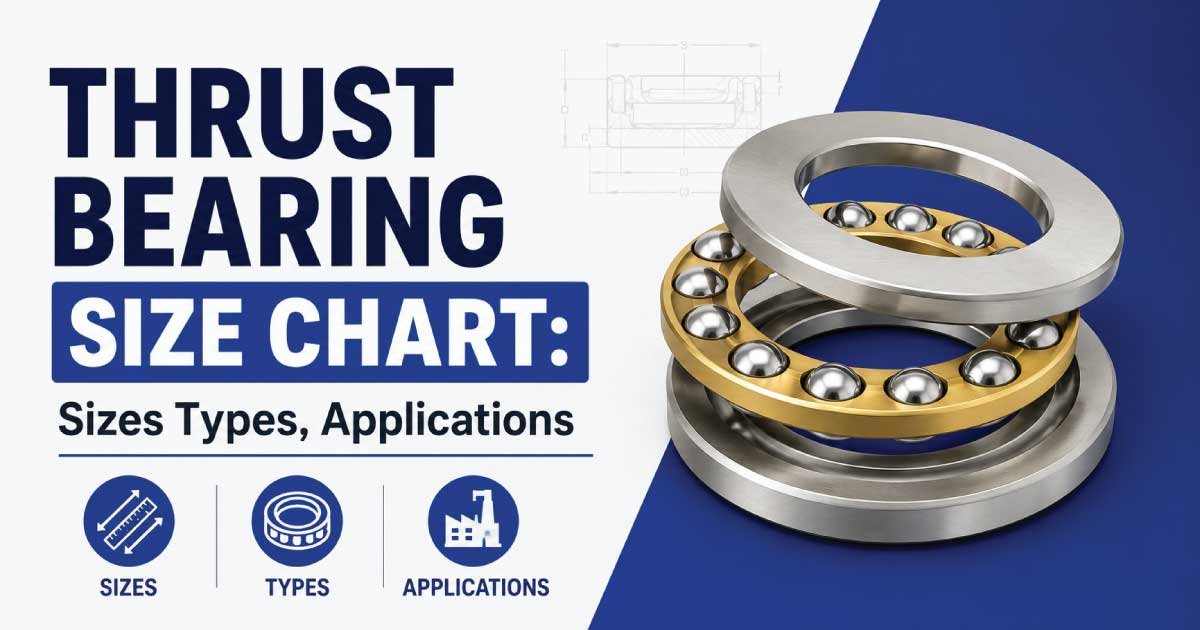
Thrust bearings are specialized bearings designed to support axial loads, also known as thrust loads. Unlike radial bearings that handle loads perpendicular to the shaft, thrust bearings are engineered to manage forces acting parallel to the shaft axis. These bearings are widely used in automotive systems, industrial machinery, pumps, gearboxes, machine tools, and heavy equipment.
Selecting the correct thrust bearing size is essential for ensuring reliable operation, reducing wear, increasing efficiency, and extending equipment life. This guide explains thrust bearing sizes, dimensions, types, applications, and selection factors, along with a comprehensive thrust bearing size chart.
What Is a Thrust Bearing?
A thrust bearing is a bearing designed primarily to support axial loads while allowing rotational movement between machine components. It consists of bearing washers and rolling elements such as balls or rollers that reduce friction during operation.
These bearings are commonly used where shafts experience significant pushing or pulling forces along their axis.
Common Applications
- Automotive transmissions
- Clutches
- Gearboxes
- Crane equipment
- Industrial pumps
- Marine propulsion systems
- Machine tools
- Heavy machinery
Standard Thrust Bearing Size Chart
The following table provides common dimensions for standard single-direction thrust ball bearings.
| Bearing Number | Bore (d) mm | Outer Diameter (D) mm | Width (T) mm |
|---|---|---|---|
| 51100 | 10 | 24 | 9 |
| 51101 | 12 | 26 | 9 |
| 51102 | 15 | 28 | 9 |
| 51103 | 17 | 30 | 9 |
| 51104 | 20 | 35 | 10 |
| 51105 | 25 | 42 | 11 |
| 51106 | 30 | 47 | 11 |
| 51107 | 35 | 52 | 12 |
| 51108 | 40 | 60 | 13 |
| 51109 | 45 | 65 | 14 |
| 51110 | 50 | 70 | 14 |
| 51111 | 55 | 78 | 16 |
| 51112 | 60 | 85 | 17 |
| 51113 | 65 | 90 | 18 |
| 51114 | 70 | 95 | 18 |
| 51115 | 75 | 100 | 19 |
| 51116 | 80 | 105 | 19 |
| 51117 | 85 | 110 | 19 |
| 51118 | 90 | 120 | 22 |
| 51120 | 100 | 135 | 25 |
This chart covers some of the most commonly used thrust ball bearing sizes in industrial applications.
Understand The Thrust Bearing Dimensions
Thrust bearing dimensions are critical specifications that determine whether a bearing will fit correctly and perform efficiently in a machine. These measurements affect installation, load capacity, operating stability, and service life. Understanding the key dimensions of a thrust bearing helps engineers, technicians, and maintenance professionals select the right bearing for specific applications and avoid costly equipment failures.
1. Bore Diameter (d)
The bore diameter is the internal opening of the thrust bearing that fits directly onto the shaft. Accurate matching between the shaft diameter and the bearing bore is essential for secure installation, efficient load transmission, and smooth operation. An incorrect bore size can lead to excessive vibration, shaft damage, misalignment, and reduced bearing service life.
2. Outer Diameter (D)
The outer diameter represents the external size of the bearing that fits within the housing or mounting surface. Selecting the correct outer diameter is important for maintaining proper bearing alignment, stability, and support during operation. A well-fitted housing helps prevent unwanted movement, distributes loads evenly, and contributes to the overall reliability of the machine.
3. Width (T)
The width, sometimes referred to as the thickness of the bearing assembly, is the distance between the two outer faces of the bearing. This dimension influences the bearing’s load-carrying capacity and structural strength. In many applications, wider thrust bearings can handle greater axial loads and provide improved durability under demanding operating conditions.
Types of Thrust Bearings
Choosing the correct type of thrust bearing is just as important as selecting the right size. Different thrust bearing designs are engineered to handle varying load capacities, speeds, operating conditions, and alignment requirements. Understanding the characteristics of each type helps ensure optimal performance, longer service life, reduced maintenance costs, and improved reliability in mechanical systems.
1. Thrust Ball Bearings
Thrust ball bearings use hardened steel balls as rolling elements positioned between bearing washers. They are specifically designed to handle axial loads while operating at relatively high rotational speeds. Due to their simple construction and low friction characteristics, they are among the most commonly used thrust bearings in light- to medium-duty applications where load requirements are moderate and efficiency is important.
Advantages
- Low friction
- High rotational speed capability
- Cost-effective
- Simple design
Applications
- Automotive transmissions
- Light industrial equipment
- Machine tools
2. Cylindrical Roller Thrust Bearings
Cylindrical roller thrust bearings utilize cylindrical rollers instead of balls, allowing them to distribute loads across a larger contact area. This design significantly increases their axial load-carrying capacity and rigidity. They are well suited for heavy-duty industrial applications where high thrust loads are present and bearing stability is critical for maintaining accurate machine performance.
Advantages
- High axial load capacity
- Increased rigidity
- Suitable for heavy-duty machinery
Applications
- Gearboxes
- Construction equipment
- Press machines
3. Needle Roller Thrust Bearings
Needle roller thrust bearings incorporate long, slender rollers that provide exceptional load capacity while occupying minimal installation space. Their compact design makes them ideal for applications where space is limited but high axial load support is still required. These bearings are widely used in automotive and machinery systems that demand efficient performance within confined assemblies.
Advantages
- Small cross-section
- High load capacity
- Space-saving design
Applications
- Automotive systems
- Small machinery
- Transmission assemblies
4. Spherical Roller Thrust Bearings
Spherical roller thrust bearings are designed to accommodate very high axial loads while also compensating for shaft misalignment. Their self-aligning capability allows them to operate reliably even when mounting inaccuracies or shaft deflections occur. These bearings are particularly valuable in harsh operating environments where heavy loads, vibration, and shock forces are common.
Advantages
- Extremely high load capacity
- Self-aligning capability
- Durable under shock loads
Applications
- Mining equipment
- Heavy industrial machinery
- Marine applications
5. Tapered Roller Thrust Bearings
Tapered roller thrust bearings feature tapered rolling elements that efficiently handle heavy axial loads while maintaining excellent durability. The roller geometry helps distribute forces evenly, reducing stress concentrations and extending bearing life. These bearings are commonly selected for demanding applications that require reliable performance under continuous heavy loads and challenging operating conditions.
Advantages
- High thrust load capability
- Long service life
- Excellent durability
Applications
- Crane equipment
- Oilfield machinery
- Heavy-duty gear systems
Thrust Bearing Series Explained
Manufacturers classify thrust bearings into different series based on their dimensions, load-carrying capacity, and intended applications. The bearing series helps engineers and maintenance professionals quickly identify a bearing’s size range and performance characteristics. As the series number increases, bearings generally offer greater load capacity and are designed for more demanding operating conditions.
511 Series
The 511 series consists of light-duty thrust ball bearings designed for moderate axial loads and relatively high operating speeds. These bearings feature a compact design, making them suitable for applications where space is limited and load requirements are not excessively demanding. They are commonly found in light machinery, automotive components, and general industrial equipment.
Examples:
- 51104
- 51108
- 51112
- 51120
512 Series
The 512 series provides larger dimensions and higher load-carrying capacity compared to the 511 series. These bearings are engineered to handle increased axial forces while maintaining smooth rotational performance. Their enhanced strength makes them suitable for medium-duty industrial applications where greater durability and reliability are required over extended operating periods.
Examples:
- 51205
- 51210
- 51220
513 Series
The 513 series is specifically designed for heavier thrust loads and more demanding operating environments. These bearings feature larger rolling elements and stronger construction, enabling them to withstand substantial axial forces. They are frequently used in industrial machinery, gear systems, and equipment where high load capacity and dependable performance are essential.
Examples:
- 51308
- 51310
- 51315
514 Series
The 514 series represents heavy-duty thrust bearings intended for the most challenging industrial applications. These bearings are built to support very high axial loads while maintaining durability under continuous operation. Their robust design makes them ideal for heavy machinery, mining equipment, large gearboxes, and other industrial systems exposed to severe working conditions.
Examples:
- 51410
- 51415
- 51420
👉 Standard Needle Bearing Size Chart with PDF is a comprehensive guide covering needle bearing dimensions, standard sizes, types, and selection guidelines. Whether you’re working with automotive components, gearboxes, industrial machinery, or precision equipment, this resource helps you identify the correct bearing size for optimal performance. Read the full post to access detailed sizing information, understand bearing specifications, and download the PDF for quick future reference.
How to Select the Correct Thrust Bearing Size
Selecting the correct thrust bearing size is essential for ensuring reliable machine performance, long service life, and efficient load handling. An improperly sized bearing can lead to excessive wear, overheating, vibration, and premature failure. By evaluating operating conditions, load requirements, and installation constraints, you can choose a thrust bearing that delivers optimal performance for your application.
1. Axial Load
The first step in bearing selection is determining the maximum axial or thrust load that the bearing must support. The selected bearing should have a load rating that exceeds the expected operating load to ensure safe and reliable performance. Proper load analysis helps prevent bearing deformation, excessive wear, and unexpected equipment breakdowns.
2. Shaft Diameter
The bearing bore diameter must match the shaft diameter precisely for proper installation and operation. A correct fit ensures efficient load transfer and prevents movement between the shaft and bearing. Using an incorrect bore size can cause vibration, misalignment, reduced accuracy, and accelerated component wear over time.
3. Available Space
Before selecting a thrust bearing, carefully measure the available installation space and housing dimensions. The bearing’s outer diameter and width must fit within the machine design without causing interference. Space limitations often influence the type and size of bearing that can be used while maintaining proper performance.
4. Operating Speed
Operating speed plays an important role in bearing selection because different bearing designs perform differently at various speeds. Thrust ball bearings are generally preferred for higher rotational speeds due to their lower friction. Applications involving heavy axial loads at lower speeds may benefit more from thrust roller bearings.
5. Alignment Conditions
Shaft and housing alignment should be evaluated before choosing a bearing. If misalignment is likely to occur during operation, standard thrust bearings may experience uneven loading and premature wear. Spherical roller thrust bearings are designed to accommodate certain levels of misalignment, making them suitable for demanding industrial environments.
6. Environmental Conditions
Environmental factors can significantly affect bearing performance and longevity. Conditions such as high temperatures, moisture, dust, dirt, and chemical exposure may accelerate wear or corrosion. In harsh operating environments, selecting bearings with specialized materials, protective coatings, seals, or lubrication systems can greatly improve reliability and service life.
Key environmental factors to consider:
- Temperature
- Moisture
- Dust
- Chemical exposure
Harsh environments often require specialized materials, advanced sealing solutions, and enhanced corrosion protection to ensure consistent bearing performance.
Metric vs Inch Thrust Bearings
Thrust bearings are manufactured in both metric and inch-based dimensions to meet different international engineering standards and equipment requirements. Selecting the correct measurement system is essential because even small dimensional differences can affect bearing fit, performance, and service life. Understanding whether your equipment uses metric or inch bearings helps ensure proper installation and reliable operation.
1. Metric Bearings
Metric thrust bearings are designed according to international metric standards and are widely used throughout Europe, Asia, and many other regions. These bearings are specified using millimeters for bore diameter, outside diameter, and overall dimensions. They are commonly found in modern industrial machinery, automotive systems, and equipment manufactured to global engineering standards.
Examples:
- 25 mm bore
- 50 mm bore
- 75 mm bore
2. Inch Bearings
Inch-sized thrust bearings are manufactured according to imperial measurement standards and are frequently used in North American machinery and equipment. Their dimensions are specified in inches rather than millimeters. These bearings are commonly found in older machinery, agricultural equipment, industrial systems, and applications designed around U.S. engineering specifications.
Examples:
- 1 inch bore
- 1.5 inch bore
- 2 inch bore
Always verify dimensions before replacement or installation. Even bearings that appear similar may have slight differences between metric and inch standards. Installing the wrong size can result in improper fit, reduced performance, premature wear, increased vibration, and potential equipment failure. Accurate measurement and specification matching are essential for achieving optimal bearing performance and longevity.
👉 Gear Size Chart: Complete Guide 2026 with PDF provides detailed information on gear dimensions, tooth counts, pitch, module sizes, and gear selection principles. Whether you’re working with industrial machinery, automotive systems, or mechanical design projects, this guide helps you understand standard gear sizes and specifications. Read the full post to learn how to choose the right gear, improve system performance, and download the PDF for convenient reference.
Materials Used in Thrust Bearings
Material selection plays a critical role in determining the performance, durability, and service life of a thrust bearing. Different materials offer unique advantages in terms of strength, wear resistance, corrosion protection, operating speed, and temperature tolerance. Choosing the right material ensures the bearing can withstand its operating environment while delivering reliable and efficient performance over time.
1. Chrome Steel
Chrome steel is the most widely used material for thrust bearings due to its excellent balance of strength, hardness, and affordability. It provides outstanding resistance to wear and fatigue, making it suitable for a wide range of industrial and automotive applications. Most standard thrust bearings are manufactured using high-quality chrome steel to ensure dependable performance under normal operating conditions.
Benefits:
- High hardness
- Excellent wear resistance
- Cost-effective
2. Stainless Steel
Stainless steel thrust bearings are specifically designed for environments where moisture, chemicals, or corrosive substances are present. Their superior corrosion resistance helps prevent rust and material degradation, making them ideal for applications requiring cleanliness and long-term reliability. These bearings are commonly used in food processing, medical equipment, marine systems, and chemical industries.
Benefits:
- Rust resistance
- Long service life
- Hygienic applications
3. Ceramic Bearings
Ceramic thrust bearings are used in high-speed and specialized applications where traditional steel bearings may not provide the required performance. Ceramic materials are significantly lighter than steel and offer exceptional resistance to corrosion and heat. Their low friction characteristics contribute to improved efficiency, reduced wear, and longer operating life in demanding environments.
Benefits:
- Lightweight
- Corrosion-resistant
- Reduced friction
4. Brass and Bronze Components
Brass and bronze are commonly used for bearing cages and separator components rather than the rolling elements themselves. These materials provide excellent strength, durability, and resistance to wear under demanding operating conditions. Their ability to withstand elevated temperatures while maintaining smooth operation makes them a preferred choice for many industrial bearing designs.
Benefits:
- Good durability
- Smooth operation
- Heat resistance
Selecting the appropriate bearing material depends on factors such as load requirements, operating speed, temperature, exposure to moisture or chemicals, and maintenance expectations. Matching the material to the application helps maximize bearing efficiency, minimize downtime, and extend the overall lifespan of the equipment.
Common Causes of Thrust Bearing Failure
Even when a thrust bearing is correctly sized and selected, failure can still occur if operating conditions are unfavorable or maintenance practices are inadequate. Understanding the most common causes of bearing failure helps prevent costly downtime, improves equipment reliability, and extends bearing service life. Regular inspection, proper lubrication, and correct installation are key factors in avoiding premature damage.
1. Overloading
Overloading occurs when the axial force applied to the bearing exceeds its rated load capacity. Excessive loads place high stress on the rolling elements and raceways, leading to surface fatigue, deformation, and cracking. Continuous overloading can significantly reduce bearing life and may result in sudden bearing failure during operation.
2. Improper Lubrication
Proper lubrication is essential for minimizing friction between moving components and reducing heat generation. Insufficient, contaminated, or incorrect lubricant can cause metal-to-metal contact, accelerating wear and increasing operating temperatures. Over time, poor lubrication conditions can lead to scoring, surface damage, and complete bearing breakdown.
3. Misalignment
Misalignment occurs when the shaft and bearing are not positioned correctly relative to each other. This condition creates uneven load distribution across the bearing surfaces, causing localized stress and accelerated wear. Persistent misalignment can result in excessive vibration, increased operating temperatures, and premature bearing failure.
4. Contamination
Contaminants such as dust, dirt, metal particles, and moisture can enter the bearing assembly and damage critical components. These foreign materials can scratch raceways, degrade lubrication quality, and promote corrosion. Effective sealing systems and regular maintenance are essential for protecting bearings from harmful environmental contaminants.
5. Incorrect Installation
Improper installation is one of the most common causes of early bearing failure. Using incorrect mounting techniques, applying excessive force during installation, or failing to maintain proper alignment can damage bearing components before the machine even begins operation. Following manufacturer guidelines and using appropriate installation tools helps ensure reliable performance and maximum bearing life.
👉 Stud Bolt Size Chart: Complete Beginner’s Guide covers standard stud bolt dimensions, thread sizes, length calculations, materials, and common applications. Whether you’re working with flanges, pipelines, pressure vessels, or industrial equipment, this guide helps you understand stud bolt sizing and selection. Read the full post to learn how to choose the correct stud bolt, ensure proper fastening, and improve assembly reliability.
Benefits of Using Properly Sized Thrust Bearings
Selecting the correct thrust bearing size is essential for achieving optimal equipment performance and reliability. A properly sized bearing distributes loads efficiently, minimizes stress on components, and helps prevent premature wear or failure. Using the right bearing size not only extends the lifespan of machinery but also improves operational efficiency and reduces overall maintenance expenses.
Key Benefits
- Improved equipment reliability
- Reduced friction
- Longer service life
- Lower maintenance costs
- Increased load-carrying capacity
- Better operating efficiency
- Reduced downtime
When a thrust bearing is correctly matched to the application’s load, speed, and operating conditions, it performs more effectively and consistently. Proper sizing helps maintain smooth shaft rotation, reduces vibration, and prevents excessive heat generation. This leads to fewer unexpected breakdowns, improved productivity, and lower repair costs. In industrial environments where equipment uptime is critical, selecting the correct thrust bearing size can significantly enhance overall system performance and operational profitability.
Maintenance Tips for Thrust Bearings
Proper maintenance is essential for achieving maximum performance, reliability, and service life from thrust bearings. Regular inspections and preventive maintenance practices help identify potential problems before they become serious failures. By maintaining proper lubrication, cleanliness, and operating conditions, businesses can reduce downtime, lower repair costs, and improve overall equipment efficiency.
1. Inspect Periodically
Routine inspections help detect early signs of bearing wear and damage before they lead to costly failures. Maintenance personnel should regularly examine the bearing and surrounding components for unusual operating conditions. Monitoring performance trends allows issues to be addressed quickly and helps extend bearing lifespan.
Check for:
- Wear
- Noise
- Vibration
- Temperature increases
2. Maintain Proper Lubrication
Lubrication plays a critical role in reducing friction, minimizing wear, and dissipating heat generated during operation. Always use the lubricant type and quantity recommended by the bearing manufacturer. Regularly inspecting lubricant condition and replenishing or replacing it when necessary helps ensure smooth operation and prevents premature bearing failure.
3. Keep Bearings Clean
Cleanliness is vital for maintaining bearing performance and reliability. Dust, dirt, moisture, and other contaminants can damage rolling elements, raceways, and lubrication systems. Using effective seals, maintaining clean work environments, and following proper handling procedures can significantly reduce contamination-related bearing problems.
4. Monitor Operating Conditions
Operating conditions should be monitored continuously to ensure the bearing remains within its designed performance limits. Excessive loads, high speeds, extreme temperatures, or unexpected vibrations can accelerate wear and reduce service life. Tracking these factors helps identify issues early and supports more effective maintenance planning.
5. Replace Damaged Bearings Promptly
When signs of damage, excessive wear, or performance degradation are detected, the bearing should be replaced as soon as possible. Continuing to operate with a damaged bearing can cause additional damage to shafts, housings, and other machine components. Timely replacement reduces repair costs and helps prevent unexpected equipment downtime.
Conclusion
Understanding the thrust bearing size chart is essential for selecting the right bearing for any application. The correct bore diameter, outer diameter, width, and bearing type directly affect machine performance, reliability, and service life. Whether you are working with automotive transmissions, industrial gearboxes, pumps, or heavy machinery, choosing the proper thrust bearing ensures efficient operation and minimizes maintenance costs. By using the size chart and selection guidelines in this guide, you can confidently choose the best thrust bearing for your equipment.
👉 Flange Size Chart: Complete Flange Size Guide provides detailed information on flange dimensions, pressure classes, bolt patterns, and sizing standards used in piping systems. Whether you’re working with industrial pipelines, water systems, oil and gas projects, or mechanical installations, this guide helps you select the correct flange size. Read the full post to understand flange specifications, ensure proper connections, and improve system reliability.
Frequently Asked Questions
1. What is the purpose of a thrust bearing?
A thrust bearing is designed to support axial loads, which are forces acting along the axis of a shaft. It helps maintain smooth rotational movement between machine components while reducing friction. These bearings are commonly used in automotive, industrial, and mechanical systems where controlled axial load support and stability are required.
2. Can thrust bearings handle radial loads?
Most thrust bearings are specifically engineered to handle axial loads and are not suitable for significant radial forces. Using them under heavy radial load conditions can lead to rapid wear and failure. However, some specially designed bearings can manage combined loads, but they must be selected according to application requirements.
3. How do I measure a thrust bearing?
To measure a thrust bearing, you need to determine three key dimensions: bore diameter, outer diameter, and overall width. These measurements are taken using precise tools such as a vernier caliper or micrometer. Accurate measurement ensures proper fit, correct installation, and reliable performance within the mechanical system.
4. What is the most common thrust bearing type?
Thrust ball bearings are the most commonly used type due to their simple design, cost-effectiveness, and ability to operate at high speeds. They are widely used in applications such as automotive transmissions, machine tools, and household equipment where moderate axial loads and smooth rotation are required.
5. How long do thrust bearings last?
The lifespan of a thrust bearing depends on several factors, including load conditions, operating speed, lubrication quality, installation accuracy, and maintenance practices. When properly selected and maintained, thrust bearings can provide long-lasting and reliable service for many years, ensuring efficient performance in industrial and mechanical applications.

Engineer Hassan is a Mechanical Engineer with 16+ years of hands-on experience in mechanical hardware, fasteners, and workshop tools. He focuses on size selection, thread identification, and measurement, helping users choose the correct components with accuracy and safety.