
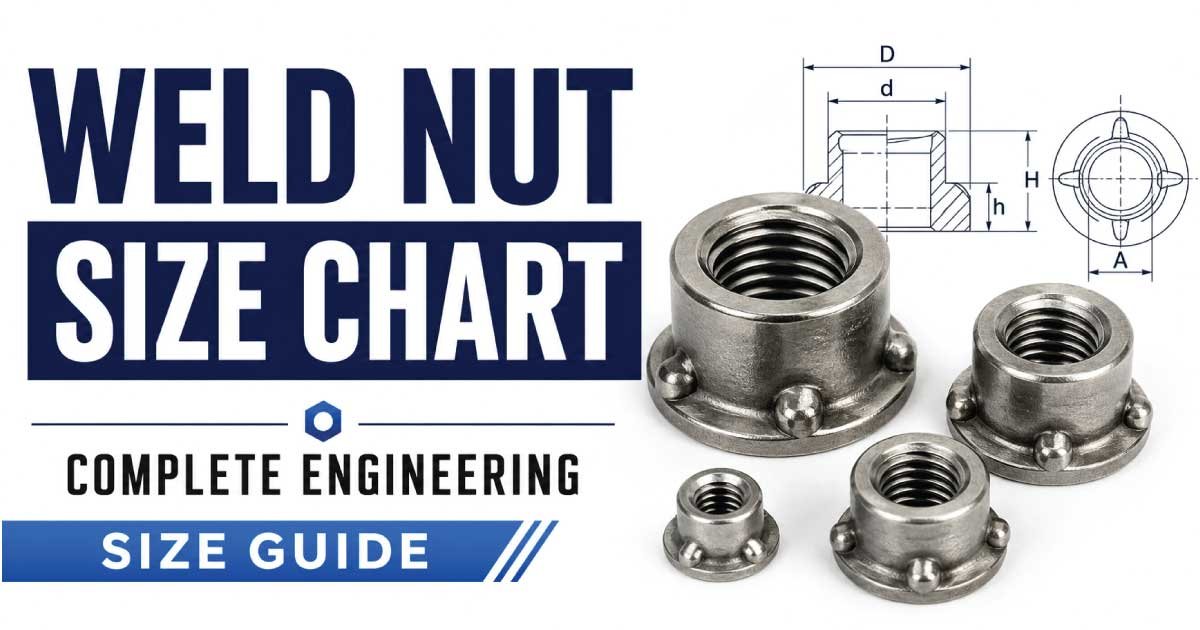
Weld nuts are specialized fasteners designed to be permanently welded onto metal surfaces, providing strong, reusable internal threads for bolts and machine screws.
They are widely used in automotive manufacturing, heavy machinery, structural fabrication, sheet metal assemblies, and industrial equipment where conventional nuts cannot be easily accessed after assembly.
Selecting the correct weld nut size ensures secure fastening, proper load distribution, and long-term reliability. This complete guide covers weld nut sizes, standard charts, dimensions, materials, measurement methods, and selection tips.
What Is a Weld Nut?
A weld nut is a threaded fastener manufactured with projections, a flange, or a flat base that allows it to be welded directly onto metal components. Once welded, it creates a permanent threaded attachment point for bolts. Weld nuts eliminate the need to hold a standard nut during assembly, making them ideal for enclosed structures and automated manufacturing processes.
Primary Functions
- Provides permanent threads
- Simplifies assembly
- Eliminates loose nuts
- Supports high-strength joints
- Improves production efficiency
- Allows repeated bolt installation
Common Types of Weld Nuts
Several weld nut designs are available to accommodate different manufacturing methods, load requirements, and material thicknesses. Understanding these types helps ensure the proper fastener is selected for each application.
1. Projection Weld Nut
Projection weld nuts feature small raised projections on the base that concentrate welding current, creating strong and consistent welds. They are the most commonly used weld nuts in automotive and industrial production.
Advantages
- Strong weld quality
- Fast installation
- Accurate positioning
- Suitable for automation
- High production efficiency
2. Flange Weld Nut
Flange weld nuts include a wide flange that distributes clamping loads over a larger surface area. They are commonly used in structural steel fabrication and heavy-duty equipment.
Benefits
- Better load distribution
- Improved stability
- High clamping strength
- Durable design
- Easy alignment
3. Round Base Weld Nut
Round base weld nuts provide a circular welding surface and are commonly used where space is limited or rotational alignment is less critical.
Applications
- Sheet metal fabrication
- Machinery frames
- Equipment housings
- Automotive panels
- Industrial enclosures
4. Square Weld Nut
Square weld nuts feature a square base that provides additional welding area and improved resistance to rotation. They are often used in heavy machinery and structural applications.
Weld Nut Size Chart (Inch Sizes)
The following table lists common inch-size weld nuts used in industrial and manufacturing applications.
| Thread Size | Threads Per Inch (TPI) | Recommended Bolt Size |
|---|---|---|
| #10-24 | 24 | #10 Bolt |
| 1/4″-20 | 20 | 1/4″ Bolt |
| 5/16″-18 | 18 | 5/16″ Bolt |
| 3/8″-16 | 16 | 3/8″ Bolt |
| 7/16″-14 | 14 | 7/16″ Bolt |
| 1/2″-13 | 13 | 1/2″ Bolt |
| 5/8″-11 | 11 | 5/8″ Bolt |
| 3/4″-10 | 10 | 3/4″ Bolt |
Metric Weld Nut Size Chart
Metric weld nuts are widely used in automotive manufacturing, machinery, and international engineering projects.
| Thread Size | Thread Pitch | Recommended Bolt Size |
|---|---|---|
| M5 | 0.8 mm | M5 Bolt |
| M6 | 1.0 mm | M6 Bolt |
| M8 | 1.25 mm | M8 Bolt |
| M10 | 1.5 mm | M10 Bolt |
| M12 | 1.75 mm | M12 Bolt |
| M16 | 2.0 mm | M16 Bolt |
| M20 | 2.5 mm | M20 Bolt |
| M24 | 3.0 mm | M24 Bolt |
Understanding Weld Nut Dimensions
Understanding weld nut dimensions helps ensure compatibility with bolts, welding equipment, and the base material. Proper sizing improves fastening strength and manufacturing efficiency.
1. Thread Size
Thread size refers to the internal diameter of the weld nut. It must match the bolt thread exactly to provide proper engagement and secure fastening.
2. Base Diameter or Width
The base diameter or width determines the welding surface area. A larger base generally provides stronger weld strength and improved load distribution.
3. Nut Height
Nut height affects thread engagement and bolt holding capacity. Taller weld nuts typically provide greater thread strength for heavy-duty applications.
How to Measure a Weld Nut
Accurate measurements are essential when replacing weld nuts or specifying fasteners for manufacturing projects. Proper measurements ensure compatibility and reliable installation.
Step 1: Measure the Thread Diameter
Measure the internal thread size using a thread gauge or by matching it with a known bolt.
Measurement Tips
- Clean the internal threads
- Use a thread gauge
- Verify thread pitch
- Compare with standard charts
Step 2: Measure the Base Diameter
Measure the outside diameter or width of the weld base using a digital caliper. This dimension determines the available welding surface.
Step 3: Measure the Nut Height
Measure the overall height from the base to the top of the nut. Proper height ensures sufficient thread engagement for the intended bolt length.
Common Weld Nut Materials
Material selection influences weldability, strength, corrosion resistance, and overall service life. Choosing the proper material improves long-term performance under different operating conditions.
Carbon Steel Weld Nuts
Carbon steel weld nuts are the most commonly used because they offer excellent weldability, high strength, and economical performance for general manufacturing.
Advantages
- High strength
- Excellent weldability
- Cost-effective
- Easy availability
- Suitable for structural applications
Stainless Steel Weld Nuts
Stainless steel weld nuts provide outstanding corrosion resistance and are widely used in marine, food processing, pharmaceutical, and chemical industries.
Benefits
- Excellent corrosion resistance
- Hygienic finish
- Long service life
- Low maintenance
- Weather resistant
Alloy Steel Weld Nuts
Alloy steel weld nuts are designed for high-strength industrial applications where heavy loads, vibration, and demanding operating conditions require superior mechanical performance.
Applications of Weld Nuts
Weld nuts are used in many industries where permanent threaded attachment points improve assembly efficiency and structural reliability.
Automotive Manufacturing
Vehicle manufacturers use weld nuts throughout chassis assemblies, body panels, engine compartments, suspension systems, and interior components for fast, repeatable assembly.
Common Applications
- Vehicle frames
- Suspension systems
- Body panels
- Engine mounts
- Seat assemblies
Industrial Equipment
Manufacturing facilities use weld nuts in machinery frames, equipment housings, conveyor systems, fabrication projects, and heavy mechanical assemblies.
Typical Uses
- Machine frames
- Conveyor equipment
- Sheet metal assemblies
- Industrial enclosures
- Fabricated structures
How to Choose the Correct Weld Nut Size
Selecting the correct weld nut size is essential for creating a strong, reliable, and durable threaded connection. The weld nut must match the bolt diameter, thread pitch, base material thickness, and load requirements. Proper sizing improves weld strength, ensures accurate bolt alignment, and increases the service life of the assembly.
Selection Checklist
- Measure the bolt diameter
- Verify the thread pitch
- Select the correct weld nut type
- Check the base diameter
- Measure material thickness
- Choose the appropriate material
- Verify the strength grade
- Consider corrosion resistance
- Match welding specifications
- Follow manufacturer recommendations
🔩 Read Expert Sizing Guide 👉 Wrench Sizes Explained: Tips, Charts & Selection Guide
Weld Nut Strength Grades
Weld nuts are available in several strength grades to match the mechanical properties of the bolts used in the assembly. Selecting compatible grades ensures safe and dependable fastening.
Common Strength Grades
The most widely used strength grades include:
- Grade 2
- Grade 5
- Grade 8
- Class 5
- Class 8
- Class 10
- Class 12
- ASTM A563
Higher-strength weld nuts are commonly used in automotive frames, industrial machinery, structural steel fabrication, and heavy equipment.
Weld Nut Material Comparison
Selecting the proper material improves weldability, corrosion resistance, and long-term durability while ensuring compatibility with the parent metal.
| Material | Best Applications | Main Advantages |
|---|---|---|
| Carbon Steel | General manufacturing | Strong and economical |
| Stainless Steel 304 | Food processing | Corrosion resistant and hygienic |
| Stainless Steel 316 | Marine equipment | Excellent saltwater resistance |
| Alloy Steel | Heavy machinery | High tensile strength |
| Zinc-Plated Steel | Indoor equipment | Improved corrosion protection |
| Low Carbon Steel | Sheet metal fabrication | Excellent weldability |
Common Weld Nut Installation Mistakes
Improper installation can weaken the welded joint and reduce the overall strength of the fastening assembly. Following proper welding procedures helps achieve reliable long-term performance.
Avoid these common mistakes:
- Selecting the wrong weld nut size
- Using an incorrect thread pitch
- Poor weld penetration
- Improper weld alignment
- Welding contaminated surfaces
- Applying excessive heat
- Using damaged weld nuts
- Ignoring welding specifications
- Skipping weld inspection
- Using incompatible materials
Weld Nut Maintenance Tips
Although weld nuts are permanently attached, routine inspection helps ensure continued structural integrity and fastening reliability. Preventive maintenance reduces unexpected failures and repair costs.
Maintenance recommendations include:
- Inspect welded joints
- Check bolt tightness
- Examine for corrosion
- Clean threaded holes
- Remove accumulated debris
- Inspect surrounding metal
- Replace damaged bolts
- Monitor vibration
- Repair cracked welds
- Perform scheduled inspections
Regular maintenance extends the service life of both the weld nut and the connected structure.
🔩 Read Expert Sizing Guide 👉 Complete Drill & Drill Bit Guide: Types, Sizes & Uses
Advantages of Using the Correct Weld Nut Size
Properly sized weld nuts improve manufacturing efficiency while creating strong and reusable threaded connections in metal assemblies.
Major advantages include:
- Permanent threaded attachment
- Strong weld strength
- Faster assembly
- Improved load distribution
- Reliable bolt alignment
- Reduced assembly time
- Increased structural strength
- Lower maintenance costs
- Reusable threaded connection
- Improved production efficiency
Signs a Weld Nut Needs Replacement
Although weld nuts are highly durable, they can become damaged through excessive loading, poor welding, corrosion, or repeated bolt removal. Regular inspections help detect problems before structural failures occur.
Common warning signs include:
- Damaged internal threads
- Cracked welds
- Loose weld attachment
- Corrosion around the base
- Bolt misalignment
- Cross-threading
- Metal fatigue
- Distorted weld nut body
- Excessive wear
- Repeated bolt loosening
Replacing damaged weld nuts promptly helps maintain assembly strength and equipment safety.
Applications of Weld Nuts Across Industries
Weld nuts are widely used in industries requiring permanent threaded mounting points for repeated assembly and maintenance operations.
Automotive Industry
Automotive manufacturers install weld nuts in vehicle frames, body panels, suspension systems, engine compartments, and seat mounting brackets to improve production speed and provide durable threaded connections.
Construction and Structural Fabrication
Steel fabricators use weld nuts on structural frames, support brackets, equipment platforms, and fabricated assemblies where dependable threaded fastening is required.
Industrial Machinery
Heavy industrial equipment uses weld nuts on machine frames, conveyor systems, manufacturing equipment, enclosures, and production machinery subjected to vibration and repeated maintenance.
Sheet Metal Fabrication
Sheet metal manufacturers use weld nuts to create permanent threaded attachment points in cabinets, electrical enclosures, HVAC equipment, and fabricated metal components where access to the back side is limited.
Complete Guide Summary
Selecting the correct weld nut size is essential for creating strong, permanent, and dependable threaded connections in metal assemblies.
By understanding weld nut dimensions, strength grades, materials, welding methods, and installation practices, engineers, fabricators, and maintenance professionals can confidently choose the right fastener for any application.
Using accurate weld nut size charts, following proper welding procedures, and performing regular inspections significantly improves structural integrity, enhances production efficiency, reduces maintenance costs, and extends the service life of automotive, industrial, construction, and sheet metal assemblies.
🔩 Read Expert Sizing Guide 👉 Pipe Wrench Size Chart: Types, Uses and Complete Guide
FAQs:
How do I determine the correct weld nut size?
Measure the bolt diameter and identify the thread pitch before selecting a weld nut with matching internal threads. Also verify the base dimensions, material thickness, and required strength. Choosing the correct size ensures proper fit, strong weld integrity, reliable fastening, and long-term performance in the intended application.
What is the difference between a weld nut and a standard nut?
A standard nut is threaded onto a bolt and can be easily removed when needed. A weld nut is permanently attached to a metal surface through welding, creating a fixed threaded connection that allows repeated bolt installation without requiring access to the opposite side.
Which material is best for weld nuts?
The best material depends on the application. Carbon steel is commonly used because of its excellent weldability and affordability. Stainless steel offers superior corrosion resistance for harsh environments, while alloy steel provides higher strength and durability for demanding industrial, structural, and heavy-duty applications.
Can a damaged weld nut be repaired?
Minor thread damage may sometimes be repaired using thread restoration tools or thread inserts. However, weld nuts with cracked welds, severe corrosion, stripped threads, or distortion should generally be removed and replaced to maintain structural strength, fastening reliability, and overall safety of the assembly.
How long do weld nuts last?
A properly installed, high-quality weld nut can remain in service for decades. Its lifespan depends on factors such as material quality, welding technique, operating loads, corrosion exposure, environmental conditions, and routine maintenance. Regular inspections help identify wear early and ensure reliable long-term fastening performance.

Engineer Hassan is a Mechanical Engineer with 16+ years of hands-on experience in mechanical hardware, fasteners, and workshop tools. He focuses on size selection, thread identification, and measurement, helping users choose the correct components with accuracy and safety.