
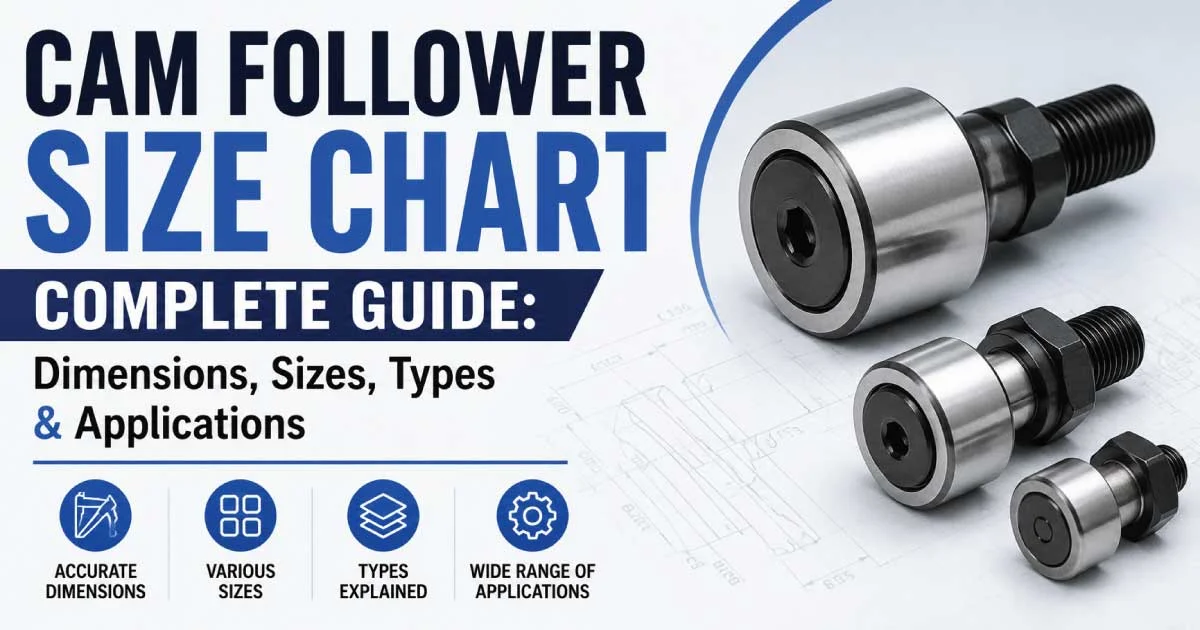
Selecting the correct cam follower size is one of the most important decisions in machine design and industrial automation. The right size ensures smooth motion, improved load capacity, longer service life, and reduced maintenance costs. This complete guide explains cam follower sizes, dimensions, types, and selection criteria in detail.
Introduction to Cam Follower Sizes
A cam follower size chart provides standardized dimensions and specifications for different cam followers. Engineers, manufacturers, and maintenance professionals rely on these charts to select components that match application requirements while ensuring proper alignment, load handling, and operational efficiency.
What Is a Cam Follower?
A cam follower is a specialized rolling bearing designed to follow cams, tracks, and guide rails. Unlike standard bearings, it features a thick outer ring that withstands heavy radial loads while providing smooth rolling contact in machinery operating under demanding conditions.
Why Cam Follower Size Matters
Choosing the correct cam follower size directly impacts machine performance and reliability. An incorrectly sized follower may fail prematurely or reduce efficiency.
Key reasons include:
- Better load distribution
- Reduced bearing wear
- Improved machine accuracy
- Longer operational lifespan
- Lower maintenance expenses
- Increased production efficiency
Understanding a Cam Follower Size Chart
A cam follower size chart lists dimensional and performance data that helps users identify suitable bearing models. Manufacturers follow international standards to ensure compatibility between machines, replacement parts, and industrial equipment across different industries and operating environments.
Main Dimensions Listed in Size Charts
Every cam follower size chart includes several important measurements. These dimensions determine compatibility with mounting arrangements, operating loads, and machine design requirements.
Typical dimensions include:
- Outside diameter (OD)
- Stud diameter
- Stud length
- Roller width
- Thread size
- Overall length
- Hex socket size
- Lubrication hole location
Outside Diameter (OD) Explained
The outside diameter determines the rolling contact surface between the follower and the cam track. Larger diameters generally provide greater load capacity, reduced contact stress, smoother movement, and better durability for applications operating continuously under heavy industrial workloads.
Stud Diameter and Its Importance
The stud diameter affects mounting strength and structural stability. Larger studs provide improved rigidity, allowing the cam follower to handle higher radial and axial loads while minimizing bending forces during operation in heavy-duty industrial equipment.
Roller Width Specifications
Roller width influences load distribution across the contact surface. Wider rollers reduce pressure concentration, increase bearing stability, and improve performance when operating against flat tracks, cams, or linear guide rails in demanding manufacturing environments.
Overall Length Measurement
Overall length refers to the complete length of the stud-type cam follower from one end to the other. This measurement ensures sufficient installation clearance while maintaining compatibility with surrounding machine components and fastening systems.
Thread Size Information
Thread dimensions are critical during installation. Proper thread sizing ensures secure mounting, prevents loosening caused by vibration, and guarantees reliable performance under repeated loading conditions commonly found in automated machinery and industrial production systems.
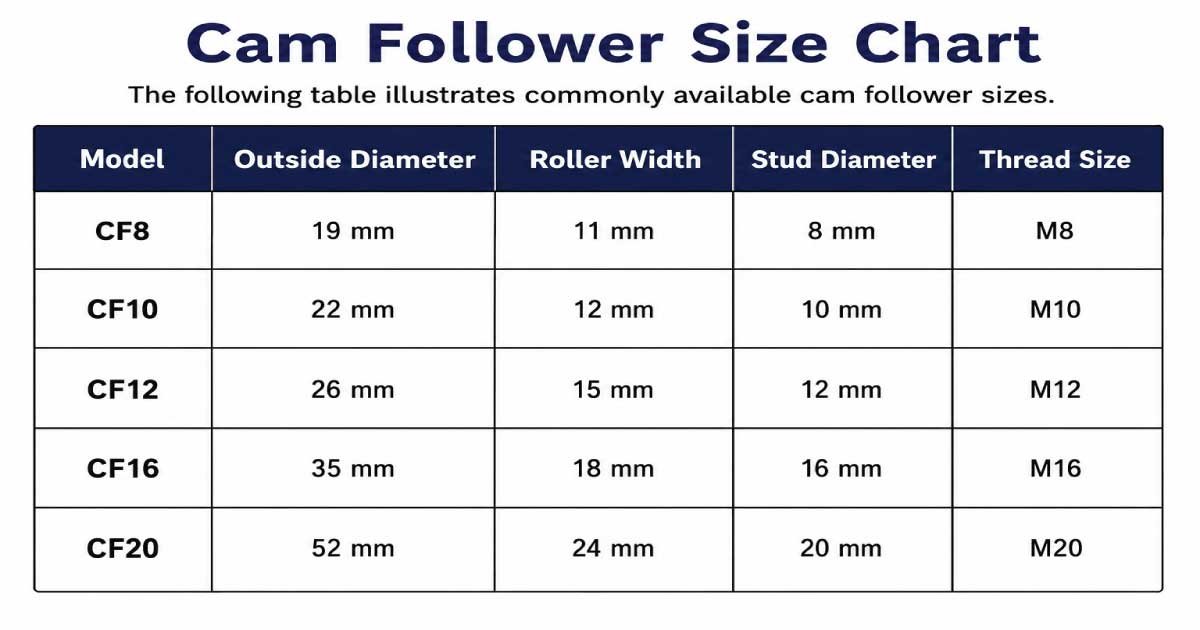
Common Cam Follower Size Chart Example
The following table illustrates commonly available cam follower sizes.
| Model | Outside Diameter | Roller Width | Stud Diameter | Thread Size |
|---|---|---|---|---|
| CF8 | 19 mm | 11 mm | 8 mm | M8 |
| CF10 | 22 mm | 12 mm | 10 mm | M10 |
| CF12 | 26 mm | 15 mm | 12 mm | M12 |
| CF16 | 35 mm | 18 mm | 16 mm | M16 |
| CF20 | 52 mm | 24 mm | 20 mm | M20 |
Cam Follower Size Chart PDF
Types of Cam Followers
Cam followers are available in several designs to meet varying industrial requirements. Selecting the proper type depends on load conditions, installation space, lubrication needs, and operating speed.
Common types include:
- Stud-type cam followers
- Yoke-type cam followers
- Heavy-duty cam followers
- Sealed cam followers
- Needle roller cam followers
- Cylindrical roller cam followers
Stud-Type Cam Followers
Stud-type cam followers feature an integrated threaded stud that simplifies installation. They are widely used in packaging machines, conveyor systems, textile equipment, robotics, and automated production lines where easy mounting and reliable performance are essential.
Yoke-Type Cam Followers
Yoke-type cam followers use a through-hole instead of an integrated stud. They are mounted using shafts or pins and provide greater rigidity for applications involving extremely high radial loads and continuous industrial operations.
Needle Roller Cam Followers
Needle roller cam followers incorporate numerous thin cylindrical rollers that maximize load capacity within compact dimensions. They offer excellent performance in applications where installation space is limited but high load support remains essential.
Cylindrical Roller Cam Followers
Cylindrical roller cam followers utilize larger rolling elements capable of supporting substantial radial loads. These bearings are commonly selected for heavy machinery, manufacturing equipment, mining systems, and industrial automation requiring exceptional durability.
Heavy-Duty Cam Followers
Heavy-duty cam followers are specifically engineered for challenging operating environments. Their reinforced construction enables them to withstand shock loading, continuous operation, vibration, and demanding production schedules without compromising performance or service life.
Sealed Cam Followers
Sealed cam followers include protective seals that prevent contaminants from entering the bearing while retaining lubricant inside. This design significantly reduces maintenance requirements and extends bearing life in dusty, wet, or contaminated industrial environments.
Metric vs Inch Cam Follower Sizes
Manufacturers produce cam followers in both metric and imperial dimensions. Metric sizes are commonly used throughout Europe and Asia, while inch-based dimensions remain popular in North American industrial equipment and specialized machinery.
Standard Metric Size Range
Metric cam followers are available in numerous standardized sizes suitable for different industrial applications.
Typical ranges include:
- Outside diameter: 10–90 mm
- Stud diameter: 5–30 mm
- Roller width: 6–35 mm
- Thread size: M5–M30
Factors That Influence Size Selection
Selecting the correct cam follower involves evaluating multiple engineering considerations beyond simple dimensions. Careful analysis helps maximize equipment reliability while minimizing downtime and replacement costs.
Important factors include:
- Radial load
- Operating speed
- Installation space
- Shock loading
- Lubrication requirements
- Environmental conditions
- Service life expectations
Load Capacity Considerations
Load capacity is often the primary factor when selecting a cam follower. The bearing must safely support both static and dynamic loads without excessive deformation, overheating, or premature fatigue during normal operating conditions.
Dynamic Load Rating
Dynamic load rating represents the maximum continuous load a cam follower can handle while rotating under normal operating conditions. Manufacturers calculate this rating using standardized testing methods, helping engineers estimate bearing life, compare models accurately, and select reliable components for long-term industrial performance.
Static Load Rating
Static load rating defines the maximum stationary load a cam follower can withstand without experiencing permanent deformation. This specification is particularly important for machinery subjected to heavy starting loads, intermittent operation, or prolonged periods of stationary force during production cycles.
Speed Limit Considerations
Every cam follower has a recommended maximum operating speed based on its size, lubrication method, and internal design. Exceeding these limits increases friction, generates excessive heat, accelerates wear, and significantly reduces bearing service life in demanding industrial applications.
Factors affecting speed include:
- Bearing size
- Lubrication quality
- Load conditions
- Operating temperature
- Seal design
- Roller construction
Material Used in Cam Followers
Most cam followers are manufactured from high-carbon chromium bearing steel that provides excellent hardness, wear resistance, and fatigue strength. Specialized applications may require stainless steel, corrosion-resistant alloys, or engineered materials designed to withstand harsh environmental and operating conditions.
Heat Treatment and Surface Hardening
Heat treatment enhances the mechanical properties of cam followers by increasing hardness and improving fatigue resistance. Surface hardening techniques create durable rolling surfaces capable of resisting wear, impact, and repeated stress while maintaining a tough internal core for structural integrity.
Importance of Proper Lubrication
Lubrication minimizes friction between rolling elements and raceways, preventing excessive heat generation and premature wear. Proper lubrication also protects against corrosion, reduces maintenance requirements, and extends the operational lifespan of cam followers working in continuous industrial environments.
Common lubrication methods include:
- Grease lubrication
- Oil lubrication
- Automatic lubrication systems
- Centralized lubrication systems
- Manual periodic lubrication
Sealed vs Shielded Cam Followers
Sealed cam followers provide superior protection against dirt, dust, moisture, and contaminants because the seals contact the bearing surfaces. Shielded versions primarily protect against larger particles while allowing lower rotational resistance, making them suitable for cleaner operating environments.
Also Read:
Applications of Cam Followers
Cam followers are widely used in industries requiring precise linear or rotary motion. Their versatility allows them to perform efficiently under varying loads, speeds, and environmental conditions across numerous mechanical systems.
Common applications include:
- Conveyor systems
- Packaging machinery
- Textile equipment
- Printing presses
- Food processing machines
- CNC machinery
- Robotics
- Pharmaceutical equipment
- Material handling systems
- Automotive assembly lines
Cam Followers in Automation Systems
Industrial automation relies heavily on cam followers to guide moving components with precision. Their low friction, high load capacity, and reliable motion control improve productivity, minimize downtime, and ensure consistent performance in automated manufacturing and robotic equipment.
Cam Followers for Conveyor Systems
Conveyor systems use cam followers to support guide rails, moving tracks, and positioning mechanisms. Properly sized followers reduce rolling resistance, improve alignment, minimize vibration, and contribute to efficient material transport in warehouses and manufacturing facilities.
Cam Followers in CNC Machines
CNC machines demand exceptional accuracy and repeatability. Cam followers provide smooth guidance for moving assemblies while maintaining dimensional precision under continuous operation, making them essential components in high-performance machining and automated manufacturing processes.
Also Read:
How to Read Manufacturer Size Charts
Manufacturer size charts contain dimensional data, load ratings, lubrication recommendations, and mounting specifications. Understanding each column enables engineers and maintenance teams to select compatible cam followers that meet performance, safety, and durability requirements for their specific machinery.
Common Mistakes When Selecting Cam Followers
Incorrect selection often leads to bearing failure, excessive maintenance, and machine downtime. Avoiding common mistakes helps maximize equipment reliability while reducing long-term operational costs.
Common mistakes include:
- Ignoring load ratings
- Selecting incorrect stud size
- Overlooking operating speed
- Choosing improper lubrication
- Ignoring environmental conditions
- Using incompatible mounting dimensions
- Failing to inspect alignment
Installation Best Practices
Correct installation ensures optimal performance and extends service life. Components should be mounted according to manufacturer specifications while maintaining proper alignment, torque values, and lubrication procedures to prevent unnecessary stress on the bearing assembly.
Installation tips include:
- Clean mounting surfaces thoroughly
- Apply recommended tightening torque
- Ensure perfect alignment
- Lubricate before operation
- Inspect seals after installation
- Verify smooth roller movement
Also Read:
Maintenance Recommendations
Routine maintenance significantly increases cam follower reliability. Regular inspections help detect wear, contamination, lubrication loss, and mounting issues before they develop into costly equipment failures or unplanned production downtime.
Maintenance checklist:
- Inspect for surface wear
- Check lubrication condition
- Monitor unusual vibration
- Listen for abnormal noise
- Verify mounting tightness
- Replace damaged seals
- Remove accumulated contaminants
Signs That a Cam Follower Needs Replacement
Even high-quality cam followers eventually reach the end of their service life. Identifying early warning signs prevents unexpected failures and protects surrounding machine components from additional damage.
Replacement indicators include:
- Excessive roller wear
- Cracked outer ring
- Increased operating noise
- Difficult rotation
- Lubricant leakage
- Visible corrosion
- Surface pitting
- Excessive vibration
Advantages of Using Correctly Sized Cam Followers
Selecting the proper cam follower size provides measurable improvements in machine performance, reliability, and operating efficiency. Correct sizing reduces unnecessary stress while maximizing bearing life under varying production demands.
Major advantages include:
- Higher operational efficiency
- Longer bearing lifespan
- Lower maintenance costs
- Improved machine accuracy
- Reduced friction
- Better load distribution
- Enhanced equipment reliability
- Reduced production downtime
Choosing the Right Manufacturer
Reliable manufacturers maintain strict quality control, precision machining, and standardized testing procedures. Selecting reputable brands ensures consistent dimensional accuracy, dependable load ratings, readily available replacement parts, and comprehensive technical support for industrial applications.
Industry Standards for Cam Followers
Cam followers are manufactured according to internationally recognized standards that ensure dimensional consistency, performance, and interchangeability. Compliance with these standards simplifies equipment maintenance and replacement while supporting safe, reliable operation across different industries and machinery designs.
Conclusion
Understanding a cam follower size chart is essential for selecting the right component for industrial machinery, automation systems, and mechanical equipment. By comparing dimensions, load ratings, speed limits, materials, and lubrication requirements, you can choose a cam follower that delivers reliable performance and long service life.
Whether you’re replacing an existing bearing or designing a new machine, selecting the correct size is crucial for ensuring proper fit, smooth operation, and efficient load handling. Considering installation conditions and application requirements also helps prevent premature wear and equipment failure.
Choosing the right cam follower improves machine efficiency, reduces maintenance costs, and enhances overall system reliability. With careful evaluation of size and performance specifications, you can ensure dependable, long-lasting operation across a wide range of industrial applications.

Engineer Hassan is a Mechanical Engineer with 16+ years of hands-on experience in mechanical hardware, fasteners, and workshop tools. He focuses on size selection, thread identification, and measurement, helping users choose the correct components with accuracy and safety.