
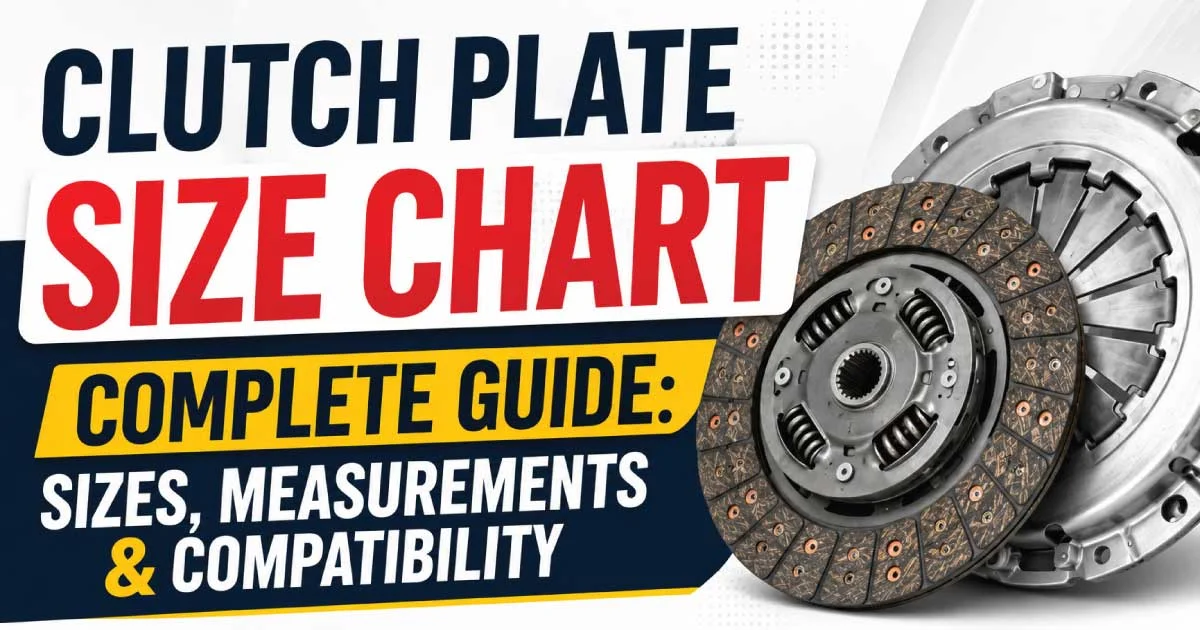
A clutch plate size chart is one of the most valuable references for vehicle owners, mechanics, and automotive enthusiasts. It helps identify the correct clutch plate diameter, spline count, hub size, and compatibility with specific vehicle models.
Choosing the right clutch plate improves transmission efficiency, enhances driving performance, and prevents premature wear.
Whether you own a passenger car, motorcycle, SUV, or commercial vehicle, understanding clutch plate sizes ensures proper installation and long-term reliability.
This complete guide explains everything you need to know before selecting the right clutch plate for your vehicle.
What Is a Clutch Plate?
A clutch plate is a key component of a manual transmission system that transfers engine power to the gearbox. Positioned between the flywheel and pressure plate, it engages and disengages power whenever the driver presses the clutch pedal.
The friction material on the clutch plate allows smooth gear shifting while reducing transmission shock. Modern clutch plates are designed with durable friction linings, torsion springs, and high-strength steel hubs to withstand repeated engagement.
Selecting the proper size ensures maximum efficiency, smoother driving, and reduced maintenance costs over time.
Why Clutch Plate Size Matters
The size of a clutch plate directly affects the vehicle’s performance, torque handling, and durability. An undersized clutch plate may slip under heavy loads, while an oversized plate may not fit properly within the clutch assembly.
Manufacturers design clutch plates according to engine output, transmission specifications, and vehicle weight.
Using the correct dimensions ensures smooth engagement, efficient power transfer, and extended service life. Installing the wrong size often results in poor acceleration, clutch vibration, overheating, and unnecessary wear on related drivetrain components.
Benefits of Choosing the Correct Clutch Plate Size
- Improved power transmission
- Smooth gear shifting
- Better fuel efficiency
- Longer clutch lifespan
- Reduced gearbox wear
- Enhanced driving comfort
- Lower maintenance costs
Main Measurements Found on a Clutch Plate Size Chart
Every clutch plate size chart contains several important measurements that determine compatibility. Understanding these specifications helps mechanics and vehicle owners make informed purchasing decisions.
While diameter is the most recognized measurement, spline count and hub dimensions are equally important for proper installation.
Always compare these values with the manufacturer’s specifications before purchasing a replacement clutch plate.
Common Measurements Include
- Outside diameter (OD)
- Inside diameter (ID)
- Spline count
- Hub diameter
- Friction surface width
- Overall thickness
- Pressure plate compatibility
Understanding Clutch Plate Diameter
The clutch plate diameter refers to the overall width of the friction disc measured from one outer edge to the opposite edge. Common passenger vehicle clutch diameters range between 180 mm and 280 mm, while heavy-duty trucks may use much larger clutch plates.
Larger diameters generally provide greater friction surface area, allowing them to handle higher torque without slipping.
Always match the replacement diameter with the original equipment manufacturer (OEM) specifications for optimal performance.
What Is Spline Count?
Spline count refers to the number of internal grooves located in the center hub of the clutch plate. These splines connect the clutch plate securely to the transmission input shaft.
Even if the diameter is correct, an incorrect spline count prevents proper installation. Manufacturers use different spline configurations depending on vehicle make and transmission type.
Therefore, verifying spline count is essential before ordering any replacement clutch plate to ensure perfect compatibility and smooth operation.
Clutch Plate Thickness Explained
Clutch plate thickness influences engagement characteristics, heat resistance, and wear capacity. New clutch plates have a standard thickness determined by the manufacturer, while worn plates gradually become thinner due to friction.
Excessively thin clutch plates often cause slipping, poor acceleration, and difficulty shifting gears.
During replacement, technicians measure thickness alongside diameter and spline specifications to ensure the new clutch plate matches the original design and restores factory-level performance.
Typical Passenger Car Clutch Plate Sizes
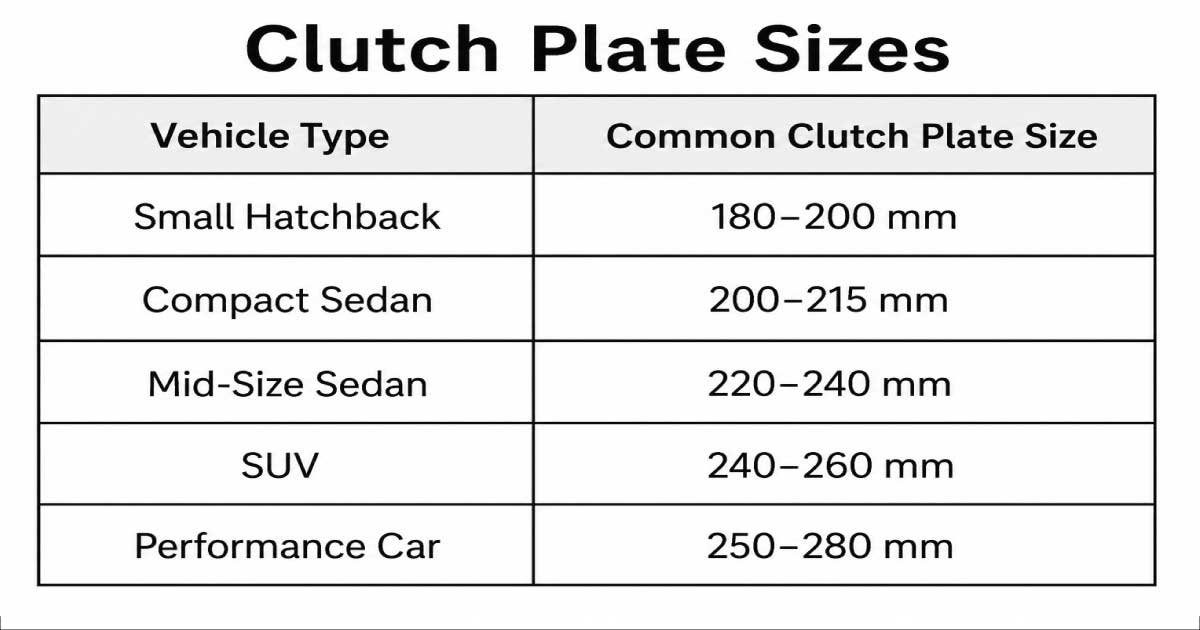
Passenger cars use various clutch plate sizes depending on engine displacement and torque output. Smaller hatchbacks generally require compact clutch plates, whereas larger sedans and SUVs use wider friction discs capable of handling increased power. Although sizes vary among manufacturers, several dimensions are commonly found across modern vehicles.
| Vehicle Type | Common Clutch Plate Size |
|---|---|
| Small Hatchback | 180–200 mm |
| Compact Sedan | 200–215 mm |
| Mid-Size Sedan | 220–240 mm |
| SUV | 240–260 mm |
| Performance Car | 250–280 mm |
Clutch Plate Size Chart PDF
The Clutch Plate Sizes chart provides a quick reference to the most common clutch plate diameter ranges used in different vehicle categories. From small hatchbacks to high-performance cars, selecting the correct clutch plate size helps ensure proper fit, reliable power transfer, smooth gear engagement, and long-lasting clutch performance while simplifying maintenance and replacement decisions.
Motorcycle Clutch Plate Sizes
Motorcycles typically use multiple smaller clutch plates stacked together rather than a single large friction disc. Their dimensions depend on engine capacity, riding style, and manufacturer design.
Sport bikes, touring motorcycles, and cruisers all feature different clutch plate configurations. Selecting the correct size maintains smooth acceleration, efficient power delivery, and dependable clutch performance under varying riding conditions.
Riders should always consult the manufacturer’s specifications before purchasing replacement clutch plates.
Commercial Vehicle Clutch Plate Sizes
Commercial trucks, buses, agricultural equipment, and construction machinery require heavy-duty clutch plates capable of handling substantial torque and continuous operation. These clutch plates are significantly larger than passenger vehicle components and often feature reinforced friction materials for increased durability. Proper sizing becomes even more critical in commercial applications because incorrect clutch dimensions can lead to costly downtime, transmission damage, and reduced operational efficiency.
Factors That Affect Clutch Plate Size Selection
Several factors influence which clutch plate size is suitable for a specific vehicle. Simply matching the diameter is not enough because transmission design, engine performance, and driving conditions also play major roles. Mechanics carefully evaluate all specifications before selecting a replacement clutch plate to ensure maximum reliability and long service life.
Important Selection Factors
- Engine horsepower
- Maximum torque output
- Transmission model
- Vehicle weight
- Driving conditions
- Manufacturer recommendations
- OEM part number compatibility
OEM vs Aftermarket Clutch Plates
OEM clutch plates are manufactured according to the vehicle maker’s original specifications, ensuring perfect fit and factory-level performance. Aftermarket clutch plates, on the other hand, offer wider choices ranging from budget-friendly replacements to high-performance racing options. While quality aftermarket products can perform exceptionally well, buyers should verify every measurement using a clutch plate size chart before installation to avoid compatibility issues.
Common Signs You Need a New Clutch Plate
Recognizing the warning signs of a worn clutch plate helps prevent more serious transmission problems. As friction material wears down, the clutch gradually loses its ability to transfer engine power efficiently. Replacing the clutch plate at the right time improves vehicle safety, restores performance, and reduces repair costs.
Warning Signs Include
- Clutch slipping during acceleration
- Burning smell after driving
- Hard or noisy gear shifts
- Clutch pedal vibration
- Reduced pulling power
- Poor fuel economy
- Difficulty engaging gears
How to Read a Clutch Plate Size Chart Correctly
Reading a clutch plate size chart becomes much easier once you understand what each specification represents. The chart usually includes the clutch plate diameter, inside diameter, spline count, hub dimensions, and compatible vehicle models. Comparing these measurements with your vehicle’s service manual ensures you purchase the correct replacement. Never rely solely on appearance because two clutch plates may look similar but have different spline configurations or thicknesses, making them incompatible with your transmission system.
Checklist Before Buying a Clutch Plate
- Verify vehicle make and model
- Check manufacturing year
- Confirm engine size
- Match transmission type
- Measure clutch plate diameter
- Count the splines
- Compare OEM part numbers
Standard Clutch Plate Size Chart
The following chart provides general clutch plate size ranges commonly used in different vehicle categories. Actual specifications may vary depending on the manufacturer and model, so always verify the measurements before purchasing.
| Vehicle Category | Clutch Plate Diameter | Typical Application |
|---|---|---|
| Motorcycle | 100–160 mm | Small and sport motorcycles |
| Hatchback | 180–200 mm | Compact passenger cars |
| Sedan | 200–240 mm | Family and executive vehicles |
| SUV | 230–260 mm | Utility and crossover vehicles |
| Pickup Truck | 240–280 mm | Light commercial use |
| Heavy Truck | 330–430 mm | Commercial transport |
| Agricultural Equipment | 300–450 mm | Tractors and farm machinery |
Clutch Plate Size Chart PDF
How to Measure a Clutch Plate
Measuring a clutch plate accurately helps avoid purchasing an incompatible replacement. Use precision measuring tools and record every important dimension before ordering a new component. Even small differences can affect clutch engagement and installation.
Measurement Steps
- Remove the clutch plate carefully.
- Clean the friction surfaces.
- Measure the outside diameter.
- Measure the inside diameter.
- Count all hub splines.
- Measure overall thickness.
- Compare with the manufacturer’s specifications.
Also Read:
Different Types of Clutch Plates
Not all clutch plates are built the same. Manufacturers design various types to meet different driving conditions, performance requirements, and vehicle applications. Choosing the right type improves durability and driving performance while reducing unnecessary wear on the transmission system.
Common Clutch Plate Types
- Organic clutch plates
- Ceramic clutch plates
- Kevlar clutch plates
- Sintered metal clutch plates
- Carbon clutch plates
- Heavy-duty clutch plates
- Performance racing clutch plates
Organic Clutch Plates
Organic clutch plates are the most common choice for everyday passenger vehicles because they provide smooth engagement, quiet operation, and comfortable driving characteristics. They use friction materials made from fibers, resin, and other composite compounds. These clutch plates offer excellent durability under normal driving conditions and are generally more affordable than high-performance alternatives, making them ideal for daily commuting and family vehicles.
Ceramic Clutch Plates
Ceramic clutch plates are designed for high-performance vehicles that generate greater horsepower and torque. Their friction material withstands extreme temperatures and heavy loads without slipping. Although ceramic clutch plates provide outstanding durability and grip, they often produce harsher engagement compared to organic versions. They are commonly used in racing, towing, and modified performance vehicles.
Heavy-Duty Clutch Plates
Heavy-duty clutch plates are engineered for commercial trucks, buses, off-road vehicles, and industrial machinery. Reinforced friction materials and stronger hub assemblies enable them to withstand continuous operation under demanding conditions. These clutch plates are built to resist heat, excessive wear, and heavy torque loads while maintaining reliable performance over extended service intervals.
Also Read:
Common Clutch Plate Materials
Modern clutch plates are manufactured using advanced friction materials selected for durability, heat resistance, and consistent performance. Each material offers unique advantages depending on the intended application and driving environment.
Popular Materials
- Organic composite fibers
- Ceramic compounds
- Kevlar fibers
- Carbon composite
- Copper-based materials
- Sintered metallic alloys
- High-strength steel hubs
Signs of Incorrect Clutch Plate Size
Installing the wrong clutch plate size often creates immediate performance problems. Even if the clutch fits inside the housing, incorrect dimensions can reduce efficiency and damage surrounding components. Recognizing these symptoms early helps prevent expensive repairs.
Common Symptoms
- Frequent clutch slipping
- Gear shifting difficulty
- Excessive pedal vibration
- Transmission noise
- Uneven clutch wear
- Reduced acceleration
- Burning clutch odor
Also Read:
Maintenance Tips for Longer Clutch Life
Proper maintenance extends clutch life and helps maintain smooth gear changes. Good driving habits reduce unnecessary wear on the clutch plate and pressure plate while improving overall transmission reliability. Preventive maintenance is always more affordable than major clutch repairs.
Maintenance Best Practices
- Avoid riding the clutch pedal.
- Shift gears smoothly.
- Do not overload the vehicle.
- Replace worn components together.
- Inspect the hydraulic system regularly.
- Check clutch free play.
- Service the transmission on schedule.
Mistakes to Avoid When Replacing a Clutch Plate
Many clutch replacement issues occur because of simple installation mistakes. Paying attention to measurements and installation procedures ensures reliable operation and prevents premature failure. Professional installation is recommended if you are unfamiliar with clutch systems.
Common Replacement Mistakes
- Choosing the wrong diameter
- Ignoring spline count
- Reusing damaged pressure plates
- Installing worn release bearings
- Skipping flywheel inspection
- Using incorrect torque settings
- Forgetting clutch alignment
When Should You Replace a Clutch Plate?
Most clutch plates last between 50,000 and 100,000 miles (80,000–160,000 kilometers) depending on driving habits, vehicle type, road conditions, and maintenance. Aggressive driving, heavy towing, and frequent stop-and-go traffic may shorten clutch life considerably. Replacing the clutch plate before complete failure protects the transmission and prevents more expensive repairs.
Tips for Buying the Right Clutch Plate
Purchasing the correct clutch plate involves more than selecting the right diameter. Always compare technical specifications, verify compatibility, and buy from reputable suppliers to ensure quality and long-lasting performance. Investing in a reliable clutch kit often saves money by reducing future maintenance costs.
Buying Tips
- Purchase OEM or trusted aftermarket brands.
- Verify all measurements.
- Match the OEM part number.
- Buy a complete clutch kit when possible.
- Check warranty coverage.
- Confirm vehicle compatibility.
- Read product specifications carefully.
Conclusion

Engineer Hassan is a Mechanical Engineer with 16+ years of hands-on experience in mechanical hardware, fasteners, and workshop tools. He focuses on size selection, thread identification, and measurement, helping users choose the correct components with accuracy and safety.