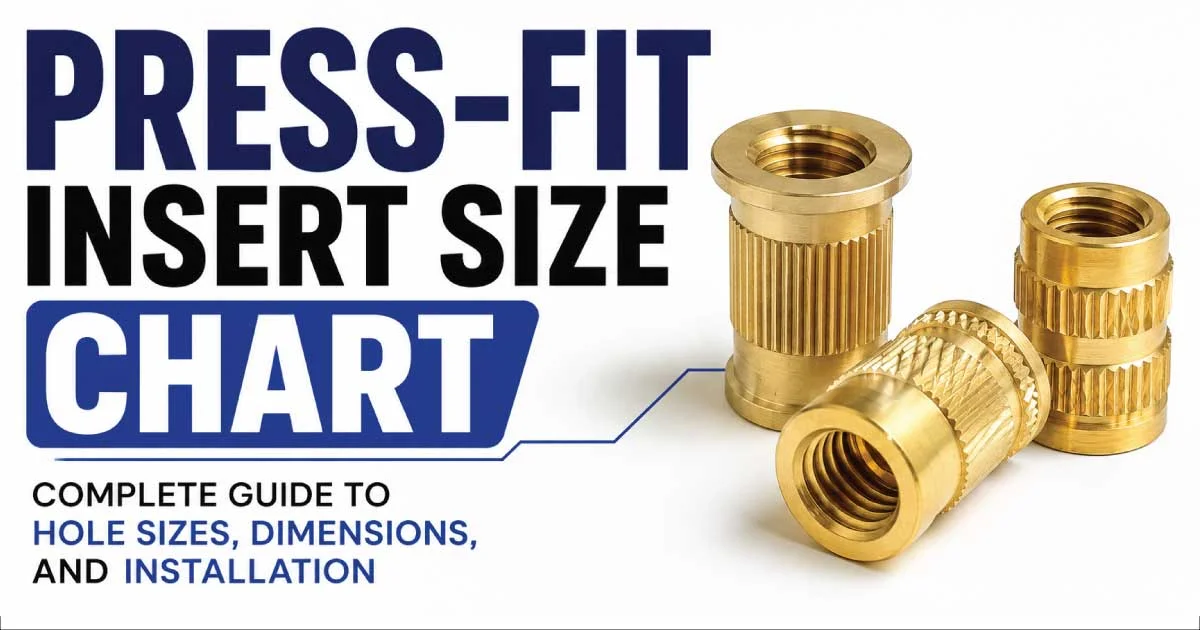
Press Fit Insert Size Chart: Complete Sizes Guide

A press-fit insert size chart is a technical reference table that helps engineers, machinists, manufacturers, and designers select the correct hole diameter for threaded inserts. The chart ensures the insert fits securely without adhesives or additional fasteners, providing excellent holding strength, durability, and consistent assembly performance across different materials.


Why a Press-Fit Insert Sizes Matters

Selecting the wrong hole size can lead to loose inserts, cracked components, or poor thread engagement. A press-fit insert size chart eliminates guesswork by providing standardized dimensions that improve assembly accuracy, reduce manufacturing errors, and increase product reliability while minimizing costly rework and production downtime.

Key Benefits of Using a Press-Fit Insert Size Chart

  • Ensures accurate insert installation
  • Improves product durability
  • Reduces manufacturing defects
  • Prevents material damage
  • Saves installation time
  • Minimizes production costs
  • Supports quality control
  • Enhances thread strength

What Is a Press-Fit Insert?

A press-fit insert is a threaded metal insert designed to be pressed into a precisely sized hole without requiring heat, adhesives, or external threads. Once installed, the insert creates a strong, reusable internal thread capable of withstanding repeated assembly and disassembly in plastic, wood, or soft metal components.


How Press-Fit Inserts Work

Press-fit inserts rely on interference fit principles. Their outer surface contains knurls, grooves, or ridges that grip the surrounding material when pressed into a correctly sized hole. This mechanical locking action prevents rotation and pull-out while distributing loads evenly throughout the base material for maximum strength.


Press-Fit Insert Size Chart Example

The following example illustrates how a typical press-fit insert size chart may present dimensional information. Actual values vary by manufacturer, insert style, and material specifications, so always verify the latest technical documentation before machining production components.
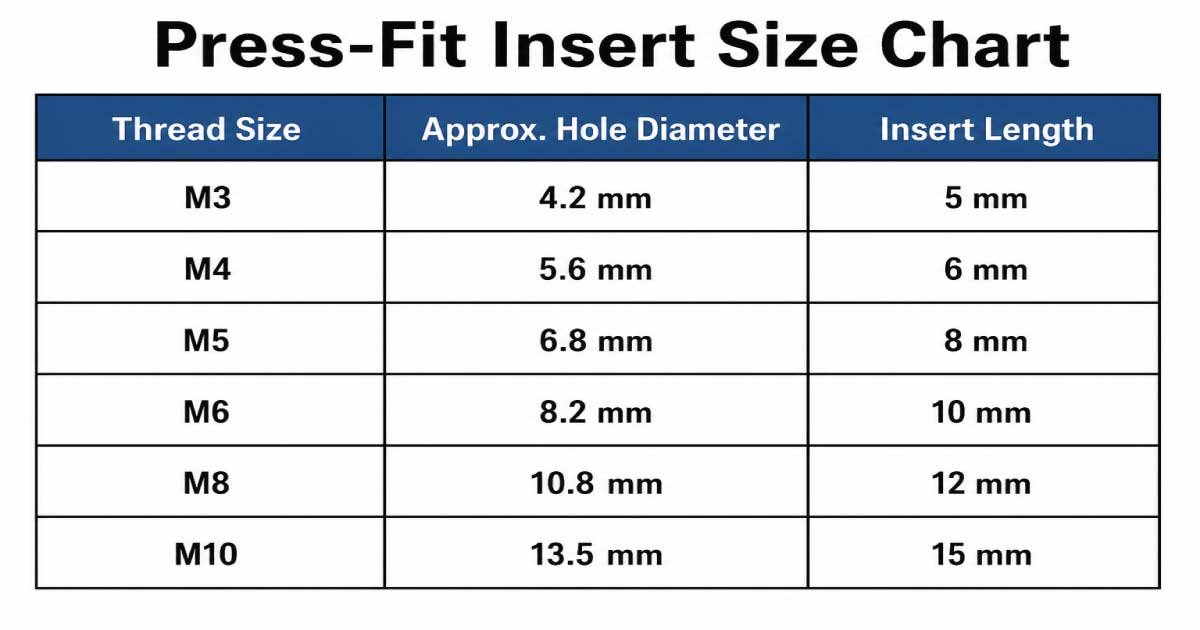
Press-Fit Insert Size Chart

Thread Size Approx. Hole Diameter Insert Length
M3 4.2 mm 5 mm
M4 5.6 mm 6 mm
M5 6.8 mm 8 mm
M6 8.2 mm 10 mm
M8 10.8 mm 12 mm
M10 13.5 mm 15 mm

Press-Fit Insert Size Chart PDF

The Press-Fit Insert Size Chart helps you choose the correct insert based on thread size, hole diameter, and insert length. Using the proper dimensions ensures a secure fit, reliable performance, and long-lasting durability in metal, plastic, and composite materials. Refer to this chart for quick and accurate installation guidance.

Press-Fit_Insert_Size_Chart

📏 Expert Size Chart Resources 👉


Components Found in a Press-Fit Insert Size Chart

A standard press-fit insert size chart typically includes several important measurements that installers must understand before selecting an insert for production or repair work.

  • Thread size
  • Insert length
  • Outside diameter
  • Recommended hole diameter
  • Installation depth
  • Material compatibility
  • Tolerance range
  • Pull-out strength

Understanding Hole Diameter

Hole diameter is one of the most critical dimensions listed in a press-fit insert size chart. Even a slight variation can significantly affect insertion force and retention strength. Manufacturers specify recommended hole sizes based on extensive testing to ensure optimal interference fit without damaging the surrounding material.


Importance of Insert Outside Diameter

The outside diameter determines how tightly the insert fits inside the prepared hole. Larger outside diameters generally provide greater holding strength but require more installation force. Choosing the correct outside diameter according to the press-fit insert size chart ensures long-lasting performance without excessive stress on the host material.

Thread Size Explained

Thread size identifies the internal thread that will receive bolts, screws, or studs. Common thread standards include metric and imperial sizes. Matching the correct thread size with the intended fastener is essential for maintaining compatibility, preventing thread damage, and ensuring safe mechanical performance in assembled products.

Role of Insert Length

Insert length influences load distribution and thread engagement. Longer inserts typically provide better pull-out resistance and stronger fastening performance, while shorter inserts are suitable for limited material thickness. A press-fit insert size chart helps determine the proper insert length based on application requirements and available installation depth.


Material Compatibility in Press-Fit Applications

Different materials require different hole dimensions because each material responds differently during installation. Plastics, aluminum, brass, hardwood, composites, and engineered polymers all exhibit unique deformation characteristics. Press-fit insert size charts often include separate recommendations for various materials to maximize retention and prevent cracking or deformation.

Common Materials Used for Press-Fit Inserts

Manufacturers produce press-fit inserts using several metals depending on strength requirements, corrosion resistance, and environmental conditions.

  • Brass
  • Stainless steel
  • Carbon steel
  • Aluminum
  • Bronze
  • Zinc-plated steel

Standard Thread Sizes Available

Press-fit inserts are available in numerous thread sizes suitable for industrial, commercial, and consumer applications. Understanding these standard sizes simplifies component selection and ensures compatibility with existing hardware.

  • M2
  • M2.5
  • M3
  • M4
  • M5
  • M6
  • M8
  • M10
  • #4-40
  • #6-32
  • #8-32
  • 1/4-20

Metric vs Imperial Press-Fit Insert Charts

Most manufacturers provide separate charts for metric and imperial systems. Metric charts use millimeters for thread sizes and hole diameters, while imperial charts rely on inches. Using the correct measurement system prevents installation errors and ensures accurate machining for global manufacturing standards.

Factors That Affect Hole Size Selection

Several variables influence the recommended hole diameter beyond the insert dimensions alone. Understanding these factors improves installation consistency and overall fastening reliability in production environments.

  • Base material hardness
  • Manufacturing tolerance
  • Operating temperature
  • Surface finish
  • Installation method
  • Insert material
  • Wall thickness
  • Expected load conditions

Press-Fit Inserts for Plastic Components

Plastic components are among the most common applications for press-fit inserts because plastics often lack sufficient thread strength. Properly installed inserts reinforce threaded connections, allowing repeated assembly without stripping the surrounding material. The size chart provides optimized dimensions specifically designed for various plastic grades and engineering polymers.

Using Press-Fit Inserts in Metal Parts

Soft metals such as aluminum and magnesium frequently benefit from press-fit inserts. These inserts create stronger, wear-resistant threads that withstand repeated fastening cycles. Selecting dimensions from the appropriate press-fit insert size chart ensures sufficient interference while avoiding excessive installation force that could deform thin-walled components.

Applications Across Different Industries

Press-fit inserts are widely used because they provide durable threaded connections in lightweight materials across many industries. Their versatility makes them essential components in modern manufacturing and precision engineering.

  • Automotive manufacturing
  • Aerospace engineering
  • Consumer electronics
  • Medical equipment
  • Industrial machinery
  • Furniture production
  • Electrical enclosures
  • Robotics
  • Telecommunications
  • Renewable energy systems

Common Installation Methods

Although press-fit inserts are straightforward to install, using the proper installation technique ensures maximum retention and prevents damage. Manufacturers recommend controlled pressing rather than hammering to achieve uniform seating and reliable mechanical performance.

Also Read:

Step-by-Step Guide to Installing Press-Fit Inserts

Proper installation begins with preparing a clean, accurately machined hole that matches the dimensions in the press-fit insert size chart. Position the insert squarely over the hole and apply steady pressure using an arbor press or dedicated installation tool until the insert sits flush with the surface without tilting or damaging the surrounding material.

Installation Steps

  • Verify the correct insert size.
  • Measure the hole diameter accurately.
  • Remove chips and debris from the hole.
  • Align the insert with the hole.
  • Apply even pressing force.
  • Check that the insert sits flush.
  • Inspect for rotation or looseness.
  • Test thread engagement with the intended fastener.

Tools Required for Press-Fit Insert Installation

Successful installation depends on using the right equipment. Precision tools improve alignment, reduce installation errors, and help maintain consistent quality throughout production. Choosing professional-grade tools also minimizes the risk of damaging inserts or the base material during assembly.

  • Arbor press
  • Hydraulic press
  • Drill press
  • Digital calipers
  • Micrometer
  • Depth gauge
  • Chamfer tool
  • Deburring tool
  • Inspection gauge
  • Thread gauge

Recommended Hole Preparation Practices

Preparing the hole correctly is just as important as selecting the proper insert. Smooth, burr-free holes improve insertion consistency and reduce stress concentrations. Following recommended preparation practices ensures the insert achieves maximum holding strength and long-term reliability in demanding applications.

Also Read:

Importance of Manufacturing Tolerances

Manufacturing tolerances determine how closely actual dimensions match the intended specifications. Even minor deviations in hole diameter or insert dimensions can significantly affect interference fit. A reliable press-fit insert size chart always works alongside specified tolerance ranges to maintain repeatable assembly quality.

Common Installation Mistakes to Avoid

Many installation failures occur because basic guidelines are overlooked. Avoiding common mistakes improves insert retention, protects surrounding materials, and reduces costly repairs or product failures after assembly.

  • Using the wrong hole diameter
  • Installing crooked inserts
  • Applying excessive force
  • Ignoring tolerance specifications
  • Failing to remove burrs
  • Choosing the wrong insert length
  • Using damaged inserts
  • Skipping final inspection

How to Measure Hole Diameter Accurately

Accurate hole measurement is essential before installing any press-fit insert. Digital calipers, bore gauges, or precision pin gauges provide reliable measurements. Measuring multiple locations within the hole helps identify taper, ovality, or machining inconsistencies that could negatively affect insert retention and installation quality.

Checking Insert Alignment During Installation

Maintaining perfect alignment prevents uneven loading and reduces the risk of insert deformation. Pressing an insert at an angle may damage the host material or compromise thread integrity. Alignment fixtures and guided presses help ensure straight, consistent installation throughout high-volume manufacturing operations.

Maintenance Tips for Press-Fit Inserts

Although press-fit inserts require very little maintenance, periodic inspection helps identify wear before failures occur. Proper care extends service life and ensures consistent fastening performance in equipment subjected to vibration, repeated assembly, or heavy operational loads.

  • Inspect threads regularly.
  • Replace damaged fasteners promptly.
  • Avoid over-tightening bolts.
  • Keep threads clean.
  • Protect against corrosion.
  • Monitor vibration-prone assemblies.
  • Follow recommended torque values.
  • Replace worn inserts when necessary.

📘 Precision Size Chart Guide 👉

Advantages of Using Press-Fit Inserts

Press-fit inserts offer numerous mechanical and economic benefits across manufacturing industries. Their simple installation, strong retention, and reusable threads make them a preferred fastening solution for components made from softer materials where conventional threads may fail prematurely.

  • Strong thread reinforcement
  • Fast installation
  • Excellent pull-out resistance
  • High torque performance
  • Reusable internal threads
  • Reduced maintenance costs
  • Improved product lifespan
  • Suitable for automation
  • Consistent assembly quality
  • Wide material compatibility

Limitations to Consider

Despite their advantages, press-fit inserts are not suitable for every application. Understanding their limitations helps engineers choose the most effective fastening solution for specific operating conditions and material types while avoiding unnecessary installation issues.

  • Require precise hole dimensions
  • Sensitive to machining tolerances
  • Not ideal for brittle materials
  • Incorrect installation reduces holding strength
  • Specialized installation equipment may be required
  • Manufacturer specifications vary

Choosing the Right Press-Fit Insert

Selecting the correct insert involves evaluating multiple design factors rather than focusing solely on thread size. Engineers should consider material compatibility, expected loading conditions, environmental exposure, installation method, and production requirements before making a final selection using the appropriate press-fit insert size chart.

Industry Standards and Specifications

Many manufacturers design press-fit inserts according to recognized industry standards to ensure compatibility and performance. Following standardized dimensions simplifies sourcing, improves interchangeability, and supports consistent quality across different production facilities and global supply chains.

Quality Inspection After Installation

Every installed insert should undergo a quality inspection before the component enters service. Visual inspection, dimensional verification, and thread testing confirm that the insert is fully seated, correctly aligned, and securely retained within the host material for reliable long-term performance.

Inspection Checklist

  • Confirm flush seating.
  • Verify correct alignment.
  • Check hole integrity.
  • Inspect thread condition.
  • Test fastener engagement.
  • Ensure no insert rotation.
  • Measure installation depth.
  • Record inspection results.

Conclusion

A press-fit insert size chart is a valuable reference for ensuring accurate, strong, and consistent threaded insert installations. It provides essential information about the correct hole diameter, insert dimensions, and installation requirements, helping users achieve reliable results in different applications.

Choosing the proper press-fit insert size improves product quality and reduces assembly mistakes. Whether working with plastics, aluminum, wood, or composite materials, following the recommended specifications ensures secure fastening and better mechanical performance.

By using a reliable press-fit insert size chart, manufacturers can increase efficiency, extend component lifespan, and maintain long-term durability. Proper insert selection supports stronger connections and dependable performance across a wide range of industrial and commercial projects.


FAQs About Press Fit Insert Size Charts

Can I Use the Same Hole Size for Every Material?

No. Different materials respond differently to the installation of press-fit inserts due to variations in hardness, elasticity, and deformation characteristics. Manufacturers recommend specific hole diameters for plastics, aluminum, hardwood, and composite materials to achieve the correct interference fit, ensuring maximum holding strength and long-term performance.

Do Press-Fit Inserts Require Adhesive?

In most applications, press-fit inserts do not require adhesive because they are engineered to remain securely in place through mechanical interference. However, adhesives may be recommended for specialized situations involving high vibration, moisture exposure, sealing requirements, or harsh environmental conditions where additional retention is beneficial.

Can Press-Fit Inserts Be Removed and Reused?

Yes, press-fit inserts can sometimes be removed using appropriate extraction methods. However, once removed, they may not provide the same interference fit or retention strength if reused. For critical or load-bearing assemblies, installing a new insert is generally the safest and most reliable solution.

How Important Are Tolerances?

Tolerances are critical when installing press-fit inserts because they directly influence insertion force, retention strength, and overall thread reliability. Even minor deviations from the recommended dimensions can result in loose fits, material damage, installation difficulties, or reduced service life of the finished assembly.