
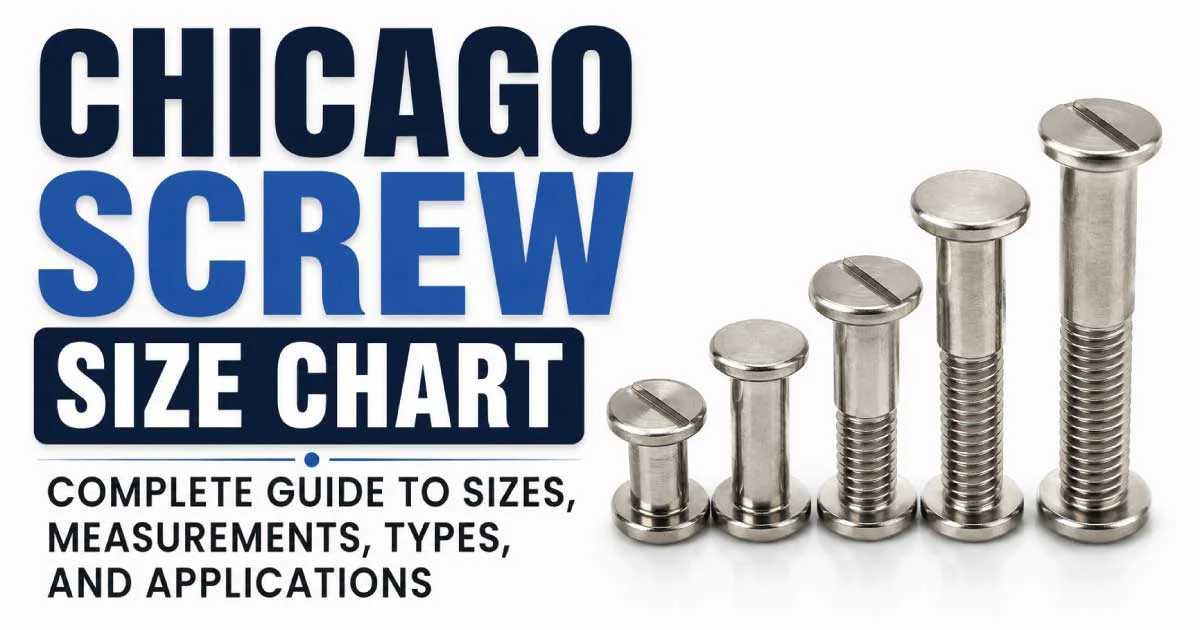
Chicago screws are versatile fasteners used in leathercraft, bookbinding, furniture, belts, holsters, and industrial applications. Choosing the correct size is essential for a secure connection and professional finish. A Chicago screw size chart simplifies the selection process by matching post length, thread size, and material thickness for every project.
What Is a Chicago Screw?
A Chicago screw, also called a binding post or sex bolt, consists of two threaded components that fasten together. One part contains a female post, while the other features a male screw. Together, they create a reusable fastening system that can be removed and reinstalled without damaging the material.
Main Components of a Chicago Screw
Every Chicago screw includes two primary pieces designed for reliable fastening. Understanding these components helps users select compatible sizes and avoid installation issues that can reduce durability or cause loose connections over time.
- Female barrel (post)
- Male screw
- Threaded connection
- Flat or decorative head
- Available in multiple materials
Why Chicago Screw Size Matters
Selecting the wrong Chicago screw size can result in weak fastening, exposed threads, or difficulty tightening the assembly. The proper size ensures stability, improves appearance, and extends the lifespan of leather goods, books, machinery, and other assembled products without compromising structural integrity.
Benefits of Using the Correct Size
Using the correct Chicago screw dimensions offers numerous practical advantages. Proper sizing minimizes movement, prevents material damage, and delivers a clean, professional finish that enhances both function and aesthetics across various applications.
- Stronger fastening
- Better load distribution
- Improved appearance
- Longer service life
- Easier maintenance
Standard Chicago Screw Size Chart
The following chart highlights common Chicago screw sizes used across various industries. These measurements help users identify the appropriate screw based on total material thickness and fastening requirements.
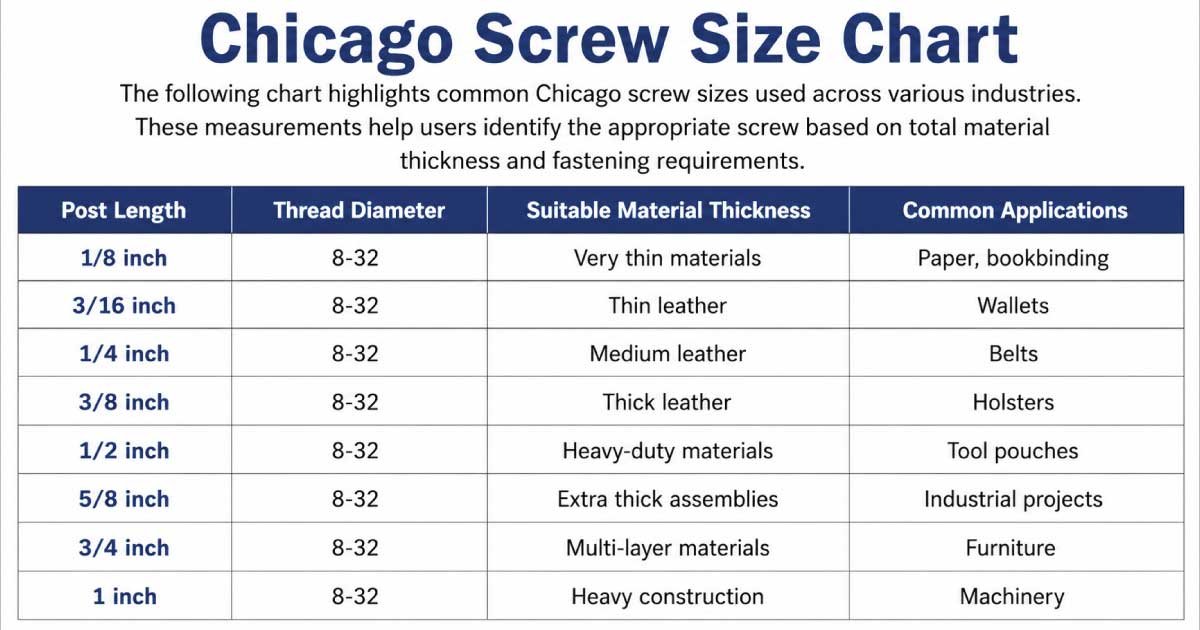
| Post Length | Thread Diameter | Suitable Material Thickness | Common Applications |
|---|---|---|---|
| 1/8 inch | 8-32 | Very thin materials | Paper, bookbinding |
| 3/16 inch | 8-32 | Thin leather | Wallets |
| 1/4 inch | 8-32 | Medium leather | Belts |
| 3/8 inch | 8-32 | Thick leather | Holsters |
| 1/2 inch | 8-32 | Heavy-duty materials | Tool pouches |
| 5/8 inch | 8-32 | Extra thick assemblies | Industrial projects |
| 3/4 inch | 8-32 | Multi-layer materials | Furniture |
| 1 inch | 8-32 | Heavy construction | Machinery |
Chicago Screw Size Chart PDF
The Standard Chicago Screw Size Chart provides a quick reference for selecting the correct Chicago screw based on post length, thread diameter, and material thickness. Whether you’re working with leather, bookbinding, furniture, or industrial assemblies, this chart helps you choose the right size for a secure, durable, and professional-quality fastening solution.
⚙️ Professional Size Chart Guides 👉 Shaft Size Chart: Easy Guide to Standard Dimensions
Common Chicago Screw Measurements Explained
Chicago screw sizing typically includes three important dimensions: head diameter, post length, and thread diameter. Understanding these measurements ensures compatibility with the material being fastened while preventing excessive tightening or loose-fitting assemblies during installation.
Post Length
Post length refers to the female barrel’s usable length. It should closely match the combined thickness of the materials being joined. A post that is too short won’t engage properly, while one that is too long may leave gaps.
Head Diameter
The head diameter affects appearance and load distribution. Larger heads spread pressure more evenly across soft materials such as leather, reducing the chance of tearing while creating a polished, decorative finish suitable for visible applications.
Thread Size
Thread size determines compatibility between the male screw and female post. Standard thread sizes are designed for secure engagement, ensuring smooth assembly and preventing stripped threads during repeated installation and removal.
Imperial vs. Metric Chicago Screw Sizes
Chicago screws are manufactured using both imperial and metric measurements. North America commonly uses inch-based sizing, while many international manufacturers produce metric versions. Understanding both systems helps prevent mismatched components during purchasing and installation.
| Imperial Size | Approximate Metric Equivalent |
|---|---|
| 1/8 inch | 3 mm |
| 3/16 inch | 5 mm |
| 1/4 inch | 6 mm |
| 3/8 inch | 10 mm |
| 1/2 inch | 13 mm |
| 5/8 inch | 16 mm |
| 3/4 inch | 19 mm |
| 1 inch | 25 mm |
Materials Used for Chicago Screws
Chicago screws are available in multiple materials, each offering unique benefits depending on environmental conditions, strength requirements, and appearance. Material selection directly affects corrosion resistance, durability, maintenance, and overall product performance in everyday use.
Stainless Steel
Stainless steel Chicago screws provide excellent corrosion resistance, making them suitable for outdoor equipment, marine environments, and high-humidity conditions. Their durability also supports heavy-duty industrial and commercial applications.
Brass
Brass Chicago screws offer an attractive gold-like appearance and excellent corrosion resistance. They are commonly used for decorative leather goods, luxury accessories, and bookbinding where visual appeal is equally important as fastening performance.
Aluminum
Aluminum Chicago screws are lightweight and resistant to corrosion. They are ideal for projects requiring reduced weight, including lightweight equipment, displays, and portable products without sacrificing dependable fastening capabilities.
Steel
Steel Chicago screws provide exceptional strength and load-bearing capacity. Many are zinc-plated to resist rust, making them suitable for construction, industrial machinery, and applications requiring reliable mechanical performance under demanding conditions.
Choosing the Right Chicago Screw Length
The ideal Chicago screw length depends on the combined thickness of all materials being joined. Selecting a slightly longer post may improve thread engagement, but excessive length can create looseness and reduce fastening effectiveness.
Helpful guidelines include:
- Measure total material thickness accurately.
- Choose the closest matching post length.
- Allow sufficient thread engagement.
- Avoid excessive exposed threads.
- Test the fit before final installation.
Applications That Require Different Chicago Screw Sizes
Different industries rely on specific Chicago screw sizes to meet functional and aesthetic requirements. Selecting the appropriate dimensions improves reliability while ensuring the fastener performs efficiently throughout the product’s intended lifespan.
Leathercraft
Belts, wallets, holsters, handbags, and straps frequently use Chicago screws because they allow components to be removed and replaced. Proper sizing prevents damage to expensive leather while maintaining a professional appearance.
Bookbinding
Bookbinding applications require shorter Chicago screws to securely hold pages together without creating unnecessary bulk. Their reusable design makes them popular for presentation books, portfolios, manuals, and sample catalogs.
Furniture Assembly
Furniture manufacturers often use larger Chicago screws to connect wooden or composite components. These fasteners provide dependable strength while allowing furniture to be disassembled for repairs, transportation, or replacement of individual parts.
Heavy-Duty Industrial Applications
Industrial environments demand Chicago screws capable of withstanding continuous stress, vibration, and repeated assembly. Heavy-duty versions are commonly manufactured from hardened steel or stainless steel to maximize strength. Selecting the correct size and material improves reliability, reduces maintenance, and extends the service life of equipment and mechanical assemblies.
Industrial Uses of Chicago Screws
Chicago screws are widely used across manufacturing and maintenance industries because they provide a reusable fastening solution without permanent riveting. Proper sizing ensures consistent performance in demanding applications where components require regular inspection or replacement.
- Machinery covers
- Industrial control panels
- Conveyor systems
- Safety equipment
- Protective guards
- Equipment housings
How to Measure a Chicago Screw Correctly
Accurate measurements are essential before purchasing replacement Chicago screws. Measuring only the visible portion may result in an incorrect size. Always determine the post length, thread diameter, and head diameter using precision tools to ensure compatibility with existing hardware and the thickness of assembled materials.
Tools Required for Measurement
Using basic measuring tools improves accuracy and prevents ordering incorrect fasteners. Even small measurement errors can affect thread engagement and overall fastening performance, especially in precision applications where secure connections are critical.
- Digital caliper
- Steel ruler
- Thread gauge
- Measuring tape
- Sample screw for comparison
Step-by-Step Measuring Process
Measure the female post from the underside of the head to the end of the barrel. Next, determine the head diameter and identify the thread size. Finally, compare the measurements with a Chicago screw size chart to choose an exact replacement.
How to Select the Best Chicago Screw Size
Selecting the appropriate Chicago screw involves more than matching the material thickness. Factors such as expected load, environmental exposure, vibration, and appearance all influence the best choice. Careful selection ensures both functional performance and an attractive finished product.
Consider Material Thickness
The total thickness of all materials being fastened should closely match the post length. Proper sizing provides sufficient thread engagement without leaving excessive clearance, resulting in a firm and stable connection.
Consider Load Requirements
Projects exposed to higher loads require stronger materials and appropriate screw dimensions. Larger Chicago screws generally distribute force more effectively, reducing stress on surrounding materials and improving long-term durability.
Consider Environmental Conditions
Outdoor and high-moisture environments require corrosion-resistant materials such as stainless steel or brass. Selecting the proper material protects the fastener from rust while maintaining structural integrity over years of service.
Common Chicago Screw Head Styles
Chicago screws are available with several head styles to accommodate different functional and decorative requirements. Choosing the appropriate head style improves accessibility, appearance, and ease of installation depending on the intended application.
Flat Head
Flat-head Chicago screws provide a clean appearance and sit nearly flush against the surface. They are commonly used in leather goods, books, and decorative assemblies where minimal projection is preferred.
Rounded Head
Rounded heads offer a smooth, attractive finish while reducing sharp edges. They are popular for bags, belts, furniture, and accessories that are frequently handled by users.
Decorative Head
Decorative Chicago screws include engraved or uniquely shaped heads designed to enhance premium products. These fasteners combine reliable performance with stylish aesthetics for custom leathercraft and luxury goods.
📏 Essential Size Chart Guides 👉 Bevel Gear Size Chart: Ultimate Guide to Gear Sizes
Chicago Screw Thread Types
Thread design influences fastening strength, ease of installation, and resistance to loosening. Understanding different thread types helps users choose the most appropriate Chicago screw for their specific project and operating conditions.
Fine Threads
Fine threads provide greater holding power and are ideal for precision assemblies where vibration is minimal. They also allow smoother tightening and improved clamping force in many applications.
Coarse Threads
Coarse threads install more quickly and resist stripping better than fine threads. They are commonly used in leatherworking, woodworking, and general-purpose fastening applications where durability is a priority.
Mistakes to Avoid When Choosing Chicago Screws
Selecting the wrong Chicago screw often leads to weak fastening, damaged materials, or unnecessary replacement costs. Understanding common mistakes helps users avoid installation problems and achieve professional-quality results every time.
- Ignoring material thickness
- Choosing incompatible thread sizes
- Using low-quality materials
- Overtightening the screw
- Selecting the wrong head style
- Forgetting corrosion resistance
Chicago Screw Maintenance Tips
Proper maintenance extends the lifespan of Chicago screws and prevents loosening over time. Regular inspections help identify wear, corrosion, or damaged threads before they affect the performance of assembled products.
Cleaning
Remove dirt, dust, and debris regularly using a soft cloth or mild cleaning solution. Clean threads improve fastening performance and reduce premature wear caused by accumulated contaminants.
Lubrication
A small amount of thread lubricant minimizes friction during installation and prevents thread seizure. Lubrication is especially beneficial for stainless steel fasteners used in outdoor or industrial environments.
Routine Inspection
Inspect Chicago screws periodically for loose connections, corrosion, or damaged threads. Prompt replacement of worn components maintains safety and prevents unexpected fastening failures.
Advantages of Using Chicago Screws
Chicago screws continue to grow in popularity because they combine ease of installation with long-term reliability. Their reusable design makes them a practical alternative to permanent fasteners across numerous industries.
- Reusable fastening system
- Professional appearance
- Easy installation and removal
- Available in many sizes
- Strong holding power
- Minimal maintenance
- Suitable for decorative projects
- Wide material selection
Final Thoughts
A well-organized Chicago Screw Size Chart is an essential guide for selecting the correct fastener for leathercraft, bookbinding, furniture, industrial equipment, and various other applications. It helps users identify the right screw dimensions and specifications, ensuring compatibility and reliable performance for different types of projects.
Understanding factors such as post length, thread diameter, material type, and application requirements is important for creating strong and secure connections. Choosing the correct size prevents fitting issues, reduces installation errors, and improves the overall stability and durability of the finished product.
Whether you are working on a small handmade project or a large industrial application, selecting the appropriate Chicago screw size plays a key role in achieving professional results. Proper sizing helps maintain both functionality and visual appeal while ensuring long-lasting performance.
By referring to a reliable Chicago Screw Size Chart and following proper installation practices, hobbyists, craftsmen, and professionals can make confident fastening decisions. The right screw choice enhances durability, improves appearance, and contributes to the overall success of any project.

Engineer Hassan is a Mechanical Engineer with 16+ years of hands-on experience in mechanical hardware, fasteners, and workshop tools. He focuses on size selection, thread identification, and measurement, helping users choose the correct components with accuracy and safety.