
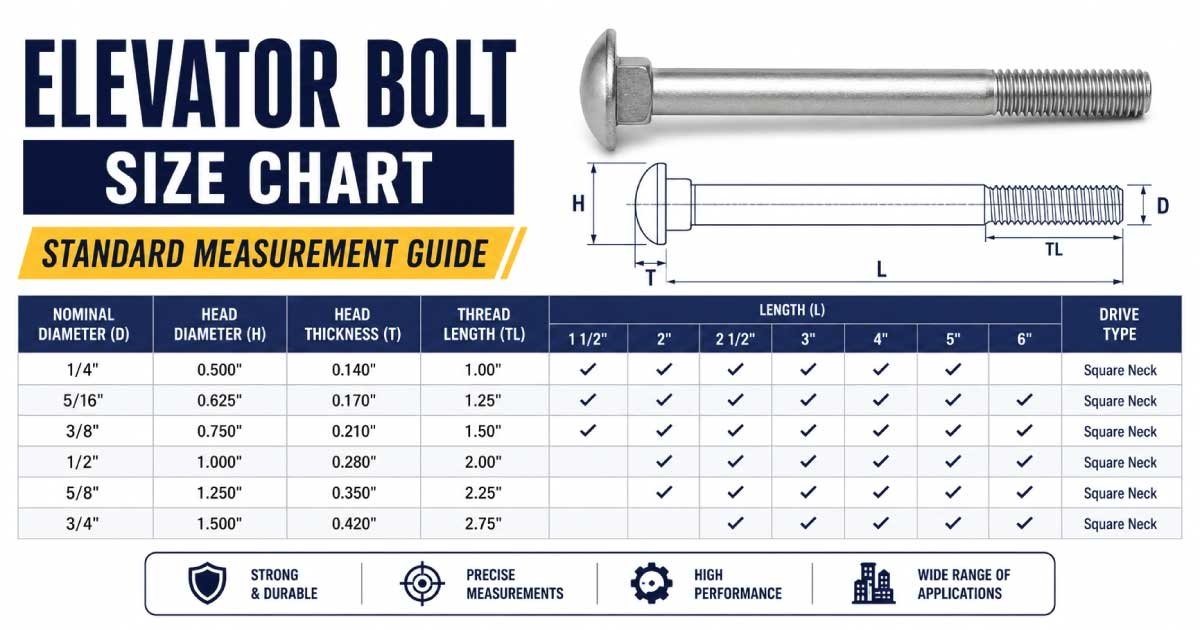
Elevator bolts are specialized fasteners designed with a large, flat head and a square neck beneath the head. They are primarily used in conveyor systems, grain elevators, bucket elevators, agricultural equipment, and material handling machinery where a smooth surface is required to prevent material from catching.
Choosing the correct elevator bolt size ensures secure fastening, improved equipment performance, and longer service life.
This guide explains elevator bolt sizes, standard size charts, dimensions, materials, measurement methods, and selection tips.
What Is an Elevator Bolt?
An elevator bolt is a threaded fastener featuring a thin, oversized flat head and a square neck that locks into the mounting surface during tightening. Its broad head distributes the load over a larger area, reducing the risk of pull-through in soft materials such as rubber belts, wood, plastic, and conveyor buckets. Elevator bolts are commonly manufactured from carbon steel, stainless steel, and galvanized steel.
Primary Functions
- Secures conveyor buckets
- Fastens elevator belts
- Distributes load evenly
- Prevents material snagging
- Reduces pull-through
- Improves equipment safety
Common Types of Elevator Bolts
Different elevator bolt designs are available to suit various conveyor systems, belt materials, and industrial applications. Understanding these types helps ensure reliable fastening and long-term performance.
1. Standard Elevator Bolt
Standard elevator bolts feature a large flat head with a square neck that prevents the bolt from rotating during installation. They are widely used in bucket elevators and conveyor systems.
Advantages
- Smooth low-profile head
- Excellent load distribution
- Easy installation
- Reliable fastening
- Cost-effective solution
2. Countersunk Elevator Bolt
Countersunk elevator bolts sit flush with the surface, reducing wear on conveyor belts and minimizing interference with moving materials.
Benefits
- Flush installation
- Reduced belt wear
- Improved safety
- Smooth material flow
- Long service life
3. Stainless Steel Elevator Bolt
Stainless steel elevator bolts provide superior corrosion resistance, making them ideal for food processing, marine, and chemical environments where moisture or corrosive materials are present.
Applications
- Food processing plants
- Grain handling
- Marine equipment
- Chemical facilities
- Outdoor conveyors
4. Galvanized Elevator Bolt
Galvanized elevator bolts feature a zinc coating that protects against rust and corrosion. They are commonly used in outdoor equipment and agricultural machinery exposed to weather conditions.
Elevator Bolt Size Chart (Inch Sizes)
The following table lists common inch-size elevator bolts used in industrial and agricultural applications.
| Bolt Diameter | Thread Size | Common Lengths |
|---|---|---|
| 1/4″ | 20 TPI | 1/2″ – 2″ |
| 5/16″ | 18 TPI | 3/4″ – 3″ |
| 3/8″ | 16 TPI | 3/4″ – 4″ |
| 7/16″ | 14 TPI | 1″ – 4″ |
| 1/2″ | 13 TPI | 1″ – 5″ |
| 5/8″ | 11 TPI | 1-1/2″ – 6″ |
| 3/4″ | 10 TPI | 2″ – 8″ |
Metric Elevator Bolt Size Chart
Metric elevator bolts are commonly used in international industrial equipment and machinery.
| Bolt Size | Thread Pitch | Common Lengths |
|---|---|---|
| M6 | 1.0 mm | 16–50 mm |
| M8 | 1.25 mm | 20–60 mm |
| M10 | 1.5 mm | 25–80 mm |
| M12 | 1.75 mm | 30–100 mm |
| M16 | 2.0 mm | 40–120 mm |
| M20 | 2.5 mm | 50–150 mm |
| M24 | 3.0 mm | 60–180 mm |
Understanding Elevator Bolt Dimensions
Understanding elevator bolt dimensions helps ensure proper installation, secure fastening, and compatibility with conveyor buckets and belts. Accurate measurements also reduce installation errors and improve overall equipment reliability.
1. Bolt Diameter
Bolt diameter refers to the outside diameter of the threaded shank. This measurement determines the strength of the bolt and must match the corresponding hole size in the conveyor bucket or mounting surface.
2. Bolt Length
Bolt length is measured from the underside of the bolt head to the end of the threaded shank. Selecting the correct length ensures adequate thread engagement without excessive projection beyond the nut.
3. Head Diameter
The oversized head diameter distributes clamping force over a larger surface area, preventing pull-through and minimizing damage to conveyor belts or soft materials.
How to Measure an Elevator Bolt
Accurate measurements are essential when replacing an existing elevator bolt or selecting a new fastener for equipment maintenance. A digital caliper provides the most accurate results.
Step 1: Measure the Bolt Diameter
Measure the outside diameter of the threaded portion using a caliper.
Measurement Tips
- Clean the threads first
- Measure across the thread peaks
- Verify multiple points
- Compare with standard size charts
Step 2: Measure the Bolt Length
Measure from the underside of the bolt head to the end of the threaded shank. Do not include the head thickness in the overall bolt length.
Step 3: Measure the Head Diameter
Measure the widest part of the bolt head. This dimension helps identify the correct elevator bolt style and ensures proper load distribution during installation.
🔧 Read Detailed Size Guide 👉 U Bolt Dimensions and Selection Guide for Your Project
Common Elevator Bolt Materials
The material of an elevator bolt affects its strength, corrosion resistance, and service life. Selecting the proper material improves reliability under different operating conditions.
Carbon Steel Elevator Bolts
Carbon steel elevator bolts are widely used because they provide high strength and economical performance for general industrial applications.
Advantages
- High strength
- Cost-effective
- Good durability
- Easy availability
- Suitable for dry environments
Stainless Steel Elevator Bolts
Stainless steel elevator bolts resist corrosion and moisture, making them suitable for food processing, marine environments, and outdoor equipment.
Benefits
- Excellent corrosion resistance
- Hygienic surface
- Long service life
- Low maintenance
- Weather resistant
Galvanized Steel Elevator Bolts
Galvanized elevator bolts feature a protective zinc coating that improves resistance to rust and extends service life in outdoor and agricultural applications.
Applications of Elevator Bolts
Elevator bolts are used wherever a large, smooth head and secure fastening are required to prevent material damage and maintain efficient operation.
Agricultural Equipment
Elevator bolts secure conveyor buckets, grain handling systems, feed processing equipment, and agricultural machinery where reliable fastening is essential.
Common Applications
- Grain elevators
- Feed mills
- Harvesting equipment
- Conveyor systems
- Storage facilities
Material Handling Systems
Industrial conveyor systems use elevator bolts to fasten buckets, belts, and components while maintaining smooth movement and reducing wear.
Typical Uses
- Mining conveyors
- Cement plants
- Food processing lines
- Recycling facilities
- Manufacturing plants
🔧 Read Detailed Size Guide 👉 Cotter Pin Size Chart for Secure Connections
How to Choose the Correct Elevator Bolt Size
Selecting the correct elevator bolt size is essential for maintaining secure bucket attachment, preventing conveyor belt damage, and ensuring reliable equipment operation. The bolt must match the bucket hole diameter, belt thickness, load requirements, and operating environment. Choosing the proper size improves fastening strength, reduces maintenance, and extends the life of the conveyor system.
Selection Checklist
- Measure the bucket hole diameter
- Determine the belt thickness
- Select the correct bolt diameter
- Choose the proper bolt length
- Verify the thread size
- Select the right head style
- Choose a corrosion-resistant material
- Check load requirements
- Match the nut and washer size
- Follow equipment manufacturer recommendations
Elevator Bolt Material Comparison
Different materials provide varying levels of strength, corrosion resistance, and durability. Selecting the appropriate material ensures reliable performance in your operating environment.
| Material | Best Applications | Main Advantages |
|---|---|---|
| Carbon Steel | General industrial use | High strength and economical |
| Galvanized Steel | Outdoor equipment | Excellent rust resistance |
| Stainless Steel 304 | Food processing | Corrosion resistant and hygienic |
| Stainless Steel 316 | Marine environments | Superior corrosion resistance |
| Alloy Steel | Heavy-duty machinery | High tensile strength |
| Zinc-Plated Steel | Indoor conveyors | Affordable corrosion protection |
Elevator Bolt Strength Grades
Elevator bolts are manufactured in different strength grades to accommodate varying load capacities. Selecting the correct grade improves safety and fastening reliability.
Common Strength Grades
The most commonly used grades include:
- Grade 2
- Grade 5
- Grade 8
- Class 4.6
- Class 5.8
- Class 8.8
- Class 10.9
- Class 12.9
Higher grades provide greater tensile strength and are preferred for heavy-duty industrial machinery and high-load conveyor systems.
Common Elevator Bolt Installation Mistakes
Improper installation can lead to loose buckets, damaged conveyor belts, and premature fastener failure. Following correct installation practices helps maintain long-term reliability.
Avoid these common mistakes:
- Choosing the wrong bolt size
- Using an incorrect bolt length
- Overtightening the nut
- Undertightening the fastener
- Reusing damaged bolts
- Installing worn nuts
- Ignoring torque specifications
- Misaligning the bucket holes
- Using incompatible washers
- Failing to inspect the belt condition
Elevator Bolt Maintenance Tips
Routine inspection and maintenance improve conveyor reliability while reducing unexpected downtime. Regular maintenance also helps identify worn fasteners before failures occur.
Maintenance recommendations include:
- Inspect bolts regularly
- Check nut tightness
- Replace worn fasteners
- Inspect bucket alignment
- Look for corrosion
- Examine thread damage
- Clean accumulated debris
- Monitor conveyor vibration
- Replace damaged washers
- Follow preventive maintenance schedules
Consistent maintenance extends the service life of both the fasteners and the conveyor system.
🔧 Read Detailed Size Guide 👉 Retaining Ring Sizes Explained with Uses (Complete Guide)
Advantages of Using the Correct Elevator Bolt Size
Using properly sized elevator bolts improves fastening performance while protecting conveyor belts and buckets from unnecessary damage.
Major advantages include:
- Secure bucket attachment
- Even load distribution
- Reduced belt wear
- Improved equipment safety
- Lower maintenance costs
- Increased conveyor efficiency
- Longer fastener life
- Better vibration resistance
- Reduced downtime
- Improved operational reliability
Signs an Elevator Bolt Needs Replacement
Elevator bolts experience continuous vibration, impact loads, and environmental exposure. Routine inspections help detect wear before major equipment failures occur.
Common warning signs include:
- Loose conveyor buckets
- Corroded bolt heads
- Bent bolt shanks
- Damaged threads
- Cracked bolt heads
- Missing fasteners
- Excessive vibration
- Worn square neck
- Rust formation
- Frequent bolt loosening
Replacing damaged bolts promptly helps prevent costly conveyor breakdowns.
Applications of Elevator Bolts Across Industries
Elevator bolts are used in numerous industries that rely on conveyor systems and material handling equipment because of their secure fastening and smooth head design.
Agriculture
Agricultural equipment uses elevator bolts to secure grain buckets, feed conveyors, seed handling systems, and harvesting machinery while reducing belt wear.
Mining Industry
Mining operations rely on heavy-duty elevator bolts for bucket elevators, aggregate conveyors, ore handling equipment, and bulk material transport systems.
Food Processing
Food-grade stainless steel elevator bolts are widely used in flour mills, grain processing facilities, sugar plants, and food production lines because they resist corrosion and support hygienic operations.
Cement and Manufacturing Plants
Industrial manufacturing facilities use elevator bolts in bulk material handling systems, conveyor belts, crushers, and processing equipment where dependable fastening is essential.
Bottom Line
Choosing the correct elevator bolt size is essential for ensuring secure fastening, reducing conveyor belt wear, and maintaining reliable material handling equipment.
By understanding bolt dimensions, strength grades, materials, and installation requirements, maintenance professionals and engineers can confidently select the right fastener for any application.
Using accurate elevator bolt size charts, following proper installation procedures, and performing regular inspections significantly improves equipment reliability, extends service life, reduces maintenance costs,
and enhances operational efficiency in agricultural, mining, manufacturing, food processing, and industrial conveyor systems.
FAQs:
How do I determine the correct elevator bolt size?
Measure the bucket hole diameter, conveyor belt thickness, and the required thread length before selecting an elevator bolt. Compare these measurements with a standard elevator bolt size chart to choose the correct diameter, length, thread specification, and strength grade for a secure, reliable, and long-lasting installation.
What is the difference between an elevator bolt and a carriage bolt?
An elevator bolt features a large, thin flat head that distributes pressure evenly across conveyor belts and buckets, reducing wear and preventing pull-through. A carriage bolt has a smooth, rounded dome head with a square neck, making it better suited for fastening wood, metal, and structural assemblies.
Which material is best for elevator bolts?
The best material depends on the application. Carbon steel is ideal for general industrial use, galvanized steel provides improved corrosion resistance in outdoor environments, and stainless steel is the preferred option for food processing, marine applications, and locations exposed to moisture, chemicals, or corrosive conditions.
Can elevator bolts be reused?
Although elevator bolts may be reused if they remain free from damage, wear, or corrosion, replacement is generally recommended during maintenance. Installing new bolts helps maintain proper clamping force, improves equipment reliability, reduces the risk of failure, and supports safe, efficient conveyor system operation over time.
How long do elevator bolts typically last?
The lifespan of elevator bolts depends on operating conditions, material quality, vibration levels, load requirements, environmental exposure, and maintenance practices. Properly installed, high-quality elevator bolts can provide many years of dependable service when regularly inspected and replaced before excessive wear or corrosion develops.

Engineer Hassan is a Mechanical Engineer with 16+ years of hands-on experience in mechanical hardware, fasteners, and workshop tools. He focuses on size selection, thread identification, and measurement, helping users choose the correct components with accuracy and safety.