
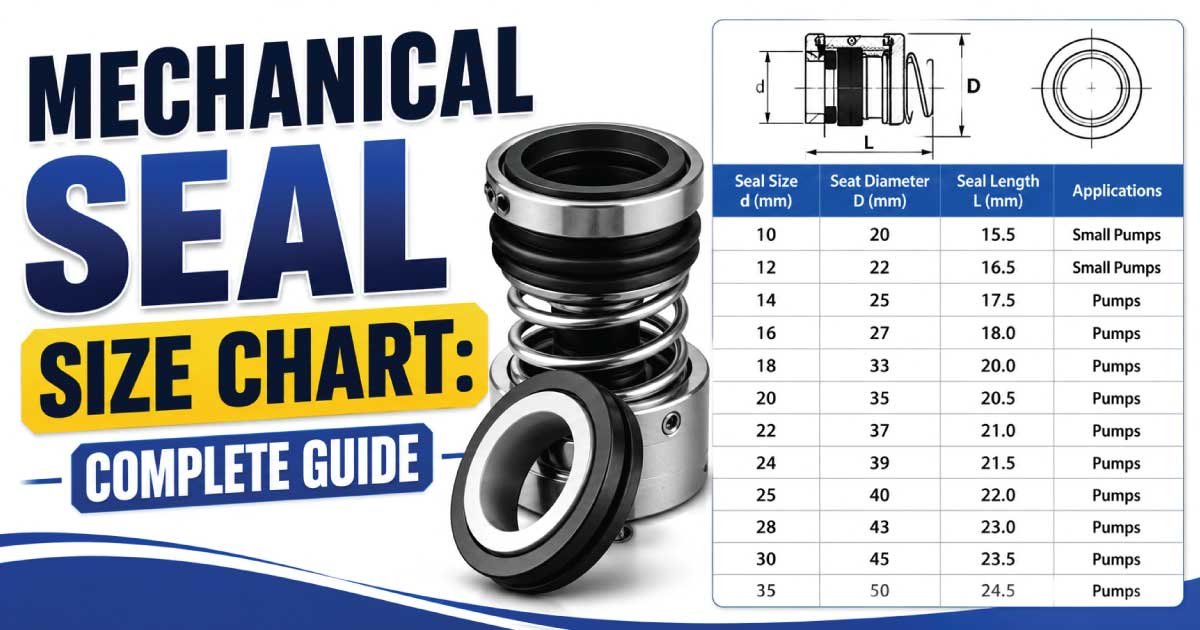
Mechanical seals are precision sealing devices used to prevent leakage between a rotating shaft and stationary equipment such as pumps, mixers, compressors, and agitators.
They consist of two flat sealing faces that remain in contact while the shaft rotates, creating a reliable seal that minimizes fluid loss and protects equipment from contamination.
Mechanical seals are widely used in water treatment plants, chemical processing, oil and gas, food processing, pharmaceuticals, and industrial manufacturing.
Choosing the correct mechanical seal size is essential for ensuring leak-free operation, extending equipment life, and reducing maintenance costs. This guide provides a standard mechanical seal size chart, explains how to measure mechanical seals, discusses common seal materials and types, and offers practical tips for selecting the right size.
Standard Mechanical Seal Size Chart
The following chart lists common metric mechanical seal sizes used in pumps and rotating equipment.
| Shaft Size | Seal Outside Diameter | Seat Outside Diameter | Seal Height | Typical Applications |
|---|---|---|---|---|
| 10 mm | 22 mm | 20 mm | 18 mm | Small water pumps |
| 12 mm | 24 mm | 22 mm | 20 mm | Circulation pumps |
| 14 mm | 26 mm | 24 mm | 22 mm | Chemical pumps |
| 16 mm | 28 mm | 26 mm | 24 mm | Cooling systems |
| 20 mm | 35 mm | 32 mm | 28 mm | Industrial pumps |
| 25 mm | 40 mm | 37 mm | 32 mm | Process equipment |
| 30 mm | 45 mm | 42 mm | 35 mm | Centrifugal pumps |
| 35 mm | 50 mm | 47 mm | 38 mm | Water treatment systems |
| 40 mm | 55 mm | 52 mm | 42 mm | Heavy-duty pumps |
| 50 mm | 65 mm | 62 mm | 48 mm | Large industrial machinery |
Imperial Mechanical Seal Size Chart
| Shaft Size | Seal Outside Diameter | Seat Outside Diameter | Common Applications |
|---|---|---|---|
| 1/2″ | 1.00″ | 0.88″ | Small pumps |
| 5/8″ | 1.13″ | 1.00″ | HVAC systems |
| 3/4″ | 1.25″ | 1.13″ | Water pumps |
| 1″ | 1.63″ | 1.50″ | Industrial equipment |
| 1-1/4″ | 2.00″ | 1.88″ | Chemical processing |
| 1-1/2″ | 2.25″ | 2.13″ | Process pumps |
| 2″ | 2.75″ | 2.63″ | Heavy-duty applications |
Why Mechanical Seal Size Matters
Selecting the correct mechanical seal size is essential for reliable equipment operation. A seal that is too small will not fit the shaft, while an oversized seal may fail to maintain proper contact pressure, leading to leakage and premature wear.
Benefits of choosing the correct seal size include:
- Leak-free operation
- Reduced equipment downtime
- Longer seal life
- Lower maintenance costs
- Improved pump efficiency
- Better shaft protection
- Increased operational reliability
How to Measure a Mechanical Seal
Accurate measurements ensure proper seal replacement.
Follow these steps:
- Measure the shaft diameter.
- Measure the seal housing bore.
- Measure the seal seat outside diameter.
- Measure the installed seal height.
- Identify the seal type.
- Check the spring configuration.
- Verify the manufacturer’s specifications.
Using a digital caliper provides the most accurate measurements.
Also Read: Roller Bearing Size Chart: Full Guide with PDF and Images
Common Types of Mechanical Seals
Mechanical seals are available in various designs for different operating conditions.
Single Mechanical Seals
The most common type, suitable for clean liquids and general industrial applications.
Double Mechanical Seals
Use two sealing faces for hazardous, abrasive, or high-pressure fluids.
Balanced Mechanical Seals
Designed to reduce face loading and improve performance in high-pressure applications.
Unbalanced Mechanical Seals
Provide a simple, cost-effective solution for low- to moderate-pressure systems.
Cartridge Mechanical Seals
Pre-assembled units that simplify installation and reduce alignment errors.
Common Mechanical Seal Materials
Material selection depends on the operating fluid, temperature, and pressure.
Carbon Graphite: Offers excellent self-lubricating properties and is widely used for seal faces.
Silicon Carbide: Provides outstanding wear resistance and is ideal for abrasive fluids.
Tungsten Carbide: Suitable for high-pressure and heavy-duty industrial applications.
Ceramic: A cost-effective choice for clean water and light industrial services.
Viton (FKM): A common elastomer with excellent resistance to heat, oils, and chemicals.
EPDM: Recommended for water, steam, and glycol-based fluids.
Also Read: Flange Size Chart 2026: Complete Flange Size Guide
How to Choose the Right Mechanical Seal Size
Consider the following factors before selecting a mechanical seal:
- Measure the shaft diameter accurately.
- Match the seal to the pump model.
- Consider operating pressure.
- Verify operating temperature.
- Choose compatible face materials.
- Select the appropriate elastomer.
- Ensure chemical compatibility with the pumped fluid.
Proper sizing improves sealing performance and extends equipment life.
Common Applications of Mechanical Seals
Mechanical seals are used in numerous industrial systems.
Typical applications include:
- Centrifugal pumps
- Water treatment plants
- Chemical processing
- Oil and gas equipment
- Food and beverage production
- Pharmaceutical manufacturing
- HVAC systems
- Marine pumps
- Mining equipment
- Industrial compressors
Also Read: Reamer Size Chart: Complete Guide 2026 with PDF
Installation Tips
Proper installation ensures reliable sealing performance.
- Clean the shaft and housing thoroughly.
- Inspect for shaft wear.
- Lubricate elastomer components when recommended.
- Avoid touching polished seal faces.
- Install the seal squarely.
- Verify proper alignment.
- Follow the manufacturer’s installation instructions.
Correct installation significantly extends seal life.
Common Mistakes to Avoid
Avoid these common mechanical seal installation errors:
- Selecting the wrong shaft size
- Installing damaged seal faces
- Running the pump dry
- Ignoring shaft wear
- Using incompatible materials
- Improper alignment
- Failing to clean installation surfaces
These mistakes can lead to premature seal failure and equipment damage.
Benefits of Properly Sized Mechanical Seals
Using the correct mechanical seal size provides several advantages.
- Reliable leak prevention
- Reduced maintenance requirements
- Improved equipment efficiency
- Longer service life
- Lower operating costs
- Better environmental protection
- Increased system reliability
Proper seal selection helps maximize equipment performance and minimize downtime.
Maintenance Tips
Routine maintenance extends the lifespan of mechanical seals.
- Inspect seals for leakage.
- Monitor shaft vibration.
- Check operating temperature regularly.
- Replace worn seal faces promptly.
- Maintain proper lubrication where required.
- Inspect elastomers for cracking or swelling.
- Schedule routine pump maintenance.
Regular inspections help prevent unexpected seal failures and costly repairs.
Conclusion
Choosing the correct mechanical seal size is essential for maintaining efficient, leak-free operation in pumps, compressors, mixers, and other rotating equipment.
By accurately measuring the shaft diameter, seal housing, and installation dimensions, selecting compatible materials, and following proper installation procedures, you can significantly improve equipment reliability and reduce maintenance costs.
Always refer to a mechanical seal size chart and the equipment manufacturer’s specifications before purchasing a replacement seal to ensure the best fit and long-term performance.

Engineer Hassan is a Mechanical Engineer with 16+ years of hands-on experience in mechanical hardware, fasteners, and workshop tools. He focuses on size selection, thread identification, and measurement, helping users choose the correct components with accuracy and safety.