
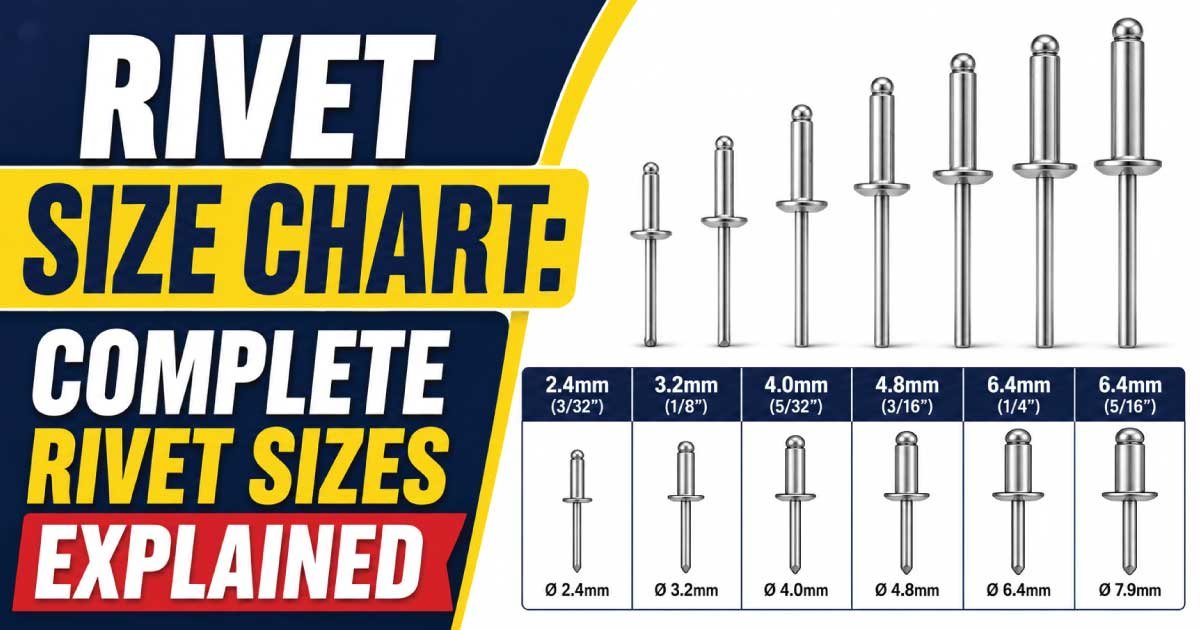
Rivets are permanent mechanical fasteners used to join two or more materials together. They consist of a smooth cylindrical shaft with a pre-formed head, and once installed, the opposite end is deformed to create a second head that permanently secures the joint. Rivets are widely used in aerospace, automotive, construction, shipbuilding, metal fabrication, HVAC systems, and general manufacturing because they provide strong, vibration-resistant connections.
Choosing the correct rivet size is essential for achieving maximum joint strength, proper load distribution, and long-lasting performance. This guide provides a standard rivet size chart, explains how to measure rivets, discusses common rivet materials and types, and offers practical tips for selecting the right size.
Standard Metric Rivet Size Chart
The following chart lists common metric blind (pop) rivet sizes used in industrial and construction applications.
| Rivet Diameter | Rivet Length | Grip Range | Hole Size | Common Applications |
|---|---|---|---|---|
| 2.4 mm | 6 mm | 1–3 mm | 2.5 mm | Electronics, light sheet metal |
| 3.2 mm | 6 mm | 1–4 mm | 3.3 mm | HVAC ductwork |
| 3.2 mm | 8 mm | 3–5 mm | 3.3 mm | Aluminum panels |
| 4.0 mm | 8 mm | 2–5 mm | 4.1 mm | Automotive trim |
| 4.8 mm | 10 mm | 3–6 mm | 4.9 mm | Metal fabrication |
| 4.8 mm | 12 mm | 5–8 mm | 4.9 mm | Steel assemblies |
| 6.4 mm | 12 mm | 4–8 mm | 6.5 mm | Structural panels |
| 6.4 mm | 16 mm | 8–12 mm | 6.5 mm | Heavy-duty fabrication |
| 8.0 mm | 16 mm | 8–14 mm | 8.1 mm | Industrial equipment |
| 8.0 mm | 20 mm | 12–16 mm | 8.1 mm | Heavy structural applications |
Imperial Rivet Size Chart
| Rivet Diameter | Rivet Length | Grip Range | Drill Size | Typical Applications |
|---|---|---|---|---|
| 3/32″ | 1/4″ | 1/16″–1/8″ | #40 | Thin sheet metal |
| 1/8″ | 1/4″ | 1/8″–3/16″ | #30 | General fabrication |
| 5/32″ | 3/8″ | 3/16″–1/4″ | #20 | Automotive repairs |
| 3/16″ | 1/2″ | 1/4″–3/8″ | #11 | Structural joints |
| 1/4″ | 5/8″ | 3/8″–1/2″ | F Drill | Heavy-duty assemblies |
Why Rivet Size Matters
Choosing the correct rivet size is critical for creating a strong and durable joint. A rivet that is too small may not provide enough holding strength, while an oversized rivet may require excessive hole enlargement and weaken the surrounding material.
Benefits of selecting the proper rivet size include:
- Strong permanent fastening
- Better load distribution
- Improved vibration resistance
- Reduced joint failure
- Longer service life
- Cleaner installation
- Increased structural reliability
How to Measure a Rivet
Accurate measurements help ensure proper rivet selection.
Follow these steps:
- Measure the rivet shank diameter.
- Measure the overall rivet length.
- Determine the grip range.
- Measure the head diameter.
- Check the head style.
- Measure the required hole diameter.
- Calculate the total thickness of the materials being joined.
The rivet length should be appropriate for the combined thickness of the materials to allow proper head formation.
Also Read: Chisel Sizes and Their Applications for Beginners
Common Types of Rivets
Different rivet designs are used for specific fastening requirements.
Blind (Pop) Rivets
Installed from one side only, making them ideal where access to the back of the joint is limited.
Solid Rivets
Provide the highest strength and are commonly used in aircraft, bridges, and structural steelwork.
Semi-Tubular Rivets
Require less installation force and are commonly used in mechanical assemblies and consumer products.
Tubular Rivets
Designed for lightweight applications such as leather goods, textiles, and small hardware.
Structural Rivets
Engineered for heavy-duty applications requiring exceptional shear and tensile strength.
Common Rivet Materials
Material selection affects strength, corrosion resistance, and application suitability.
Aluminum
Lightweight, corrosion-resistant, and widely used in sheet metal and HVAC applications.
Steel
Offers high strength for construction, machinery, and structural assemblies.
Stainless Steel
Provides outstanding corrosion resistance for marine, food-processing, and outdoor environments.
Copper
Ideal for electrical applications due to its excellent conductivity and corrosion resistance.
Brass
Commonly used in decorative and marine applications because of its attractive finish and corrosion resistance.
Also Read: Micrometer Screw Gauge Reading Guide for Beginners
How to Choose the Right Rivet Size
Consider these factors before selecting a rivet:
- Measure the total material thickness.
- Select the correct rivet diameter.
- Choose the proper rivet length.
- Verify the grip range.
- Match the rivet material to the application.
- Consider shear and tensile load requirements.
- Select the appropriate rivet head style.
Proper sizing ensures maximum joint strength and durability.
Common Applications of Rivets
Rivets are used in numerous industries.
Typical applications include:
- Aircraft manufacturing
- Automotive assembly
- HVAC ductwork
- Metal roofing
- Construction projects
- Shipbuilding
- Furniture manufacturing
- Electrical enclosures
- Aluminum fabrication
- Industrial machinery
Installation Tips
Proper installation helps ensure a secure and long-lasting joint.
- Drill the correct hole size.
- Remove burrs before installing the rivet.
- Insert the rivet fully into the hole.
- Use the correct rivet gun or installation tool.
- Verify the formed head after installation.
- Replace damaged rivets immediately.
- Inspect the finished joint for proper alignment.
Correct installation improves joint strength and reliability.
Common Mistakes to Avoid
Avoid these common rivet installation errors:
- Choosing the wrong rivet diameter
- Selecting an incorrect rivet length
- Using the wrong drill size
- Mixing incompatible materials
- Installing rivets in oversized holes
- Failing to remove burrs
- Using damaged installation tools
These mistakes can weaken the joint and reduce overall performance.
Also Read: Feeler Gauge Sizes and Their Practical Uses
Benefits of Properly Sized Rivets
Using the correct rivet size provides several advantages.
- High-strength permanent fastening
- Excellent vibration resistance
- Uniform load distribution
- Improved structural integrity
- Lower maintenance requirements
- Long service life
- Reliable performance in demanding environments
Proper rivet sizing improves both safety and assembly quality.
Maintenance Tips
Although rivets are permanent fasteners, regular inspections help maintain structural integrity.
- Inspect rivets for looseness.
- Check for corrosion or rust.
- Replace damaged rivets promptly.
- Inspect surrounding material for cracks.
- Monitor high-vibration joints regularly.
- Clean exposed rivets in corrosive environments.
- Include riveted joints in routine maintenance schedules.
Regular inspections help extend the lifespan of riveted assemblies.
Also Read: What Is Cotter Pin? Sizes, Parts, Types and How to Choose
Frequently Asked Questions
1. How do I choose the correct rivet size?
Choose a rivet based on the total thickness of the materials being joined, known as the grip range. The rivet diameter and length should match the application and hole size to provide a strong, permanent connection with proper load distribution and long-lasting performance.
2. What are the different types of rivets?
Common rivet types include blind (pop) rivets, solid rivets, semi-tubular rivets, tubular rivets, and structural rivets. Each type is designed for specific applications, ranging from lightweight sheet metal assemblies to heavy-duty structural connections in aerospace, construction, and industrial equipment.
3. What material is best for rivets?
The best rivet material depends on the application. Aluminum is lightweight and corrosion-resistant, steel provides high strength, stainless steel is ideal for marine and outdoor environments, while copper and brass are commonly used for electrical and decorative applications.
4. Can rivets be removed and reused?
No, rivets are permanent fasteners and cannot be reused once installed. To remove a rivet, it must be drilled out or cut away, which destroys the fastener. A new rivet should always be installed to maintain the strength and reliability of the joint.
5. Why is selecting the correct rivet size important?
Selecting the correct rivet size ensures a secure, vibration-resistant joint with proper load distribution and maximum holding strength. Using the wrong size can weaken the connection, cause premature joint failure, damage surrounding materials, and reduce the overall durability and safety of the assembly.
Conclusion
Choosing the correct rivet size is essential for creating strong, permanent, and reliable joints in metal, plastic, and composite materials. By accurately measuring the rivet diameter, length, grip range, and material thickness, you can select the ideal fastener for your application. Whether used in aerospace, automotive, construction, or general fabrication, the right rivet size improves structural strength, reduces maintenance, and ensures long-term performance. Always consult a rivet size chart before purchasing or installing rivets for the best results.

Engineer Hassan is a Mechanical Engineer with 16+ years of hands-on experience in mechanical hardware, fasteners, and workshop tools. He focuses on size selection, thread identification, and measurement, helping users choose the correct components with accuracy and safety.