
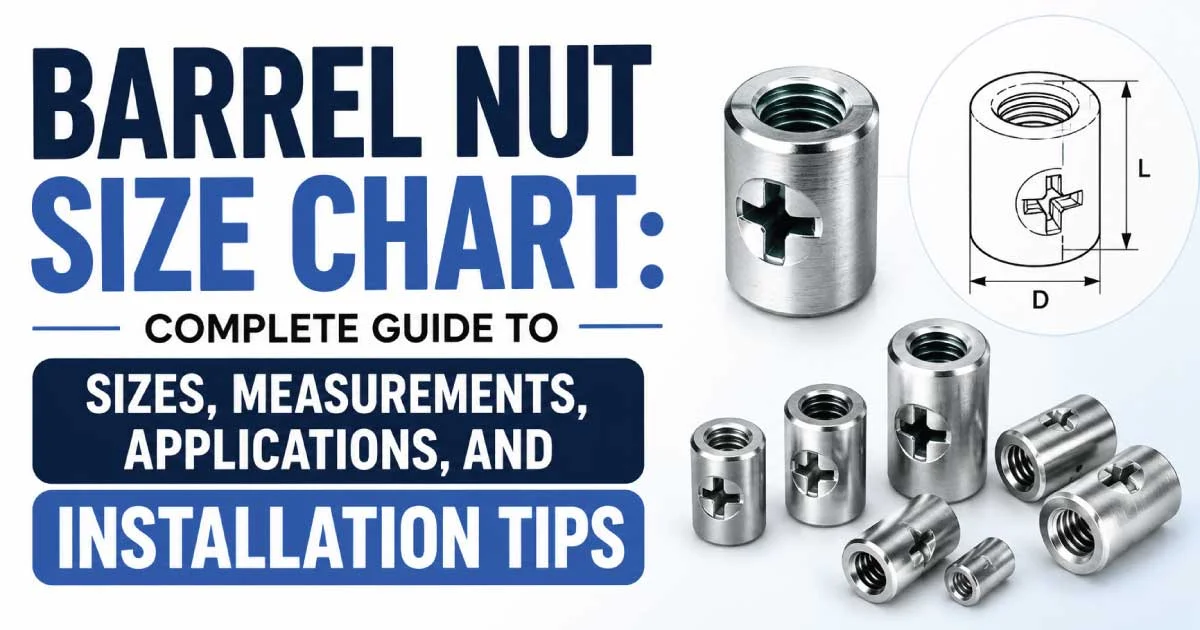
A barrel nut size chart is a reference table that helps users identify the correct barrel nut dimensions for different applications. It lists essential measurements such as thread size, outer diameter, length, and compatible bolt size. Using the correct chart ensures secure fastening, prevents mismatched hardware, and improves structural reliability in woodworking, furniture assembly, automotive projects, and industrial equipment.
Why a Barrel Nut Size Chart Is Important
Choosing the correct barrel nut is impossible without understanding its dimensions. A size chart eliminates guesswork by matching bolts with compatible barrel nuts. Whether you are assembling furniture or repairing machinery, accurate sizing ensures proper load distribution, stronger joints, and easier installation while reducing the risk of stripped threads or loose connections.
Benefits of Using a Barrel Nut Size Chart
- Ensures accurate hardware selection.
- Prevents thread mismatch.
- Improves structural stability.
- Saves installation time.
- Reduces replacement costs.
- Increases equipment safety.
- Simplifies maintenance and repairs.
What Is a Barrel Nut?
A barrel nut is a cylindrical fastener with an internally threaded hole designed to work alongside a machine bolt. Unlike traditional hex nuts, barrel nuts fit into pre-drilled holes, creating a concealed fastening system.
They are widely used in flat-pack furniture, bicycles, automotive components, machinery, and metal fabrication because they provide excellent strength while maintaining a clean appearance.
How Does a Barrel Nut Work?
A barrel nut functions by aligning its threaded opening with a bolt inserted from another direction. Once the bolt tightens into the barrel nut, both components clamp materials together securely.
This cross-dowel fastening method distributes force evenly, making it ideal for applications requiring strong joints without exposed nuts or bulky hardware.
Main Components of a Barrel Nut
Understanding the different parts of a barrel nut makes it easier to choose the correct size and install it properly.
- Cylindrical body
- Internal threaded hole
- Alignment slot
- Outer diameter
- Length
- Thread pitch
- Material coating
Each component contributes to the overall performance and compatibility of the fastener.
Standard Barrel Nut Size Chart
The following chart provides common barrel nut dimensions used across woodworking, furniture manufacturing, and mechanical applications.
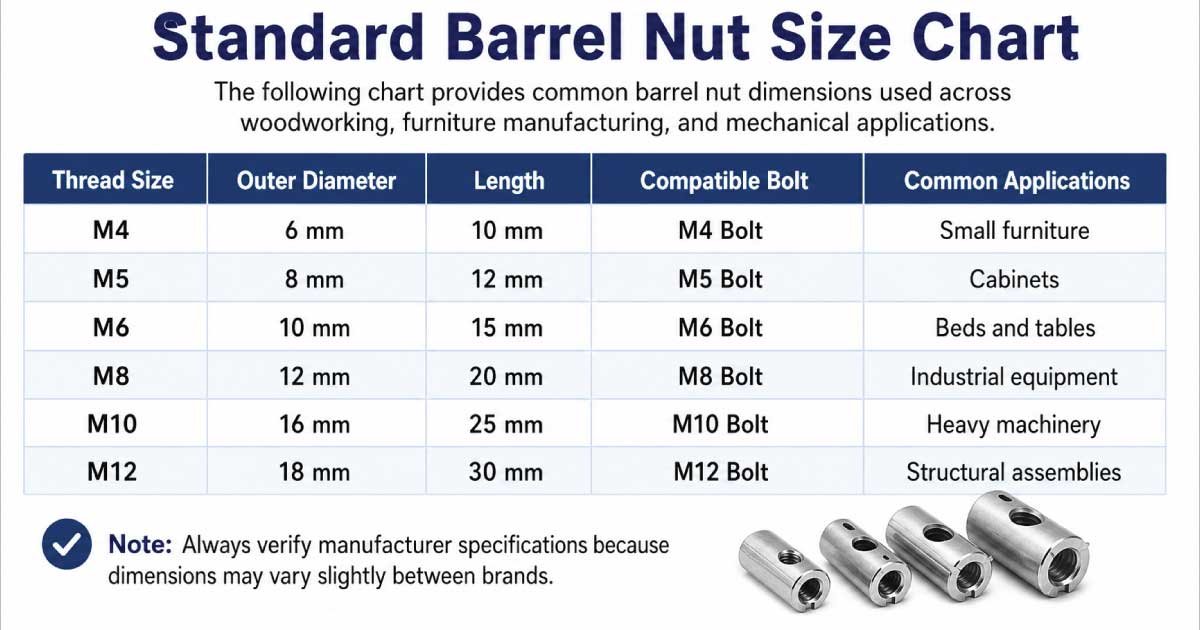
| Thread Size | Outer Diameter | Length | Compatible Bolt | Common Applications |
|---|---|---|---|---|
| M4 | 6 mm | 10 mm | M4 Bolt | Small furniture |
| M5 | 8 mm | 12 mm | M5 Bolt | Cabinets |
| M6 | 10 mm | 15 mm | M6 Bolt | Beds and tables |
| M8 | 12 mm | 20 mm | M8 Bolt | Industrial equipment |
| M10 | 16 mm | 25 mm | M10 Bolt | Heavy machinery |
| M12 | 18 mm | 30 mm | M12 Bolt | Structural assemblies |
Always verify manufacturer specifications because dimensions may vary slightly between brands.
Barrel Nut Size Chart PDF
This standard barrel nut size chart provides quick reference dimensions for common barrel nuts used in woodworking, furniture assembly, and mechanical applications. It includes thread size, outer diameter, length, compatible bolt, and typical uses, helping you select the correct barrel nut for secure, reliable, and accurate fastening in a wide range of projects.
📏 Expert Size Chart Resources 👉 Castle Nut Size Chart: Precision Measurement Guide
Understanding Barrel Nut Measurements
Reading a barrel nut size chart requires understanding several critical dimensions. Each measurement determines compatibility with bolts and installation holes. Ignoring even one specification can lead to poor alignment, reduced holding strength, or complete fastening failure during assembly or operation.
Thread Size
Thread size represents the diameter of the bolt that fits into the barrel nut. Metric sizes such as M4, M5, M6, M8, M10, and M12 are the most common. Selecting the correct thread size ensures smooth engagement, secure tightening, and maximum load-bearing capacity without damaging the internal threads.
Outer Diameter
The outer diameter determines the size of the hole required to accommodate the barrel nut. A properly sized hole keeps the nut securely positioned during installation while preventing unnecessary movement. Accurate diameter measurements improve alignment and help maintain the strength of the assembled structure.
Length
Barrel nut length affects how deeply the fastener sits inside the material. Choosing the correct length ensures full thread engagement while preventing protrusion beyond the workpiece. Longer barrel nuts generally provide greater holding strength, especially in heavy-duty applications requiring increased load distribution.
Thread Pitch
Thread pitch refers to the distance between adjacent threads inside the barrel nut. Metric fasteners typically follow standardized thread pitches, making compatibility easier. Matching thread pitch with the bolt prevents cross-threading, ensures smooth installation, and maximizes fastening performance.
Metric Barrel Nut Sizes
Metric barrel nuts are commonly used worldwide due to standardized sizing and compatibility with metric machine bolts. Industries including furniture manufacturing, engineering, construction, and automotive repair rely heavily on metric fasteners because they simplify maintenance and replacement across international markets.
| Metric Size | Typical Length | Outer Diameter |
|---|---|---|
| M4 | 10 mm | 6 mm |
| M5 | 12 mm | 8 mm |
| M6 | 15 mm | 10 mm |
| M8 | 20 mm | 12 mm |
| M10 | 25 mm | 16 mm |
| M12 | 30 mm | 18 mm |
Imperial Barrel Nut Sizes
Imperial barrel nuts remain common in North America, particularly for legacy equipment, woodworking, and automotive restoration. These sizes correspond to inch-based machine screws and bolts. Matching imperial hardware with the appropriate barrel nut ensures reliable fastening and avoids compatibility issues with metric components.
| Imperial Size | Approximate Diameter | Common Use |
|---|---|---|
| #8-32 | 0.164 inch | Furniture |
| #10-24 | 0.190 inch | Cabinets |
| 1/4-20 | 0.250 inch | Machinery |
| 5/16-18 | 0.312 inch | Equipment |
| 3/8-16 | 0.375 inch | Structural projects |
Common Materials Used for Barrel Nuts
The material used in a barrel nut significantly affects its durability, corrosion resistance, and strength. Manufacturers produce barrel nuts using different metals to suit various environments, ranging from indoor furniture to outdoor construction and heavy industrial machinery.
Stainless Steel
Stainless steel barrel nuts provide exceptional corrosion resistance and excellent durability. They are ideal for outdoor furniture, marine equipment, food processing machinery, and environments exposed to moisture or chemicals. Although more expensive, stainless steel offers superior longevity with minimal maintenance.
Carbon Steel
Carbon steel barrel nuts are widely used because they provide high tensile strength at an affordable cost. They are commonly coated with zinc or black oxide to improve corrosion resistance. These fasteners are popular in machinery, automotive repairs, and industrial manufacturing.
Brass
Brass barrel nuts resist corrosion while providing an attractive finish. They are commonly found in decorative furniture, electrical equipment, musical instruments, and marine applications where appearance and moderate strength are equally important.
Industries That Use Barrel Nuts
Barrel nuts serve numerous industries because they provide strong concealed fastening systems while maintaining easy disassembly for repairs and maintenance.
Common industries include:
- Furniture manufacturing
- Woodworking
- Automotive engineering
- Aerospace
- Bicycle manufacturing
- Medical equipment
- Construction
- Heavy machinery
- Agricultural equipment
- Industrial automation
Each industry relies on barrel nuts to create durable, secure, and aesthetically pleasing assemblies.
How to Choose the Right Barrel Nut Size
Selecting the correct barrel nut involves more than matching thread size. Material thickness, load requirements, environmental conditions, bolt length, and installation method all influence the ideal choice. Reviewing a barrel nut size chart alongside manufacturer recommendations helps ensure maximum performance, durability, and long-term reliability in any fastening application.
How to Measure a Barrel Nut Correctly
Measuring a barrel nut accurately ensures it fits both the bolt and the installation hole. Always use a digital caliper for precise readings. Record the thread size, overall length, outer diameter, and thread pitch before purchasing a replacement. Comparing these measurements with a barrel nut size chart minimizes installation errors and ensures dependable fastening performance.
Tools Needed for Measuring Barrel Nuts
The right tools improve measurement accuracy and reduce the chance of selecting incompatible hardware.
- Digital caliper
- Thread pitch gauge
- Steel ruler
- Micrometer
- Bolt gauge
- Vernier caliper
- Manufacturer specification sheet
Using proper measuring tools results in better compatibility and longer-lasting assemblies.
How to Read a Barrel Nut Size Chart
Reading a barrel nut size chart involves matching the thread size first, then confirming the barrel’s diameter and length. Finally, compare the thread pitch and compatible bolt size. Following this sequence simplifies hardware selection and helps prevent loose connections, stripped threads, or installation failures in woodworking and mechanical projects.
Reading the Chart Step by Step
Follow these steps for accurate selection:
- Identify the bolt thread size.
- Measure the barrel nut diameter.
- Measure the overall length.
- Verify the thread pitch.
- Check the recommended application.
- Confirm material compatibility.
- Compare with manufacturer specifications.
🔍 Popular Size Chart Guides 👉 Pipe Flange Size Chart: Standard Size Guide
How to Install a Barrel Nut
Proper installation improves joint strength and extends the lifespan of the fastening system. Carefully align the threaded hole with the bolt before tightening. Avoid forcing the bolt, as misalignment can damage threads. Gradually tighten until the joint is secure without applying excessive torque that could deform the surrounding material.
Installation Tips
- Align the slot before inserting the bolt.
- Tighten gradually instead of all at once.
- Use the recommended torque.
- Avoid overtightening.
- Ensure both components remain properly aligned.
- Inspect the assembly after tightening.
Common Barrel Nut Applications
Barrel nuts are versatile fasteners used across residential, commercial, and industrial environments. Their concealed design and excellent holding strength make them suitable for furniture, machinery, transportation equipment, and specialized engineering applications requiring durable and reusable mechanical joints.
Furniture Assembly
Flat-pack furniture frequently uses barrel nuts because they create hidden, strong connections while allowing repeated assembly and disassembly. Beds, wardrobes, desks, cabinets, shelving units, and dining tables commonly rely on barrel nuts to provide stable joints without visible external hardware.
Woodworking Projects
Woodworkers use barrel nuts when building benches, workstations, cabinets, custom shelving, and large wooden structures. These fasteners improve joint strength while maintaining a clean appearance, making them particularly valuable for premium furniture and architectural woodworking projects.
Automotive Industry
Automotive manufacturers and mechanics use barrel nuts in seat frames, structural supports, body panels, steering assemblies, and aftermarket modifications. Their secure fastening capability withstands vibration while allowing components to be removed for maintenance or replacement when necessary.
Industrial Machinery
Industrial equipment often experiences continuous vibration and heavy loads. Barrel nuts provide dependable fastening solutions for machine frames, production equipment, conveyor systems, manufacturing tools, and maintenance-access panels where repeated disassembly is required.
Advantages of Using Barrel Nuts
Barrel nuts offer several benefits over conventional nuts because they combine strength, concealment, and serviceability. Their design distributes forces efficiently, improves appearance, and allows convenient maintenance without compromising structural integrity across numerous applications.
Key Benefits
- Hidden fastening system
- Excellent load distribution
- High structural strength
- Reusable design
- Easy maintenance
- Professional appearance
- Reduced hardware exposure
- Long service life
- Wide size availability
- Strong vibration resistance
Disadvantages of Barrel Nuts
Despite their advantages, barrel nuts have several limitations that users should understand before selecting them. Proper planning and precise drilling are essential because installation mistakes can reduce joint strength or make alignment difficult during assembly.
Potential Drawbacks
- Requires accurate drilling
- Alignment can be time-consuming
- Not ideal for extremely thin materials
- Installation requires proper tools
- May cost more than standard nuts
- Limited accessibility after installation
Common Barrel Nut Materials Compared
Choosing the correct material depends on environmental conditions, strength requirements, and budget. The following comparison highlights the characteristics of the most commonly used barrel nut materials.
| Material | Strength | Corrosion Resistance | Typical Applications |
|---|---|---|---|
| Stainless Steel | Excellent | Excellent | Marine, outdoor equipment |
| Carbon Steel | Very High | Moderate | Machinery, automotive |
| Brass | Moderate | High | Decorative furniture, electrical equipment |
| Aluminum | Moderate | Good | Lightweight assemblies |
Common Mistakes When Choosing Barrel Nuts
Selecting the wrong barrel nut often leads to assembly problems, weakened joints, or damaged hardware. Understanding these common mistakes helps improve installation quality and reduces unnecessary replacement costs while ensuring reliable long-term performance.
Mistakes to Avoid
- Choosing the wrong thread size.
- Ignoring thread pitch.
- Measuring incorrectly.
- Selecting the wrong barrel length.
- Using incompatible bolt materials.
- Overtightening the bolt.
- Ignoring manufacturer recommendations.
- Using damaged barrel nuts.
Maintenance Tips for Barrel Nuts
Routine inspection helps extend the service life of barrel nuts. Periodically check fasteners for loosening, corrosion, thread wear, or physical damage. Replace worn hardware immediately and clean exposed components before reassembly to maintain reliable performance, especially in outdoor or high-vibration environments.
Maintenance Checklist
- Inspect annually.
- Clean accumulated dirt.
- Remove rust immediately.
- Replace worn components.
- Apply anti-seize when appropriate.
- Check bolt tightness regularly.
- Store spare hardware in dry conditions.
Barrel Nut vs Traditional Hex Nut
Although both serve as threaded fasteners, barrel nuts and hex nuts are designed for different applications. Barrel nuts provide concealed fastening and cross-bolt connections, whereas hex nuts require direct access and external tightening with standard tools.
| Feature | Barrel Nut | Hex Nut |
|---|---|---|
| Shape | Cylindrical | Hexagonal |
| Visibility | Hidden | Visible |
| Installation | Cross-bolt system | Standard bolt fastening |
| Appearance | Clean finish | Exposed hardware |
| Furniture Use | Excellent | Limited |
| Heavy Machinery | Excellent | Excellent |
Conclusion
A Barrel Nut Size Chart is an important reference tool for choosing the right fastener for furniture, woodworking, automotive, and industrial applications. It provides essential details about different barrel nut sizes, helping users identify the correct option for their specific projects. Using accurate measurements ensures better compatibility and improves the overall quality of assemblies.
Understanding key specifications such as thread size, outer diameter, length, and thread pitch is crucial for creating strong and reliable connections. These measurements determine how well the barrel nut fits with other components and how effectively it can handle pressure, movement, and regular use. Selecting the correct size helps prevent loose fittings and structural issues.
Accurate measurement, proper material selection, and correct installation techniques play a major role in maximizing the performance of barrel nuts. Avoiding common sizing mistakes ensures better durability, improved safety, and longer-lasting results in both small and large projects.
Whether you are a DIY enthusiast, woodworker, mechanic, or professional builder, keeping a dependable barrel nut size chart available makes hardware selection easier and more efficient. By following proper guidelines, you can improve project accuracy, strengthen assemblies, and achieve reliable results every time.

Engineer Hassan is a Mechanical Engineer with 16+ years of hands-on experience in mechanical hardware, fasteners, and workshop tools. He focuses on size selection, thread identification, and measurement, helping users choose the correct components with accuracy and safety.