
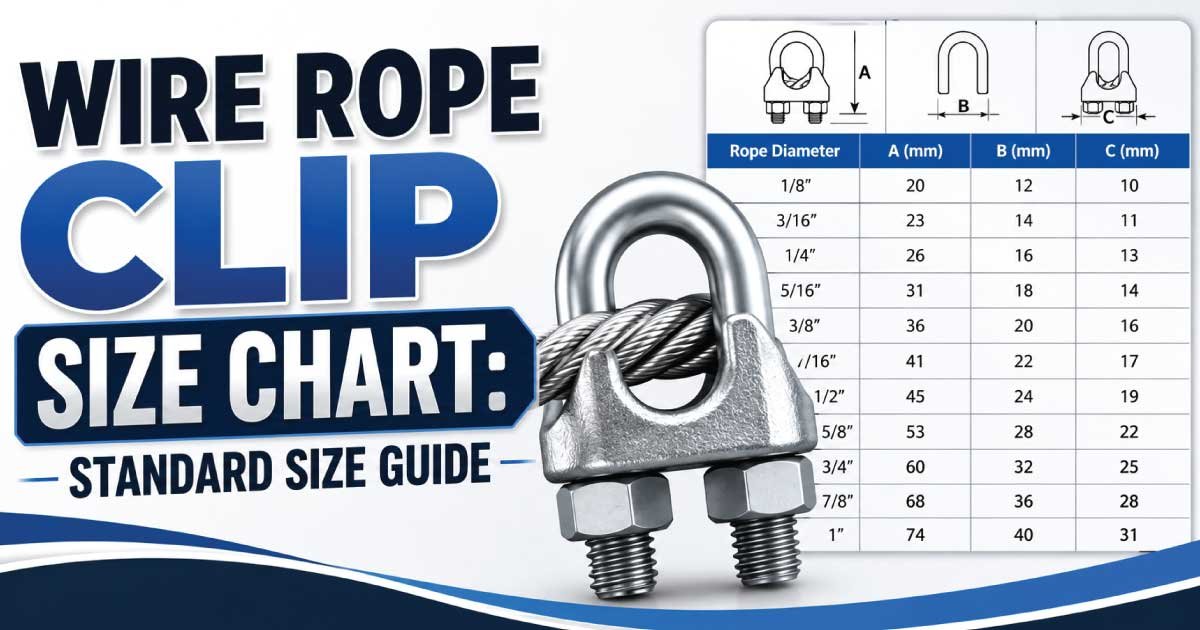
Wire rope clips, also known as cable clamps or wire rope clamps, are essential fasteners used to create loops, secure cable ends, and join wire ropes in lifting, rigging, marine, construction, and industrial applications.
Choosing the correct wire rope clip size is critical for ensuring a safe and secure connection. A clip that is too small may damage the rope, while an oversized clip may fail to grip it properly.
This guide includes a standard wire rope clip size chart, explains how to measure wire rope clips, discusses common materials, and provides practical tips for selecting the correct size.
Standard Wire Rope Clip Size Chart
The following chart lists common wire rope clip sizes and their recommended wire rope diameters.
| Wire Rope Diameter | Clip Size | Bolt Diameter | Approx. Dimensions (L × W) | Typical Applications |
|---|---|---|---|---|
| 1/8″ (3 mm) | 1/8″ | M4 | 25 × 18 mm | Light-duty cables, signs |
| 3/16″ (5 mm) | 3/16″ | M5 | 32 × 22 mm | Small fences, garden projects |
| 1/4″ (6 mm) | 1/4″ | M6 | 40 × 26 mm | Utility cables, gates |
| 5/16″ (8 mm) | 5/16″ | M8 | 48 × 30 mm | Marine and farm equipment |
| 3/8″ (10 mm) | 3/8″ | M10 | 58 × 36 mm | Winches, lifting systems |
| 1/2″ (12 mm) | 1/2″ | M12 | 72 × 44 mm | Construction and rigging |
| 5/8″ (16 mm) | 5/8″ | M16 | 88 × 54 mm | Heavy-duty lifting |
| 3/4″ (19 mm) | 3/4″ | M18 | 102 × 60 mm | Cranes and industrial use |
| 7/8″ (22 mm) | 7/8″ | M20 | 118 × 68 mm | Heavy rigging |
| 1″ (25 mm) | 1″ | M22 | 132 × 76 mm | Industrial and marine applications |
Why Wire Rope Clip Size Matters
Using the proper wire rope clip size ensures maximum grip and minimizes the risk of cable slippage. Incorrect sizing can reduce the strength of the wire rope assembly and increase the likelihood of failure under load.
Benefits of choosing the correct size include:
- Improved holding strength
- Better cable protection
- Increased safety
- Longer service life
- Easier installation
- Reliable performance under load
- Reduced maintenance
How to Measure a Wire Rope Clip
Selecting the correct clip starts with measuring the wire rope accurately.
Follow these steps:
- Measure the wire rope diameter.
- Measure the inside width of the clip.
- Check the bolt diameter.
- Measure the saddle width.
- Verify the overall clip dimensions.
- Confirm thread size and bolt length.
- Match the clip size exactly to the rope diameter.
Always measure the rope itself rather than estimating its size.
Also Read: Ratchet Size Chart: Best Guide for Every Mechanic
Common Materials Used for Wire Rope Clips
Different materials provide varying levels of strength and corrosion resistance.
Galvanized Steel: The most common option for outdoor construction, fencing, and general-purpose applications due to its corrosion resistance.
Stainless Steel: Ideal for marine environments, food processing facilities, and locations with high humidity where corrosion resistance is essential.
Forged Steel: Designed for heavy-duty lifting, rigging, and industrial applications that require high strength.
Malleable Iron: Commonly used in light-duty applications where cost is a primary consideration.
How Many Wire Rope Clips Should You Use?
The required number of clips depends on the diameter of the wire rope.
General recommendations include:
- 1/8″ to 3/16″ rope – 2 clips
- 1/4″ to 5/16″ rope – 3 clips
- 3/8″ to 1/2″ rope – 4 clips
- 5/8″ to 3/4″ rope – 5 clips
- 7/8″ to 1″ rope – 6 clips
Always follow the manufacturer’s recommendations for critical lifting applications.
Common Applications of Wire Rope Clips
Wire rope clips are used across many industries.
Typical applications include:
- Crane rigging
- Marine boats and docks
- Utility poles
- Suspension cables
- Farm fencing
- Winch cables
- Guy wires
- Construction projects
- Industrial lifting systems
- Shade structures
Installation Tips
Proper installation is just as important as selecting the correct size.
- Position the saddle on the live end of the rope.
- Place the U-bolt on the dead end.
- Tighten nuts evenly.
- Use the recommended number of clips.
- Space clips correctly.
- Retighten after the first load.
- Inspect clips periodically for wear.
A common reminder is: “Never saddle a dead horse,” meaning the saddle should always be installed on the live end of the wire rope.
Also Read: Barrel Nut Size Chart: Complete Guide Standard Size
Common Mistakes to Avoid
Avoid these common installation errors:
- Using the wrong clip size
- Installing too few clips
- Incorrect saddle placement
- Uneven bolt tightening
- Reusing damaged clips
- Ignoring torque specifications
- Skipping routine inspections
These mistakes can significantly reduce the strength of the wire rope connection.
Benefits of Properly Sized Wire Rope Clips
Selecting the correct clip size provides several advantages.
- Higher load capacity
- Improved cable security
- Better resistance to vibration
- Longer hardware lifespan
- Reduced maintenance costs
- Safer lifting operations
- Reliable long-term performance
Maintenance Tips
Routine inspection helps maintain safe operation.
- Check bolt tightness regularly.
- Inspect for rust or corrosion.
- Replace bent or damaged clips.
- Lubricate threaded components if needed.
- Clean debris from the assembly.
- Replace clips showing excessive wear.
- Inspect after heavy loading events.
Proper maintenance extends the service life of both the clips and the wire rope.
Also Read: Cross Dowel Size Chart: Complete Guide to Sizes
Conclusion
Choosing the correct wire rope clip size is essential for creating strong, secure, and dependable cable connections. By matching the clip size to the wire rope diameter, using the proper number of clips, and following correct installation practices, you can maximize safety and performance.
Whether used for construction, marine, agricultural, or industrial applications, the right wire rope clip ensures a durable and reliable connection that performs well under demanding conditions.
Frequently Asked Questions
How do I choose the correct wire rope clip size?
Choose a wire rope clip that exactly matches the diameter of your wire rope. Using the correct size ensures a secure grip, prevents cable damage, and maintains the strength of the assembly. Never use a clip that is smaller or larger than the wire rope diameter.
How many wire rope clips are required for a secure connection?
The number of wire rope clips depends on the wire rope diameter. Smaller ropes typically require two or three clips, while larger ropes may need four to six. Always follow the manufacturer’s recommendations and applicable safety standards for lifting and rigging applications.
What is the best material for wire rope clips?
Stainless steel wire rope clips are ideal for marine and corrosive environments because they resist rust. Galvanized steel clips are suitable for general outdoor use, while forged steel clips provide superior strength for heavy-duty industrial, construction, and lifting applications.
Can wire rope clips be reused after removal?
Wire rope clips should be carefully inspected before reuse. If a clip is bent, cracked, corroded, or has damaged threads, it should be replaced immediately. Reusing worn or damaged clips can reduce connection strength and create serious safety risks during operation.
What does “Never saddle a dead horse” mean?
This common installation rule means the saddle of the wire rope clip must always be placed on the live (load-bearing) end of the wire rope, while the U-bolt grips the dead end. Proper installation helps maintain maximum holding strength and prevents the rope from being damaged.
How often should wire rope clips be inspected?
Wire rope clips should be inspected before each use in critical lifting applications and periodically for general-purpose installations. Check for loose nuts, corrosion, cracks, deformation, and wear. Regular inspections and proper maintenance help ensure safe, reliable, and long-lasting wire rope connections.

Engineer Hassan is a Mechanical Engineer with 16+ years of hands-on experience in mechanical hardware, fasteners, and workshop tools. He focuses on size selection, thread identification, and measurement, helping users choose the correct components with accuracy and safety.