
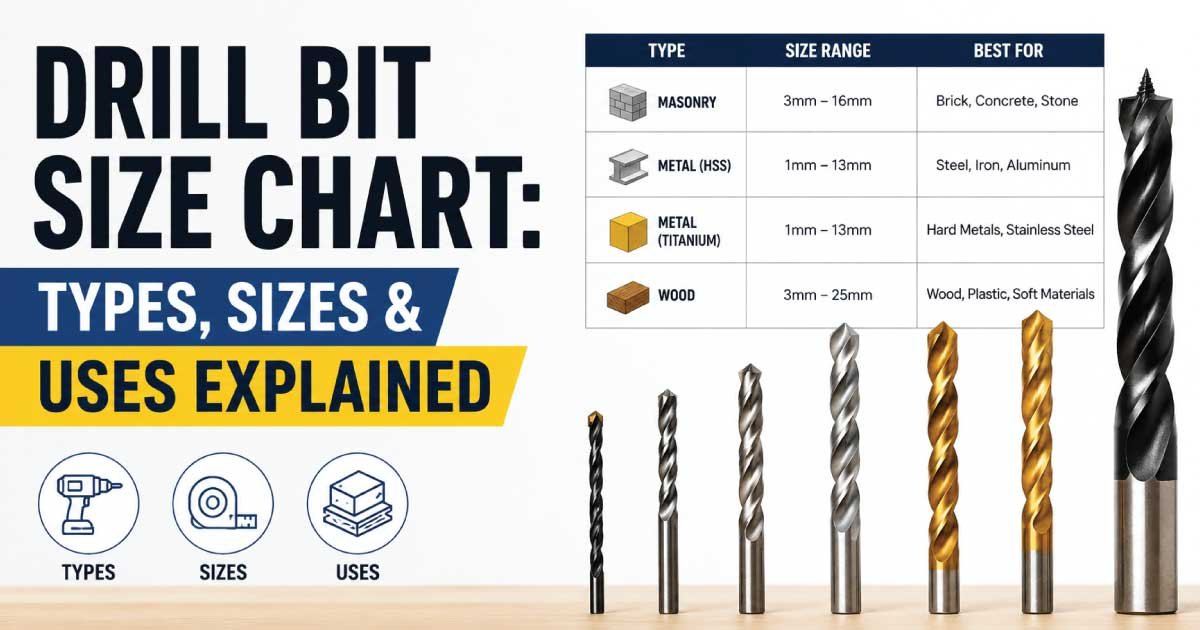
Drill bits are essential cutting tools used to create holes in wood, metal, plastic, masonry, and other materials. Whether you’re a DIY enthusiast, carpenter, mechanic, or contractor, understanding drill bit sizes helps ensure accurate holes, proper fastener fit, and professional results.
This complete guide covers drill bit size charts, measurement systems, drill bit types, conversion tables, and tips for choosing the right drill bit for your project.
What Is a Drill Bit?
A drill bit is a rotating cutting tool designed to create precise circular holes in a variety of materials when attached to a drill machine. It works by spinning at high speed while its cutting edges remove material, allowing the user to form clean and accurate holes. Drill bits are manufactured in different sizes, shapes, and materials depending on the type of work and the surface being drilled.
Drill bits are essential tools in both professional and DIY applications because they allow controlled and efficient drilling in wood, metal, plastic, masonry, and other materials. Selecting the correct type and size of drill bit is important to ensure accuracy, reduce wear on tools, and prevent damage to the work surface.
Common Uses of Drill Bits
Drill bits are widely used across multiple industries and everyday tasks. Their versatility makes them essential for construction, repair, and installation work.
- Woodworking
- Metal fabrication
- Construction projects
- Plumbing installations
- Electrical work
- Automotive repairs
- Home improvement projects
Using the correct drill bit size ensures cleaner holes, improves precision, and prevents cracking, splitting, or unnecessary damage to the material being drilled.
Understand The Drill Bit Sizes
Drill bit sizes are primarily determined by the diameter of the cutting tip, which directly controls the width of the hole created. Selecting the correct size is essential for ensuring proper fit, especially when preparing holes for screws, bolts, anchors, or other fasteners. Using an incorrect size can lead to loose fittings, material damage, or weak joints.
Drill bits are manufactured in multiple sizing systems to match different regional standards and industrial requirements. Each system is used for specific applications, depending on precision needs and material type.
Drill bits are commonly measured using:
- Metric sizes (millimeters)
- Fractional inch sizes
- Number drill sizes
- Letter drill sizes
Metric and fractional sizes are most commonly used in general construction and DIY work, while number and letter drill sizes are often used in precision engineering, metalworking, and industrial manufacturing.
The size selected depends on both the material being drilled and the fastener being used. Softer materials like wood may allow more flexibility in sizing, while metal and masonry require more precise selection to avoid damage and ensure accurate hole formation.
Metric Drill Bit Size Chart
Metric drill bits are measured in millimeters (mm).
| Drill Bit Size (mm) | Decimal Inch Equivalent |
|---|---|
| 1 mm | 0.039″ |
| 1.5 mm | 0.059″ |
| 2 mm | 0.079″ |
| 2.5 mm | 0.098″ |
| 3 mm | 0.118″ |
| 3.5 mm | 0.138″ |
| 4 mm | 0.157″ |
| 4.5 mm | 0.177″ |
| 5 mm | 0.197″ |
| 5.5 mm | 0.217″ |
| 6 mm | 0.236″ |
| 6.5 mm | 0.256″ |
| 7 mm | 0.276″ |
| 8 mm | 0.315″ |
| 9 mm | 0.354″ |
| 10 mm | 0.394″ |
| 12 mm | 0.472″ |
| 14 mm | 0.551″ |
| 16 mm | 0.630″ |
| 20 mm | 0.787″ |
Metric drill bits are commonly used in modern workshops and industrial applications.
Fractional Inch Drill Bit Size Chart
Fractional drill bits are widely used in the United States.
| Fractional Size | Decimal Equivalent |
|---|---|
| 1/16″ | 0.0625″ |
| 5/64″ | 0.0781″ |
| 3/32″ | 0.0938″ |
| 7/64″ | 0.1094″ |
| 1/8″ | 0.1250″ |
| 9/64″ | 0.1406″ |
| 5/32″ | 0.1563″ |
| 3/16″ | 0.1875″ |
| 7/32″ | 0.2188″ |
| 1/4″ | 0.2500″ |
| 5/16″ | 0.3125″ |
| 3/8″ | 0.3750″ |
| 7/16″ | 0.4375″ |
| 1/2″ | 0.5000″ |
| 9/16″ | 0.5625″ |
| 5/8″ | 0.6250″ |
Number Drill Bit Size Chart
Number drill bits provide sizes between fractional drill sizes.
| Number Size | Diameter (Inches) |
|---|---|
| #80 | 0.0135″ |
| #70 | 0.0280″ |
| #60 | 0.0400″ |
| #50 | 0.0700″ |
| #40 | 0.0980″ |
| #30 | 0.1285″ |
| #20 | 0.1610″ |
| #10 | 0.1935″ |
| #1 | 0.2280″ |
These sizes are commonly used for precision machining and metalworking.
Letter Drill Bit Size Chart
Letter drill bits are another sizing system commonly used in machine shops.
| Letter Size | Diameter (Inches) |
|---|---|
| A | 0.234″ |
| B | 0.238″ |
| C | 0.242″ |
| D | 0.246″ |
| E | 0.250″ |
| F | 0.257″ |
| G | 0.261″ |
| H | 0.266″ |
| I | 0.272″ |
| J | 0.277″ |
| K | 0.281″ |
| L | 0.290″ |
| M | 0.295″ |
| N | 0.302″ |
| O | 0.316″ |
| P | 0.323″ |
| Q | 0.332″ |
| R | 0.339″ |
| S | 0.348″ |
| T | 0.358″ |
| U | 0.368″ |
| V | 0.377″ |
| W | 0.386″ |
| X | 0.397″ |
| Y | 0.404″ |
| Z | 0.413″ |
Common Types of Drill Bits
Different materials and applications require different drill bit designs to achieve clean, accurate, and efficient holes. Each type of drill bit is engineered for specific tasks, ensuring better performance, longer tool life, and reduced material damage. Choosing the correct drill bit type is just as important as selecting the correct size.
1. Twist Drill Bits
Twist drill bits are the most widely used and versatile type of drill bit. They feature a helical design that helps remove debris while drilling, making them suitable for a variety of general-purpose applications. These bits are commonly found in most tool kits due to their affordability and multi-material capability.
Best For
- Wood
- Plastic
- Soft metals
- General-purpose drilling
Advantages
- Versatile
- Affordable
- Widely available
2. Brad Point Drill Bits
Brad point drill bits are designed for precision drilling, especially in woodworking applications. They feature a sharp center point that helps guide the bit accurately, preventing it from wandering on the surface. This results in cleaner, more precise holes with minimal splintering.
Best For
- Woodworking
- Furniture making
- Cabinetry
Advantages
- Precise hole placement
- Cleaner holes
- Reduced splintering
3. Masonry Drill Bits
Masonry drill bits are specifically designed for drilling into hard and abrasive materials. They typically feature a tungsten carbide tip that enhances durability and allows the bit to withstand impact drilling. These bits are commonly used with hammer drills for best results.
Best For
- Concrete
- Brick
- Stone
- Block walls
Features
- Tungsten carbide tip
- High durability
- Impact resistance
4. Spade Bits
Spade bits are flat, paddle-shaped drill bits used for creating large holes in wood quickly. They are ideal for rough drilling tasks where speed is more important than fine precision. These bits are commonly used in construction and installation work.
Common Sizes
- 1/4″
- 3/8″
- 1/2″
- 3/4″
- 1″
Applications
- Electrical wiring
- Plumbing installations
- Wood framing
5. Hole Saw Bits
Hole saws are circular cutting tools designed to cut large-diameter holes with precision. They are commonly used when standard drill bits are too small for the required opening. Hole saws are widely used in installation and construction work.
Common Uses
- Door hardware installation
- Pipe openings
- Electrical boxes
Common Sizes
- 1″
- 1-1/4″
- 2″
- 2-1/2″
- 3″
6. Step Drill Bits
Step drill bits feature a conical design with multiple diameter steps, allowing a single bit to drill different hole sizes. They are especially useful for thin materials and provide smooth, burr-free holes without frequent bit changes.
Best For
- Sheet metal
- Thin plastics
- Electrical panels
Advantages
- Multiple sizes in one bit
- Smooth hole enlargement
👉 Drill Size Chart: Complete Guide To Standard Drill Sizes explains different drill bit sizes, measurement standards, and their uses in wood, metal, and masonry work. Read the full guide to understand how to choose the right Drill Bit Size for precise drilling, better accuracy, and efficient results in every project.
Drill Bit Size Chart for Common Screw Sizes
Pilot holes improve screw installation and reduce wood splitting.
| Screw Size | Recommended Drill Bit |
|---|---|
| #4 | 3/32″ |
| #6 | 7/64″ |
| #8 | 1/8″ |
| #10 | 9/64″ |
| #12 | 5/32″ |
| #14 | 3/16″ |
Always verify recommendations based on material type.
How to Measure Drill Bit Size
If the size markings on a drill bit are worn off or unreadable, you can still determine the correct size using simple manual methods. Accurate measurement is important because the correct drill bit size ensures clean holes, proper fastener fit, and reduced material damage.
Method 1: Use a Drill Gauge
A drill gauge is the fastest and most reliable tool for identifying drill bit sizes. It contains a series of precision holes labeled with standard sizes, allowing quick matching without calculations.
Steps
- Insert the drill bit into gauge holes.
- Find the hole that matches perfectly.
- Read the size marking on the gauge.
Method 2: Measure with a Caliper
A digital caliper provides a highly accurate way to measure drill bit diameter, especially when a drill gauge is not available. This method is commonly used in workshops and fieldwork for precise identification.
Steps
- Measure the diameter at the cutting edge.
- Record the value in millimeters or inches.
- Compare the measurement with a drill bit size chart.
Using either of these methods ensures accurate sizing, helping you select the correct drill bit for the material and fastener, and improving the quality of your drilling work.
Most Common Drill Bit Sizes
Certain drill bit sizes are used more frequently than others because they match common screw, anchor, and fastener requirements in household, construction, and workshop applications. Keeping these standard sizes in your drill set helps you handle most everyday drilling tasks efficiently without needing specialized bits.
1. Common Metric Sizes
Metric drill bits are widely used in modern construction, engineering, and general repair work. These sizes are especially common in projects involving metric screws and fasteners, which are standard in most countries.
- 3 mm
- 4 mm
- 5 mm
- 6 mm
- 8 mm
- 10 mm
These sizes cover a broad range of tasks, from small pilot holes for screws to medium-sized holes for anchors and fittings.
2. Common Fractional Sizes
Fractional (inch-based) drill bits are commonly used in woodworking, plumbing, and older hardware systems, especially in regions where imperial measurements are standard. These sizes are essential for compatibility with SAE fasteners and fittings.
- 1/8″
- 3/16″
- 1/4″
- 5/16″
- 3/8″
- 1/2″
These commonly used drill bit sizes cover most household repairs, furniture assembly, and workshop projects, making them essential for both professionals and DIY users.
👉 Punch Size Chart: Complete Guide + PDF helps you understand different punch sizes, types, and their uses in metalworking, woodworking, and fabrication tasks. Read the full guide to learn accurate measurements, selection tips, and applications. Download the Punch Size Chart PDF to make your work faster, easier, and more precise.
How to Choose the Right Drill Bit Size
Selecting the correct drill bit size is essential for achieving clean, accurate holes and preventing damage to both the material and fasteners. The right choice depends on several important factors, including the type of material, the size of the fastener, the required hole depth, and compatibility with your drill machine.
1. Consider Material Type
Different materials require different drill bit designs to ensure efficient cutting and prevent damage. Using the correct type improves drilling performance and extends the life of the bit.
Examples:
- Wood → Brad point bits
- Metal → HSS twist bits
- Concrete → Masonry bits
- Tile → Specialized tile bits
2. Match the Fastener Size
When drilling pilot holes, the drill bit must match the size of the screw or bolt being used. Proper sizing ensures a secure fit and prevents issues during installation. Incorrect sizing can weaken the joint or damage the material.
Incorrect sizing may cause:
- Material cracking
- Loose fasteners
- Difficult installation
3. Consider Hole Depth
The depth of the hole also plays an important role in selecting the correct drill bit. Longer or deeper holes require extended-length drill bits, while shallow holes can be completed with standard-length bits.
- Deep holes → Extended-length drill bits
- Shallow holes → Standard-length drill bits
4. Verify Drill Compatibility
It is also important to ensure that the drill bit shank matches the drill chuck type for safe and stable operation. Different drills support different shank designs, and using the correct one prevents slipping and improves drilling accuracy.
Common shank types include:
- Straight shank
- Hex shank
- SDS shank
Choosing the right drill bit size and type ensures better precision, safer operation, and higher-quality results in all drilling applications.
👉 Reamer Size Chart: Complete Guide 2026 with PDF explains different reamer sizes, types, and precision applications used for enlarging and finishing drilled holes in metal, wood, and machining work. Read the full guide to understand sizing standards, selection tips, and uses. Download the Reamer Size Chart PDF for quick reference in workshops and industrial projects.
Benefits of Using the Correct Drill Bit Size
Using the correct drill bit size is essential for achieving accurate, clean, and professional drilling results. The right selection improves performance, reduces errors, and helps protect both the material and the tools being used. Whether working on wood, metal, or masonry, proper sizing makes every drilling task more efficient and reliable.
1. Improved Accuracy
Using the correct drill bit size ensures precise hole dimensions and cleaner finishes. This is especially important for projects that require exact fitting of screws, bolts, or anchors. Proper sizing helps maintain alignment and reduces the need for rework. Creates cleaner, more precise holes.
2. Better Fastener Fit
The correct drill bit size ensures that screws and bolts fit securely without being too loose or too tight. This improves the strength and stability of joints, making the final assembly more reliable and durable. Ensures proper screw and bolt installation.
3. Reduced Material Damage
Choosing the right size helps prevent unnecessary stress on the material being drilled. Incorrect sizing can lead to cracks, chips, or splitting, especially in wood, tile, or brittle surfaces. Minimizes cracking, splitting, and chipping.
4. Faster Work
Proper drill bit sizing allows smoother and more efficient drilling, reducing resistance and effort. This helps complete tasks faster while maintaining quality results, especially in repetitive or large-scale projects. Reduces drilling time and effort.
5. Longer Tool Life
Using the correct size reduces strain on both the drill bit and the drill machine. This minimizes wear and overheating, helping extend the lifespan of your tools and maintain consistent performance over time. Decreases wear on both drill bits and drills.
Final Thoughts
Understanding drill bit sizes is essential for accurate drilling, proper fastener installation, and professional-quality results. A reliable drill bit size chart helps you quickly identify the correct size, choose the right bit for the material, and avoid costly mistakes. Whether you’re a DIY homeowner, carpenter, mechanic, or contractor, keeping a complete drill bit size reference nearby will improve safety, efficiency, and project success.
FAQs:
What is the most common drill bit size?
The 1/4-inch drill bit is one of the most commonly used sizes for general-purpose drilling tasks. It is widely used in wood, metal, and plastic applications. Its versatility makes it a standard choice for DIY projects, household repairs, and basic workshop drilling operations.
Are metric and inch drill bits interchangeable?
Metric and inch drill bits are sometimes close in size, but they are not perfectly interchangeable. Even small differences can affect hole accuracy and fitting. For precision work, always use the exact matching size system to ensure proper results, especially in engineering, construction, and mechanical applications.
What drill bit should I use for wood?
For wood, brad point drill bits and standard twist drill bits are commonly used. Brad point bits provide cleaner, more accurate holes, while twist bits are suitable for general woodworking. Choosing the right bit improves cutting performance, reduces splintering, and ensures smooth finishing in wood drilling projects.
What drill bit is best for concrete?
A masonry drill bit with a carbide tip is the best choice for drilling into concrete. These bits are designed to withstand hard surfaces and heat generated during drilling. When used with a hammer drill, they provide efficient penetration and long-lasting performance in construction and heavy-duty work.
How do I identify an unmarked drill bit?
You can identify an unmarked drill bit using a drill gauge or a digital caliper. These tools help measure the exact diameter of the bit accurately. Comparing the measurement with standard size charts allows you to determine the correct size for safe and precise drilling applications.

Engineer Hassan is a Mechanical Engineer with 16+ years of hands-on experience in mechanical hardware, fasteners, and workshop tools. He focuses on size selection, thread identification, and measurement, helping users choose the correct components with accuracy and safety.