
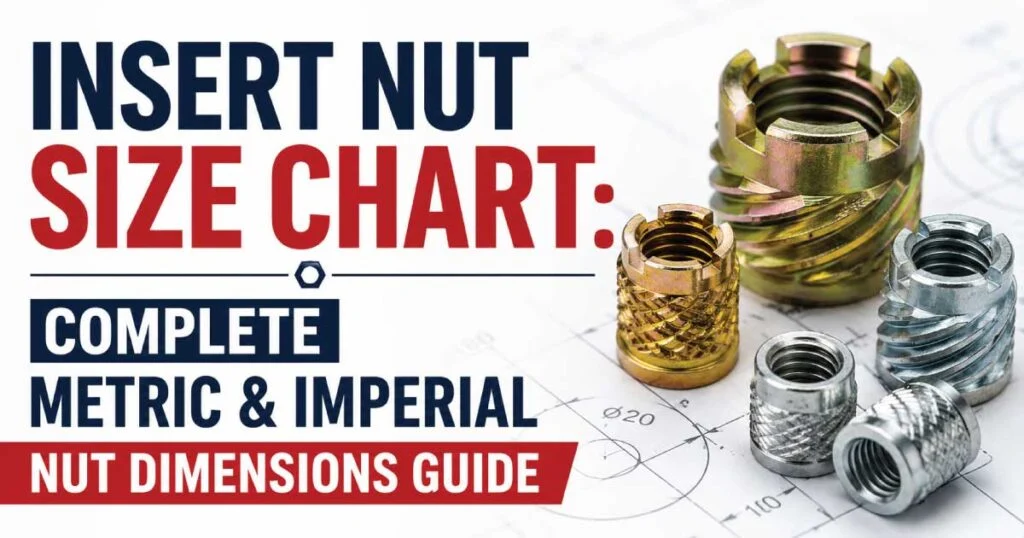
Fasteners play a critical role in construction, automotive, manufacturing, engineering, and DIY applications. Among these fasteners, nuts are essential because they securely hold bolts in place while creating strong mechanical joints. However, selecting the correct nut size can be confusing without a proper nut size chart.
This guide explains standard nut dimensions, thread measurements, and how to choose the correct size for different applications.
What Is a Nut Size Chart?
A nut size chart is a reference table that lists the dimensions, thread sizes, widths across flats, heights, and compatible bolt sizes for different types of nuts. It simplifies the process of selecting the correct fastener while reducing installation mistakes. Whether you’re working with metric or imperial fasteners, these charts provide accurate sizing information for professional and home projects.
Why a Nut Size Chart Is Important
Using the correct nut size improves safety, durability, and performance. Choosing the wrong nut can result in loose assemblies, stripped threads, or structural failures. A reliable chart eliminates guesswork by providing standardized measurements recognized across industries, ensuring compatibility between nuts, bolts, and threaded rods.
Key benefits include:
- Prevents thread mismatch
- Improves assembly accuracy
- Saves installation time
- Reduces maintenance costs
- Enhances structural reliability
- Ensures compliance with engineering standards
Understanding Nut Size Measurements
Nut sizes are identified using several dimensions rather than just the thread diameter. Understanding these measurements helps users choose the correct fastener for every application. Most manufacturers follow ISO, DIN, ANSI, or ASME standards to maintain consistency across products and industries.
The most common measurements include:
- Thread diameter
- Thread pitch
- Width across flats (AF)
- Nut height
- Width across corners
- Thread standard (Metric or Imperial)
Metric Nut Size Chart
Metric fasteners use millimeters for thread diameter and pitch. The thread pitch indicates the distance between adjacent threads, making it easier to identify compatible bolts.
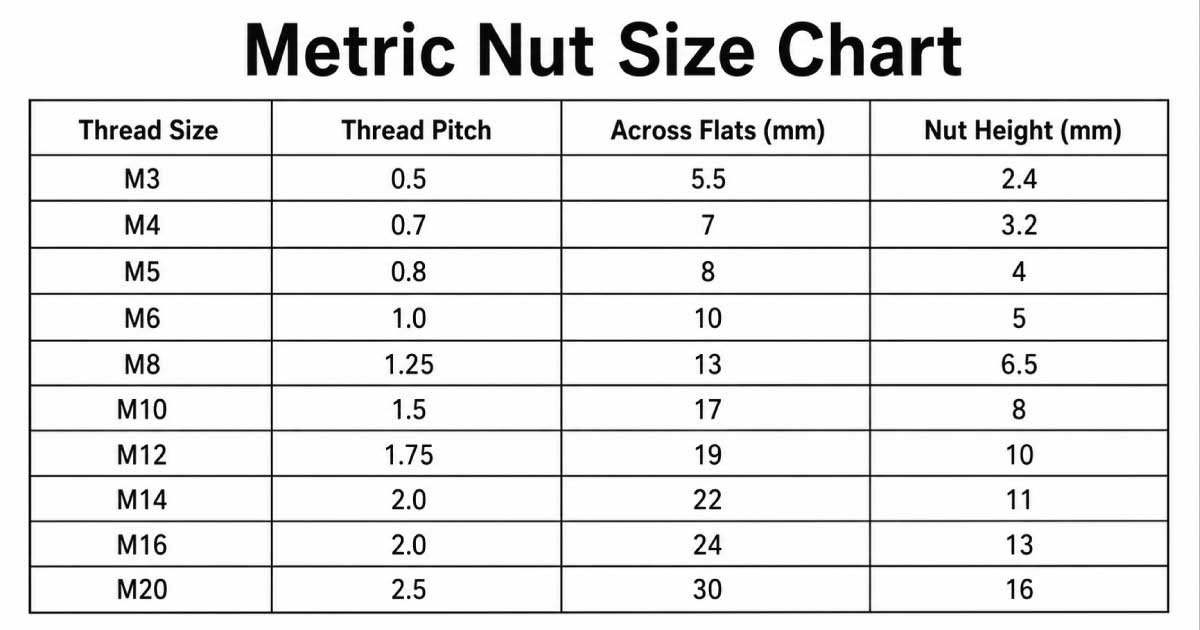
| Thread Size | Thread Pitch | Across Flats (mm) | Nut Height (mm) |
|---|---|---|---|
| M3 | 0.5 | 5.5 | 2.4 |
| M4 | 0.7 | 7 | 3.2 |
| M5 | 0.8 | 8 | 4 |
| M6 | 1.0 | 10 | 5 |
| M8 | 1.25 | 13 | 6.5 |
| M10 | 1.5 | 17 | 8 |
| M12 | 1.75 | 19 | 10 |
| M14 | 2.0 | 22 | 11 |
| M16 | 2.0 | 24 | 13 |
| M20 | 2.5 | 30 | 16 |
Nut Size Chart PDF
📘 Precision Size Chart Guide 👉 Track Bolt Size Chart: Expert Sizing Guide & Dimensions
Imperial Nut Size Chart
Imperial fasteners are commonly used in the United States and some industrial sectors. These sizes are measured in inches and identified by threads per inch (TPI), making them different from metric fasteners.
| Bolt Size | Threads Per Inch | Across Flats | Nut Height |
|---|---|---|---|
| 1/4″ | 20 | 7/16″ | 7/32″ |
| 5/16″ | 18 | 1/2″ | 17/64″ |
| 3/8″ | 16 | 9/16″ | 21/64″ |
| 7/16″ | 14 | 11/16″ | 25/64″ |
| 1/2″ | 13 | 3/4″ | 7/16″ |
| 5/8″ | 11 | 15/16″ | 35/64″ |
| 3/4″ | 10 | 1-1/8″ | 21/32″ |
| 1″ | 8 | 1-1/2″ | 7/8″ |
Common Types of Nuts
Many nut varieties are available to suit different fastening requirements. Each type is engineered for a specific purpose, such as resisting vibration, preventing loosening, or improving load distribution. Understanding these options ensures better performance and longer service life in demanding applications.
Common nut types include:
- Hex nuts
- Lock nuts
- Wing nuts
- Flange nuts
- Cap nuts
- Castle nuts
- Coupling nuts
- Square nuts
How to Measure a Nut Correctly
Accurate measurement is essential before purchasing replacement nuts. Using calipers or a thread gauge provides precise readings that help identify the correct size and standard. Even small differences in thread pitch or diameter can prevent proper installation.
Follow these steps:
- Measure the thread diameter.
- Determine the thread pitch or TPI.
- Measure the width across flats.
- Measure the nut height.
- Match the measurements using a standard nut size chart.
Metric vs Imperial Nut Sizes
Metric and imperial fasteners may appear similar, but they are not interchangeable. Their thread angles, diameters, and pitch specifications differ significantly. Attempting to combine these systems often damages threads and weakens the joint, making proper identification extremely important before assembly.
| Feature | Metric | Imperial |
|---|---|---|
| Measurement | Millimeters | Inches |
| Thread Pitch | Millimeters | Threads Per Inch |
| Common Standards | ISO, DIN | ANSI, ASME |
| Typical Applications | International Manufacturing | North America |
Industries That Use Nut Size Charts
Nut size charts are valuable across numerous industries where precision fastening is essential. Engineers, technicians, mechanics, and builders rely on standardized dimensions to maintain equipment performance and ensure safety. Accurate fastener selection minimizes downtime while extending the lifespan of mechanical assemblies.
Industries include:
- Automotive
- Aerospace
- Construction
- Heavy machinery
- Manufacturing
- Marine engineering
- Oil and gas
- Home improvement
Choosing the Right Nut for Your Project
Selecting the correct nut involves more than matching thread size. Material strength, corrosion resistance, load capacity, environmental exposure, and vibration resistance should also be considered. Evaluating these factors ensures long-lasting performance while reducing maintenance and replacement costs.
Before choosing a nut, consider:
- Compatible bolt size
- Thread standard
- Material grade
- Finish or coating
- Operating environment
- Required torque
- Load-bearing capacity
Nut Material Options and Their Applications
The material of a nut directly affects its strength, corrosion resistance, and overall lifespan. Different materials are designed for specific environments, from indoor furniture assembly to heavy industrial equipment. Selecting the appropriate material ensures reliable performance, reduces maintenance requirements, and increases the safety of bolted connections over time.
Common nut materials include:
- Carbon steel
- Stainless steel
- Alloy steel
- Brass
- Bronze
- Aluminum
- Nylon
- Titanium
Nut Strength Grades Explained
Nut grades indicate the mechanical strength and load-bearing capacity of a fastener. Higher-grade nuts are manufactured to withstand greater tensile and compressive forces, making them suitable for heavy-duty applications. Always pair nuts with compatible bolt grades to maintain the integrity and safety of the fastening system.
Popular strength grades include:
- Grade 2 – General-purpose applications
- Grade 5 – Medium-strength industrial use
- Grade 8 – Heavy-duty machinery
- Class 8 – Standard metric applications
- Class 10 – High-strength metric assemblies
- Class 12 – Extreme load conditions
Standard Nut Dimensions You Should Know
Besides thread size, several physical dimensions determine whether a nut will fit a particular application. Manufacturers follow internationally recognized standards to maintain consistency, allowing engineers and technicians to replace components without compatibility issues while ensuring secure and reliable fastening.
Important dimensions include:
- Width across flats (AF)
- Width across corners
- Nut thickness
- Thread diameter
- Thread pitch
- Chamfer angle
- Bearing surface diameter
How to Identify an Unknown Nut Size
Sometimes old fasteners lose their packaging or markings, making identification challenging. Measuring the nut carefully and comparing the results with a standard size chart is the most reliable method. Precision tools such as digital calipers and thread gauges provide accurate measurements for correct identification.
Follow these identification steps:
- Clean the nut thoroughly.
- Measure the thread diameter.
- Determine the thread pitch or TPI.
- Measure the width across flats.
- Compare the measurements with a standard chart.
- Verify compatibility using a matching bolt.
📐 Latest Size Chart Resources 👉 Union Fitting Size Chart: Expert Sizing Guide
Common Mistakes When Selecting Nuts
Choosing the wrong nut can lead to damaged threads, loose joints, premature wear, and costly repairs. Many installation problems occur because users overlook thread standards or material compatibility. Understanding these common mistakes helps improve assembly quality and extends the service life of fastened components.
Avoid these errors:
- Mixing metric and imperial fasteners
- Ignoring thread pitch differences
- Using incorrect material grades
- Over-tightening the nut
- Under-tightening the connection
- Selecting the wrong finish
- Reusing damaged nuts
Tips for Maintaining Nuts and Bolted Connections
Proper maintenance prevents corrosion, loosening, and mechanical failure in bolted assemblies. Regular inspections help identify wear before it becomes a serious issue. Cleaning, lubrication, and correct torque application significantly improve fastener longevity while maintaining structural stability in demanding environments.
Maintenance best practices:
- Inspect fasteners regularly.
- Replace worn or damaged nuts.
- Apply recommended torque values.
- Use anti-seize compounds where necessary.
- Protect exposed fasteners from moisture.
- Tighten connections during scheduled maintenance.
Industries That Depend on Accurate Nut Sizing
Nearly every engineering sector relies on standardized nut dimensions to maintain quality, safety, and equipment performance. Accurate sizing ensures components fit correctly, minimizes downtime, and supports compliance with international engineering specifications across a wide range of industrial and commercial applications.
Industries include:
- Construction
- Automotive manufacturing
- Aerospace engineering
- Railway infrastructure
- Marine construction
- Agricultural machinery
- Renewable energy
- Electronics manufacturing
Final Thoughts
A well-organized nut size chart is an essential reference for engineers, mechanics, contractors, manufacturers, and DIY enthusiasts. It provides standardized information that makes it easier to identify the correct nut for a specific application. Having accurate size and thread details readily available helps improve efficiency and reduces the risk of selecting incompatible fasteners.
Understanding thread sizes, dimensions, material options, and strength grades is crucial for ensuring that every fastener performs as intended. These specifications determine how well a nut fits with its corresponding bolt, as well as its ability to withstand loads, vibration, and environmental conditions. Choosing the right combination helps create secure and dependable connections.
Whether you’re working with metric or imperial hardware, selecting the correct nut enhances safety, increases durability, and minimizes the chances of assembly errors. Using standardized measurements ensures compatibility across different components and simplifies maintenance, repairs, and future replacements in a wide range of industries.
By following best practices and referring to a reliable nut size chart, you can confidently choose the right fasteners for construction, machinery, automotive repairs, and countless other projects. Proper fastener selection not only improves performance but also extends the lifespan of equipment while helping prevent costly failures and unnecessary downtime.
Frequently Asked Questions About Nut Size
Many users have questions about selecting the correct nut size, understanding thread standards, and identifying compatible fasteners. The following answers address the most common concerns, helping beginners and professionals make informed decisions while avoiding installation errors and compatibility issues.
What Does M8 Mean on a Nut?
An M8 nut is designed to fit an 8-millimeter metric bolt. The “M” identifies it as a metric thread, while the number indicates the nominal thread diameter. Always confirm the thread pitch before installation, as M8 fasteners are available in both standard and fine-pitch versions, which are not interchangeable.
Can Metric and Imperial Nuts Be Used Together?
No. Although some metric and imperial fasteners may appear similar in size, they have different thread diameters, thread pitches, and manufacturing standards. Mixing them can damage the threads, reduce fastening strength, and create safety hazards. Always use matching nuts and bolts from the same measurement system for a secure connection.
How Do I Measure a Nut Size?
To measure a nut correctly, determine the thread diameter, identify the thread pitch or threads per inch (TPI), and measure the width across the flats using a caliper. Compare these measurements with a standard nut size chart to verify compatibility. Digital calipers and thread gauges provide the most accurate and reliable results.
What Is the Most Commonly Used Nut Type?
The hex nut is the most widely used fastener because of its simple design, excellent strength, and compatibility with standard hand and power tools. It is commonly used in automotive, construction, industrial, manufacturing, machinery, and household applications, making it one of the most versatile and reliable fastening solutions available.
Which Nut Material Is Best for Outdoor Use?
Stainless steel is generally the best choice for outdoor applications because it provides excellent resistance to corrosion, moisture, rust, and changing weather conditions. For coastal or marine environments with high salt exposure, higher-grade stainless steel or specialized corrosion-resistant alloys offer even greater durability and long-term performance.

Engineer Hassan is a Mechanical Engineer with 16+ years of hands-on experience in mechanical hardware, fasteners, and workshop tools. He focuses on size selection, thread identification, and measurement, helping users choose the correct components with accuracy and safety.