
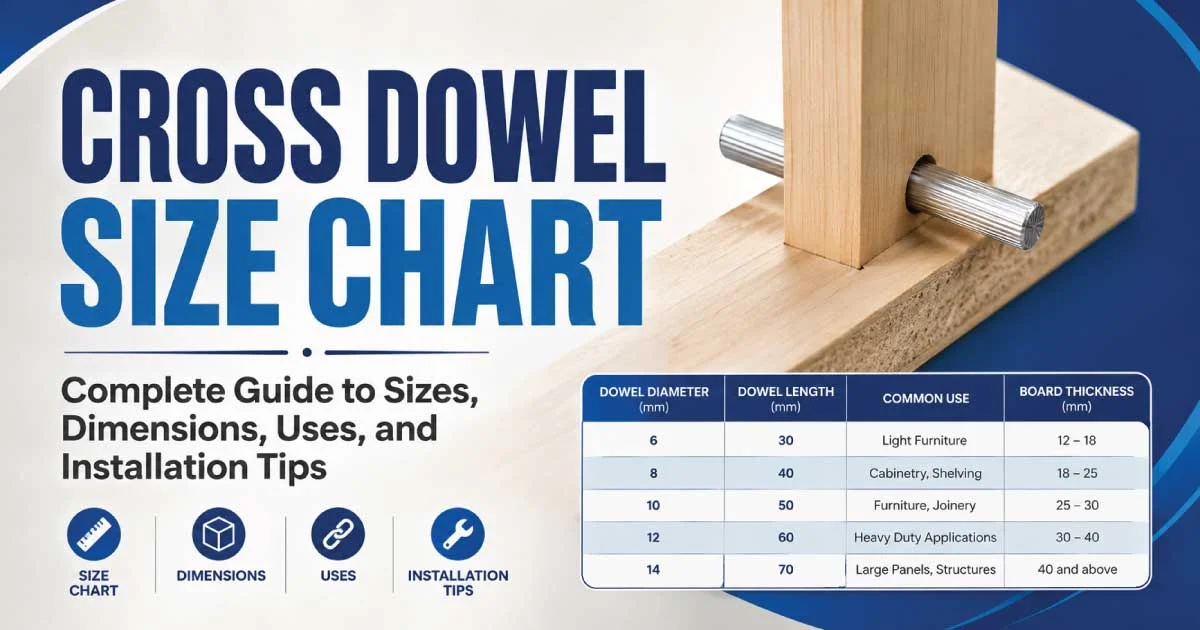
Cross dowels, also known as barrel nuts, are essential furniture fasteners used to create strong and reliable joints. They are commonly paired with connector bolts in flat-pack furniture, cabinets, beds, and woodworking projects.
Selecting the correct cross dowel size ensures proper alignment, improved load capacity, and long-lasting structural integrity.
This guide explains cross dowel dimensions, sizing standards, applications, and selection methods to help both beginners and professionals choose the right option for every project.
What Is a Cross Dowel?
A cross dowel is a cylindrical metal fastener with a threaded hole drilled through its center. It works together with a connector bolt that passes through one workpiece and threads into the dowel positioned inside another piece. This fastening system creates a strong mechanical connection that can be repeatedly assembled and disassembled without significantly damaging the material.
Unlike traditional wood screws, cross dowels distribute pressure more evenly, making them ideal for engineered wood products such as MDF, plywood, and particleboard.
Why Cross Dowel Size Matters
Choosing the proper cross dowel size directly affects the strength, durability, and stability of furniture joints. An oversized dowel may weaken the material by removing excessive wood, while an undersized dowel may fail under load or allow movement over time.
Proper sizing also ensures:
- Strong clamping force
- Accurate bolt alignment
- Better load distribution
- Longer furniture lifespan
- Easier assembly and maintenance
Selecting the correct dimensions minimizes installation errors and improves the overall quality of woodworking projects.
Understanding Cross Dowel Dimensions
Cross dowels are measured using several important dimensions. Each measurement influences compatibility with connector bolts and the thickness of the materials being joined.
The primary dimensions include:
- Overall diameter
- Overall length
- Internal thread size
- Thread pitch
- Slot width
- Slot depth
These specifications help determine whether a cross dowel will fit properly within the drilled hole while maintaining sufficient holding strength.
Standard Cross Dowel Size Chart
Below is a general reference chart for common metric cross dowel sizes used in woodworking and furniture manufacturing.
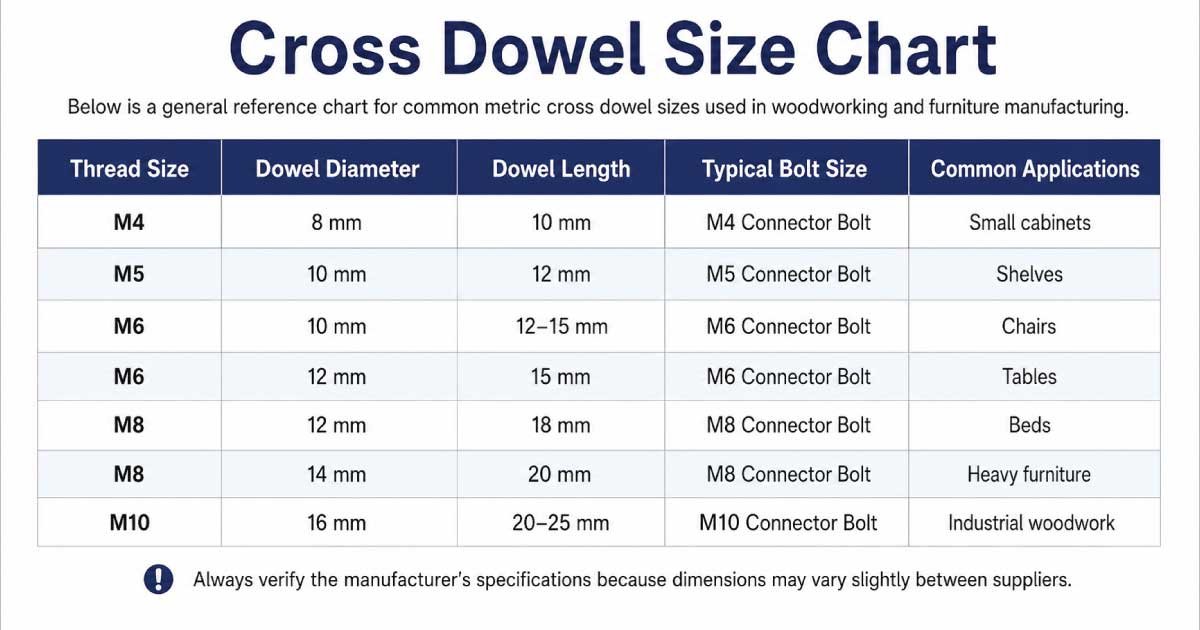
| Thread Size | Dowel Diameter | Dowel Length | Typical Bolt Size | Common Applications |
|---|---|---|---|---|
| M4 | 8 mm | 10 mm | M4 Connector Bolt | Small cabinets |
| M5 | 10 mm | 12 mm | M5 Connector Bolt | Shelves |
| M6 | 10 mm | 12–15 mm | M6 Connector Bolt | Chairs |
| M6 | 12 mm | 15 mm | M6 Connector Bolt | Tables |
| M8 | 12 mm | 18 mm | M8 Connector Bolt | Beds |
| M8 | 14 mm | 20 mm | M8 Connector Bolt | Heavy furniture |
| M10 | 16 mm | 20–25 mm | M10 Connector Bolt | Industrial woodwork |
Always verify the manufacturer’s specifications because dimensions may vary slightly between suppliers.
Cross Dowel Size Chart PDF
The Standard Cross Dowel Size Chart provides a quick reference for the most common metric cross dowel sizes used in furniture assembly and woodworking. It includes thread size, dowel diameter, dowel length, compatible connector bolts, and typical applications, making it easier to choose the correct hardware for strong, secure, and durable joints.
📐 Latest Size Chart Resources 👉 Elevator Bolt Size Chart: Standard Measurement Guide
Metric vs Imperial Cross Dowel Sizes
Cross dowels are manufactured in both metric and imperial measurements depending on the country and industry standards. Metric sizes dominate European and Asian furniture production, while imperial sizes remain common in certain North American woodworking applications.
Metric systems typically use thread sizes like M4, M5, M6, M8, and M10, whereas imperial systems may use inch-based bolt threads such as 1/4-inch or 5/16-inch. Understanding the measurement system prevents compatibility issues during installation.
Common Cross Dowel Thread Sizes
Thread size determines which connector bolt can engage securely with the cross dowel. Using mismatched threads prevents proper tightening and may permanently damage the fastener.
The most frequently used thread sizes include:
- M4
- M5
- M6
- M8
- M10
Among these, M6 and M8 are the most widely used in residential furniture because they provide an excellent balance between strength and compact size.
Cross Dowel Diameter Guide
The diameter of a cross dowel refers to the outside measurement of its cylindrical body. Larger diameters generally provide greater strength because they contain more threaded material and offer better resistance to pull-out forces.
Common dowel diameters include:
| Diameter | Typical Use |
|---|---|
| 8 mm | Lightweight furniture |
| 10 mm | General furniture |
| 12 mm | Medium-duty joints |
| 14 mm | Heavy-duty furniture |
| 16 mm | Industrial applications |
Selecting the correct diameter depends on material thickness, expected load, and connector bolt size.
Cross Dowel Length Guide
Cross dowel length affects how much contact area exists inside the material. Longer dowels provide additional support but require thicker wood sections.
Common lengths include:
- 10 mm
- 12 mm
- 15 mm
- 18 mm
- 20 mm
- 25 mm
The ideal length allows the dowel to fit completely within the drilled hole while maintaining enough surrounding material for structural strength.
Choosing the Correct Cross Dowel for Wood Thickness
Material thickness is one of the most important factors when selecting a cross dowel. Thin panels require smaller fasteners, while thicker materials benefit from larger diameters and longer dowels.
General recommendations include:
- 12–16 mm boards → M4 or M5
- 16–18 mm boards → M6
- 18–25 mm boards → M6 or M8
- Over 25 mm boards → M8 or M10
Proper sizing reduces the risk of splitting, improves clamping force, and ensures long-term joint stability.
Materials Used in Cross Dowels
Cross dowels are manufactured from various metals to meet different strength and corrosion-resistance requirements. Material selection significantly influences durability, especially in humid or outdoor environments.
Common materials include:
- Zinc-plated steel
- Stainless steel
- Carbon steel
- Brass
- Nickel-plated steel
Stainless steel offers superior corrosion resistance, while zinc-plated steel provides excellent value for indoor furniture applications.
Applications of Cross Dowels
Cross dowels are widely used across residential, commercial, and industrial woodworking projects due to their strength and reusability.
Typical applications include:
- Flat-pack furniture
- Bed frames
- Dining tables
- Office desks
- Cabinets
- Wardrobes
- Bookshelves
- Wooden machinery
- Exhibition displays
Their ability to withstand repeated assembly makes them particularly valuable for modular furniture systems.
Benefits of Using Cross Dowels
Cross dowels provide several advantages compared to traditional screws and nails. Their mechanical fastening system creates stronger joints while allowing repeated assembly without damaging the wood.
Key benefits include:
- High joint strength
- Excellent load capacity
- Reusable connections
- Better alignment accuracy
- Reduced wood splitting
- Easy maintenance
- Professional appearance
- Improved furniture longevity
These benefits make cross dowels one of the preferred fastening solutions for modern furniture manufacturing.
How to Install Cross Dowels Correctly
Installing a cross dowel correctly is essential for creating a secure and durable connection. Accurate drilling and proper alignment ensure the connector bolt engages smoothly with the threaded hole. Even a high-quality fastener can fail if it is installed incorrectly or forced into a misaligned position.
Follow these basic installation steps:
- Measure and mark drilling locations.
- Drill the bolt hole through the first workpiece.
- Drill the cross dowel hole in the second workpiece.
- Insert the cross dowel into its hole.
- Align the threaded opening with the bolt hole.
- Insert and tighten the connector bolt.
- Check for a firm and stable joint.
Correct installation improves strength while reducing wear on both the fastener and the surrounding material.
📘 Precision Size Chart Guide 👉 Coupling Size Chart: Expert Size Selection Guide
Recommended Drill Bit Sizes for Cross Dowels
Selecting the correct drill bit ensures the cross dowel fits snugly without excessive force. A hole that is too large can reduce holding strength, while one that is too small may damage the dowel during installation.
| Cross Dowel Diameter | Recommended Drill Bit |
|---|---|
| 8 mm | 8 mm |
| 10 mm | 10 mm |
| 12 mm | 12 mm |
| 14 mm | 14 mm |
| 16 mm | 16 mm |
Always confirm the manufacturer’s recommendations, as tolerances may vary slightly between brands.
Cross Dowel and Connector Bolt Compatibility
Cross dowels are designed to work with matching connector bolts. Both components must share the same thread size to create a secure connection. Using incompatible parts may strip the threads or prevent the bolt from tightening properly.
Common compatible combinations include:
- M4 Cross Dowel → M4 Connector Bolt
- M5 Cross Dowel → M5 Connector Bolt
- M6 Cross Dowel → M6 Connector Bolt
- M8 Cross Dowel → M8 Connector Bolt
- M10 Cross Dowel → M10 Connector Bolt
Always verify both the thread size and bolt length before assembly.
Factors to Consider When Choosing a Cross Dowel
Several factors influence the ideal cross dowel size for a woodworking project. Evaluating these details before purchasing helps prevent installation issues and improves the overall performance of the finished furniture.
Important considerations include:
- Material thickness
- Expected load capacity
- Connector bolt size
- Wood type
- Indoor or outdoor use
- Corrosion resistance
- Frequency of assembly and disassembly
- Manufacturer specifications
Careful planning ensures the fastener performs reliably throughout the furniture’s lifespan.
Common Mistakes When Selecting Cross Dowels
Many furniture assembly problems result from incorrect fastener selection rather than poor workmanship. Choosing the wrong size or thread type can weaken joints and shorten the service life of the furniture.
Avoid these common mistakes:
- Using mismatched thread sizes
- Choosing an incorrect dowel diameter
- Ignoring material thickness
- Purchasing bolts that are too short
- Over-tightening the connector bolt
- Misaligning the threaded opening
- Using low-quality fasteners
Preventing these errors leads to stronger, safer, and more professional results.
Cross Dowel Size Selection Tips
Selecting the right cross dowel becomes easier when a few practical guidelines are followed. Rather than choosing the largest available fastener, focus on achieving the best balance between strength and compatibility.
Helpful tips include:
- Match the thread size exactly.
- Select a diameter appropriate for the wood thickness.
- Use corrosion-resistant materials for humid environments.
- Buy fasteners from reputable manufacturers.
- Test-fit components before final assembly.
- Follow furniture manufacturer recommendations whenever available.
These simple practices improve assembly quality and reduce future maintenance.
Maintenance and Inspection
Although cross dowels require minimal maintenance, periodic inspection helps preserve furniture stability. Over time, repeated movement or environmental changes can loosen connector bolts, particularly in frequently assembled furniture.
Maintenance recommendations include:
- Tighten loose connector bolts when necessary.
- Inspect for signs of corrosion.
- Replace stripped or damaged fasteners.
- Keep threaded components clean.
- Avoid excessive tightening during reassembly.
Routine maintenance extends the life of both the furniture and its fastening system.
Advantages of Stainless Steel Cross Dowels
Stainless steel cross dowels are increasingly popular because they combine high strength with outstanding corrosion resistance. They perform exceptionally well in damp environments where standard zinc-plated fasteners may eventually rust.
Key advantages include:
- Excellent corrosion resistance
- High mechanical strength
- Long service life
- Attractive appearance
- Low maintenance requirements
- Suitable for outdoor furniture
- Ideal for marine and humid conditions
Although they cost more than standard steel versions, their durability often justifies the investment.
Cross Dowels vs Traditional Wood Screws
While wood screws remain common in furniture construction, cross dowels provide several unique advantages for knock-down and modular designs. Their threaded metal-to-metal connection offers greater reliability than repeated screw insertion into wood.
| Feature | Cross Dowels | Wood Screws |
|---|---|---|
| Reusable | Yes | Limited |
| Joint Strength | High | Moderate |
| Easy Disassembly | Excellent | Moderate |
| Load Distribution | Excellent | Fair |
| Furniture Lifespan | Longer | Shorter |
For furniture that may be moved or reassembled, cross dowels are generally the superior choice.
Industries That Commonly Use Cross Dowels
Cross dowels are widely used beyond residential furniture manufacturing. Their dependable fastening system supports many commercial and industrial woodworking applications where strong, removable joints are required.
Industries that frequently use cross dowels include:
- Furniture manufacturing
- Cabinet making
- Interior fit-outs
- Educational furniture production
- Hospitality furniture
- Office furniture manufacturing
- Exhibition stand construction
- Recreational vehicle interiors
- Marine woodworking
Their versatility makes them an industry-standard fastening solution across numerous sectors.
Expert Recommendations
Professional woodworkers recommend choosing fasteners based on the project’s structural requirements rather than simply selecting the largest available size. Matching the cross dowel diameter, length, and thread size with the material thickness and expected load produces stronger, longer-lasting joints while reducing installation problems and future repairs.
Conclusion
Cross dowels are one of the most reliable fastening solutions used in modern furniture assembly and woodworking projects. They provide strong, secure connections that help improve the stability and durability of various wooden structures. By understanding their purpose and proper application, builders can create furniture that remains sturdy and functional over time.
Knowing the dimensions, thread sizes, diameters, and compatibility of cross dowels with connector bolts is essential for achieving the best results. Selecting the correct size ensures a precise fit, improves joint strength, and allows for easier assembly, adjustment, and maintenance when needed.
Using an accurate Cross Dowel Size Chart, choosing high-quality materials, and following proper installation techniques can significantly enhance the performance of your projects. Correct sizing helps prevent weak connections, reduces installation problems, and ensures long-lasting reliability in different woodworking applications.
Whether you are assembling flat-pack furniture, creating custom cabinets, or building heavy-duty wooden structures, selecting the right cross dowel size plays an important role in project success. A small choice in fastener selection can provide major benefits by improving strength, durability, and overall furniture performance.
Frequently Asked Questions
What Is the Most Common Cross Dowel Size?
The M6 and M8 cross dowel sizes are among the most commonly used options because they provide reliable strength for a wide range of furniture applications. These sizes are frequently found in beds, tables, cabinets, desks, and other wooden assemblies where strong, hidden, and reusable connections are required.
Can Cross Dowels Be Reused?
Yes. Cross dowels are designed for repeated assembly and disassembly, making them especially useful for flat-pack, modular, and movable furniture. As long as the threads remain clean and undamaged, they can be reused multiple times. Regular inspection for wear, corrosion, or damage helps maintain secure connections and reliable fastening performance.
Do Cross Dowels Work With All Connector Bolts?
No. Cross dowels are not compatible with every connector bolt. The bolt must have the correct thread size, pitch, and diameter to properly engage with the cross dowel. Using mismatched components can result in weak connections, improper alignment, or damaged threads. Always verify compatibility before installation for the best results.
Which Material Is Best for Outdoor Furniture?
Stainless steel is generally the best choice for outdoor furniture applications because it offers excellent resistance to rust, moisture, corrosion, and changing weather conditions. Compared with standard steel options, stainless steel cross dowels provide longer-lasting performance in outdoor environments, helping maintain strong and reliable furniture joints over extended periods.
How Tight Should a Connector Bolt Be?
A connector bolt should be tightened until the joint feels secure, stable, and properly aligned. Avoid applying excessive force because over-tightening can strip the threads, damage the cross dowel, or compress the surrounding wood material. Using the correct tightening pressure ensures a strong connection while protecting both the fastener and the furniture structure.

Engineer Hassan is a Mechanical Engineer with 16+ years of hands-on experience in mechanical hardware, fasteners, and workshop tools. He focuses on size selection, thread identification, and measurement, helping users choose the correct components with accuracy and safety.