
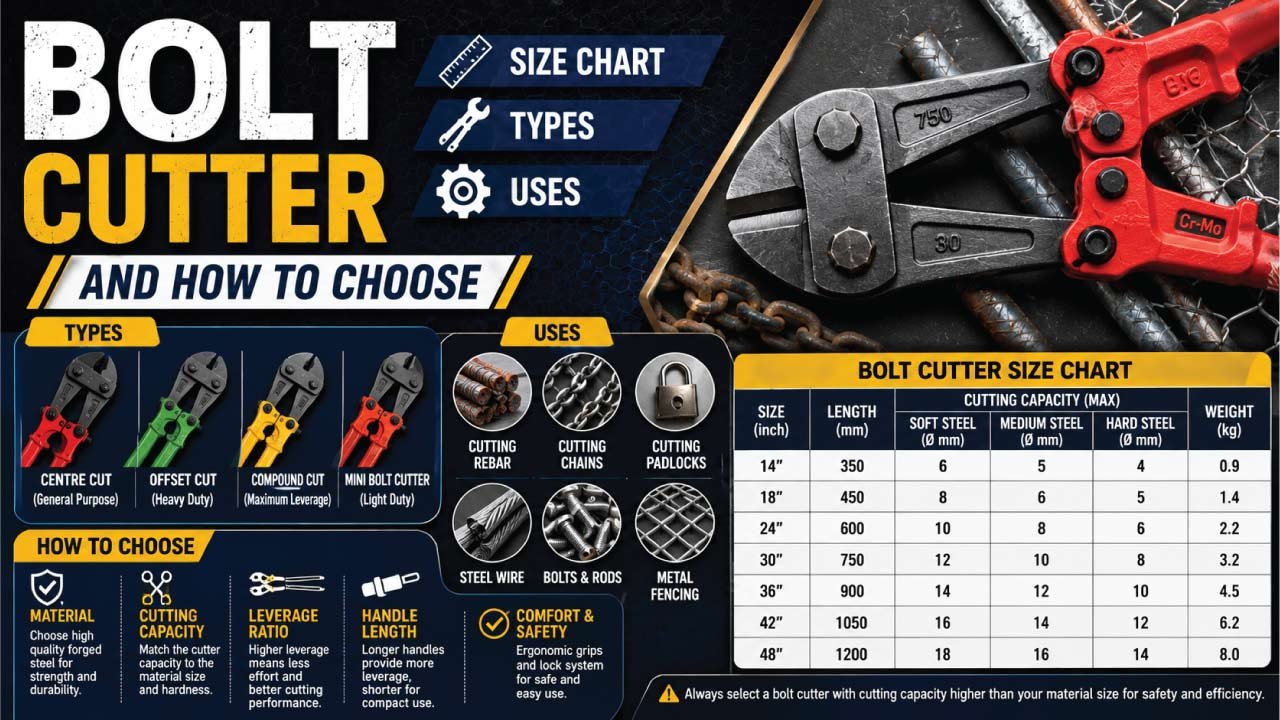
Bolt cutters are powerful hand tools designed to cut through hard materials like bolts, chains, locks, wire mesh, rods, and metal bars. They are commonly used in construction, electrical work, fencing, automotive repair, rescue operations, and industrial maintenance. Choosing the correct bolt cutter size improves cutting efficiency, reduces user effort, and increases safety.
In this complete guide, you will learn about bolt cutter sizes, size charts, types, uses, materials, and tips for selecting the right bolt cutter for different jobs.
What Is a Bolt Cutter?
A bolt cutter is a heavy-duty hand tool designed to cut hard materials such as bolts, chains, metal rods, locks, and thick wires. It uses long handles and hardened cutting jaws to create powerful leverage, allowing users to cut strong metals with less physical effort and improved cutting efficiency.
Most bolt cutters feature:
- Hardened steel jaws
- Long leverage handles
- Adjustable cutting blades
- Compound hinge mechanism
- Rubber grip handles
Bolt cutters are sometimes called bolt croppers in some regions.
Main Parts of a Bolt Cutter
Understanding the main parts of a bolt cutter helps users select the correct tool for different cutting tasks and maintain it properly for long-term use. Each component plays an important role in improving cutting strength, user comfort, accuracy, and overall durability when working with metal materials and heavy-duty applications.
1. Cutting Jaws
The cutting jaws are the most important part of a bolt cutter because they perform the actual cutting work. These hardened steel blades are designed to cut through tough materials like bolts, chains, wires, rods, and padlocks. High-quality jaws stay sharp longer and provide cleaner, smoother, and more efficient cuts during heavy-duty use.
2. Pivot Bolt
The pivot bolt is the central connection point between the handles and the cutting jaws. It transfers the pressure created by the handles directly into the jaws, increasing cutting force. A strong and properly tightened pivot bolt ensures smooth operation, balanced movement, and reliable cutting performance during demanding metal cutting tasks.
3. Handles
The handles of a bolt cutter are long to create maximum leverage and reduce the effort required for cutting hard materials. Longer handles provide greater cutting power, making it easier to cut thick metals. Most handles are made from strong steel materials to withstand heavy pressure and repeated industrial or workshop use.
4. Grip Covers
Grip covers are usually made from rubber, plastic, or non-slip materials to improve user comfort and safety while operating the tool. These covers help reduce hand fatigue during long working sessions and provide a secure grip, especially when working in oily, dusty, or wet environments where slipping may occur easily.
5. Adjustment Screws
Adjustment screws help align the cutting jaws properly for accurate and efficient cutting performance. Correct jaw alignment prevents uneven cuts, blade damage, and excessive wear over time. Users can adjust these screws to maintain proper blade contact, ensuring the bolt cutter continues working smoothly and delivers precise cutting results.
Bolt Cutter Size Chart
Bolt cutters come in many sizes for different cutting capacities and applications.
| Bolt Cutter Size | Typical Cutting Capacity | Common Uses |
|---|---|---|
| 8 Inch | Thin wires, small cables | Hobby work, electronics |
| 12 Inch | Soft metals, fencing wire | Home repair |
| 14 Inch | Small bolts and rods | DIY projects |
| 18 Inch | Medium chains and locks | General maintenance |
| 24 Inch | Thick rods and bolts | Construction work |
| 30 Inch | Heavy-duty cutting | Industrial jobs |
| 36 Inch | Hardened steel and chains | Professional applications |
| 42 Inch | Maximum cutting force | Demolition and rescue work |
Common Bolt Cutter Sizes Explained
Bolt cutters come in different sizes to handle various cutting tasks, from light household work to heavy industrial applications. Smaller models offer better portability and control, while larger bolt cutters provide greater cutting force for hardened materials. Choosing the correct size improves cutting efficiency, safety, comfort, and overall tool performance.
1. Small Bolt Cutters (8–14 Inch)
Small bolt cutters are lightweight, compact, and easy to carry for light-duty cutting tasks. They are commonly used in homes, electrical work, hobby projects, and small repair jobs where precision and portability are more important than maximum cutting power. These cutters work best on thinner and softer metal materials.
They work well for cutting:
- Wire fencing
- Small cables
- Nails
- Thin rods
These are ideal for electricians, hobbyists, and DIY users.
2. Medium Bolt Cutters (18–24 Inch)
Medium-size bolt cutters are the most popular and widely used option because they provide a strong balance between cutting power, control, and portability. They are suitable for workshops, garages, construction sites, and maintenance work where moderate-strength metals need to be cut efficiently and safely.
Suitable for:
- Medium bolts
- Padlocks
- Rebar
- Fence wire
- Steel rods
These are widely used in workshops and construction sites.
3. Large Bolt Cutters (30–42 Inch)
Large bolt cutters are designed for heavy-duty industrial and professional cutting applications. Their extra-long handles create maximum leverage, allowing users to cut hardened steel materials with less effort. These powerful cutters are commonly used in construction, rescue operations, demolition work, and high-security maintenance tasks.
Common applications include:
- Heavy chains
- Thick steel rods
- Hardened bolts
- Security locks
These are mainly used by professionals and rescue workers.
Types of Bolt Cutters
Bolt cutters are available in several designs, each made for specific cutting tasks and working conditions. The jaw shape, cutting mechanism, and handle design affect cutting performance, accessibility, and precision. Choosing the correct bolt cutter type helps improve safety, cutting efficiency, and overall durability during different metal cutting applications.
1. Standard Bolt Cutters
Standard bolt cutters are the most widely used type because they offer reliable cutting power for general-purpose work. They feature straight cutting jaws and long handles that create strong leverage, making them suitable for cutting common metal materials in construction, repair, maintenance, and household applications.
Best for:
- Chains
- Bolts
- Rods
- Wire mesh
2. Center Cut Bolt Cutters
Center cut bolt cutters are designed with blades aligned at the center, allowing pressure to be distributed evenly during cutting. This balanced cutting action improves stability, reduces jaw twisting, and produces cleaner cuts. They are commonly used for industrial tasks that require accuracy and stronger cutting performance.
Advantages:
- Cleaner cuts
- Better control
- Reduced jaw twisting
Used for:
- Metal rods
- Thick wires
- Industrial applications
3. Angle Cut Bolt Cutters
Angle cut bolt cutters feature angled jaws that help users reach difficult or narrow spaces more easily. The angled cutting head also improves visibility while cutting and allows better access in overhead or confined working conditions, making them highly useful in automotive, fencing, and maintenance work.
Benefits include:
- Better accessibility
- Easier overhead cutting
- Improved visibility
Commonly used in fencing and automotive work.
4. Shear Cut Bolt Cutters
Shear cut bolt cutters use overlapping cutting blades that create smoother and cleaner cuts compared to standard cutting jaws. They are especially effective for softer metals because the shearing action reduces material deformation and produces more precise cutting results during electrical or metalworking applications.
Ideal for:
- Soft metals
- Aluminum
- Copper cables
5. Compact Bolt Cutters
Compact bolt cutters are smaller, lightweight versions designed for portability and quick access during light-duty tasks. Their reduced size makes them easy to store in toolboxes, emergency kits, and service bags. They are commonly used for small cutting jobs where mobility and convenience are important.
Suitable for:
- Emergency kits
- Portable toolboxes
- Light-duty work
Bolt Cutter Jaw Types
Different bolt cutter jaw types are designed for specific cutting tasks and materials. The shape and design of the jaws directly affect cutting speed, cutting strength, precision, and overall tool performance. Choosing the correct jaw type helps users work more efficiently and prevents unnecessary damage to both the tool and the material being cut.
1. Clip Point Jaws
Clip point jaws are specially designed for cutting softer metals and thinner materials quickly and efficiently. Their pointed shape allows easier access into tight spaces and helps create fast cuts with less effort. These jaws are commonly used for cutting wires, light chains, fencing materials, and other softer metal components in general-purpose work.
2. Blunt Cut Jaws
Blunt cut jaws are built for maximum strength and durability when cutting hard or thick materials. Their strong jaw design distributes pressure evenly, making them suitable for cutting hardened bolts, heavy chains, locks, and reinforced metal rods. These jaws are commonly preferred for industrial work, construction tasks, and demanding heavy-duty cutting applications.
3. Knife Edge Jaws
Knife edge jaws are designed to deliver clean, smooth, and highly precise cuts on metal materials. Their sharp cutting edges reduce material deformation and create neater results compared to standard jaws. These jaws are ideal for detailed work, electrical applications, and situations where accurate cutting and a cleaner finish are especially important.
Bolt Cutter Materials
The material used in a bolt cutter directly affects its strength, durability, cutting performance, and resistance to wear. High-quality materials improve cutting efficiency and extend tool life, especially during heavy-duty applications. Different steel types are selected based on the intended use, hardness requirements, and overall manufacturing quality of the bolt cutter.
1. Chrome Molybdenum Steel
Chrome molybdenum steel is a premium material commonly used in professional-grade bolt cutters because of its exceptional strength and durability. It can withstand high cutting pressure without deforming easily, making it suitable for industrial and heavy-duty cutting applications where long-term performance and reliability are important.
This material offers:
- High strength
- Excellent toughness
- Wear resistance
Common in professional-grade cutters.
2. Hardened Alloy Steel
Hardened alloy steel is widely used for bolt cutter jaws because it provides superior cutting performance on tough and hardened metals. The hardening process increases blade durability and helps maintain sharp cutting edges even after repeated use in demanding construction and industrial environments. Alloy steel jaws provide excellent cutting performance on hard metals.
3. Carbon Steel
Carbon steel is a cost-effective material commonly found in general-purpose bolt cutters designed for light and medium-duty work. Although it is less durable than premium alloy steels, it still offers reliable cutting performance for everyday applications and is popular among DIY users and homeowners. Carbon steel is affordable and suitable for general-purpose cutting.
Handle Materials
Bolt cutter handles are manufactured using different materials to improve durability, cutting performance, safety, and user comfort. The handle material affects the overall weight, strength, grip, and resistance to environmental conditions. Choosing the right handle type helps users perform cutting tasks more efficiently and comfortably in different working environments.
1. Steel Handles
Steel handles are known for their exceptional strength, durability, and ability to provide maximum leverage during heavy cutting tasks. These handles can withstand high pressure without bending or breaking, making them ideal for industrial and construction work. Steel handles are commonly used in heavy-duty bolt cutters designed for cutting thick and hardened metal materials.
2. Tubular Handles
Tubular steel handles are designed to reduce the overall weight of the bolt cutter while still maintaining excellent strength and cutting performance. Their hollow construction makes the tool easier to carry and operate for extended periods. These handles are popular among professionals who need a balance between durability, leverage, and comfortable daily use.
3. Fiberglass Handles
Fiberglass handles provide excellent resistance against electricity, rust, moisture, and corrosion, making them suitable for specialized working conditions. They are lighter than solid steel handles and offer added safety when working near electrical systems. Fiberglass handles are commonly used in environments where electrical insulation and weather resistance are important for user protection.
Bolt Cutter Uses
Bolt cutters are widely used in construction, maintenance, electrical work, automotive repair, farming, and emergency operations because they can cut tough metal materials quickly and efficiently. Different bolt cutter sizes and jaw designs are selected depending on the material thickness, working environment, and level of cutting force required for the task.
1. Construction Work
Construction workers frequently use bolt cutters for cutting metal materials during building, fencing, and reinforcement projects. Their strong cutting force makes them useful for handling steel components that are difficult to cut with ordinary hand tools, especially on active construction and industrial job sites.
Construction workers use bolt cutters for:
- Cutting rebar
- Fence installation
- Steel wire cutting
2. Electrical Work
Electricians commonly use compact bolt cutters because they are lightweight, portable, and effective for cutting softer conductive materials. Smaller bolt cutters provide better control and precision when working with electrical components, cables, and wiring systems in residential and commercial installations.
Electricians use compact bolt cutters for cutting:
- Copper wire
- Aluminum cable
- Cable ties
3. Automotive Repair
Mechanics use bolt cutters during vehicle maintenance and repair work to remove damaged or rusted metal components. Their powerful jaws help cut through stubborn automotive parts quickly, reducing repair time and making removal tasks easier in tight workshop environments.
Mechanics use bolt cutters to remove:
- Rusted bolts
- Metal clamps
- Exhaust hangers
4. Security and Rescue Operations
Heavy-duty bolt cutters are important tools for emergency responders, firefighters, and rescue teams because they provide fast access during critical situations. Their strong cutting ability helps remove barriers, locks, and chains when immediate entry or rescue access is required.
Applications include:
- Removing locks
- Cutting chains
- Emergency access
5. Farming and Agriculture
Farmers and agricultural workers use bolt cutters for daily maintenance and repair tasks around farms and livestock areas. They are useful for handling fencing materials, repairing equipment, and cutting various types of agricultural wire used in outdoor environments.
Farmers use bolt cutters for:
- Fence repair
- Wire cutting
- Equipment maintenance
How to Choose the Right Bolt Cutter Size
Choosing the correct bolt cutter size is important for safety, cutting efficiency, and user comfort. Different cutting tasks require different tool sizes depending on the material type, hardness, and working conditions. Selecting the proper size helps reduce effort, improves cutting accuracy, and prevents unnecessary damage to both the tool and the material.
1. Material Thickness
The thickness of the material is one of the most important factors when selecting a bolt cutter size. Thin wires and small bolts can usually be cut with compact cutters, while thicker chains, rods, and heavy bolts require larger models with longer handles to generate greater cutting force and smoother performance.
2. Material Hardness
Harder materials such as hardened steel, reinforced rods, and security chains require stronger cutting jaws and increased leverage. Larger bolt cutters with high-quality hardened jaws are better suited for these demanding tasks. Using a small cutter on extremely hard materials can damage the jaws and reduce overall cutting efficiency over time.
3. Working Space
The available working space also affects the choice of bolt cutter size. Small or compact areas may not allow enough room to operate long handles comfortably. In tight spaces, smaller bolt cutters or models with angled jaws provide better control, easier movement, and safer operation without sacrificing too much cutting capability.
4. Frequency of Use
Users who frequently perform cutting tasks should invest in heavy-duty bolt cutters made from durable materials. Professional-grade models provide better comfort, stronger handles, and longer-lasting jaws for repeated use. Occasional users can choose lighter and more affordable models designed for general home, workshop, or maintenance applications.
5. Portability Needs
Portability is important for users who carry tools regularly between job sites or store them in limited spaces. Smaller bolt cutters are lightweight, easier to transport, and fit conveniently inside toolboxes or vehicles. Larger cutters offer more cutting power but may be less practical for mobile work and quick everyday tasks.
Bolt Cutter Cutting Capacity
Cutting capacity varies depending on:
- Jaw hardness
- Handle length
- Material type
- User force
Typical capacities include:
| Material | Recommended Cutter Size |
|---|---|
| Thin wire | 8–12 inch |
| Fencing wire | 14–18 inch |
| Medium bolts | 18–24 inch |
| Thick chains | 30–42 inch |
| Hardened steel rods | 36–42 inch |
Advantages of Bolt Cutters
Bolt cutters are widely used because they provide strong cutting performance, simple operation, and excellent versatility for different tasks. They are useful in construction, maintenance, farming, security work, and home repair projects. Their practical design allows users to cut tough materials quickly while maintaining durability, portability, and long-term reliability.
1. High Cutting Power
Bolt cutters are designed with long handles that create powerful leverage, allowing users to cut hard materials with less physical effort. This high cutting force makes them effective for cutting chains, bolts, locks, rods, wires, and reinforced metal components that cannot easily be cut using standard hand tools or ordinary pliers.
2. Easy Operation
Most bolt cutters are simple to operate and do not require advanced technical skills or special training. Users only need to position the jaws correctly and apply pressure to the handles. Their straightforward design makes them suitable for beginners, DIY users, maintenance workers, and professionals working in different industries and environments.
3. Portable
Many bolt cutters are lightweight and easy to transport, especially smaller and medium-sized models used for general-purpose work. Their portable design allows users to carry them between job sites, workshops, vehicles, or home projects without difficulty. Compact models also fit easily inside toolboxes and storage cabinets for convenient access.
4. Durable
High-quality bolt cutters are built from hardened steel and durable materials that can withstand heavy pressure and repeated use. With proper maintenance, cleaning, and storage, they can last for many years without losing cutting performance. Strong construction also helps reduce wear, blade damage, and handle bending during demanding tasks.
5. Versatile
Bolt cutters can cut a wide variety of materials, making them useful across multiple industries and applications. They are commonly used for cutting chains, bolts, fencing wire, metal rods, cables, padlocks, and reinforcement materials. Their versatility makes them valuable tools for construction workers, mechanics, electricians, farmers, and emergency repair professionals.
Limitations of Bolt Cutters
Although bolt cutters are highly effective for cutting many types of metal materials, they also have certain limitations. Understanding these disadvantages helps users choose the right tool for specific jobs and avoid situations where bolt cutters may not provide the best performance, accuracy, comfort, or accessibility during demanding tasks.
1. Not Ideal for Precision Work
Bolt cutters are mainly designed to generate strong cutting force rather than perform delicate or highly precise cutting tasks. Their large jaws and powerful leverage can damage sensitive materials or create rough edges. For detailed metalwork or fine cutting applications, specialized precision tools are usually a better and safer choice.
2. Large Models Are Heavy
Heavy-duty bolt cutters with long handles and reinforced steel construction can be difficult to carry and operate for extended periods. Their extra weight may cause user fatigue during continuous work and make transportation less convenient. Large models also require more storage space compared to smaller and more compact cutting tools.
3. Limited Reach in Tight Areas
Standard bolt cutters usually have straight jaws and long handles, which can make access difficult in narrow or confined spaces. Users may struggle to position the tool properly around tightly placed materials or obstacles. In such situations, angled cutters or compact cutting tools may provide better flexibility and easier operation.
Bolt Cutter Safety Tips
Using bolt cutters safely is important because cutting hard metal materials can create sharp edges, flying fragments, and sudden pressure release. Proper safety practices help prevent injuries, improve tool control, and extend the life of the cutter. Always inspect the tool carefully and use protective equipment before starting any cutting task.
1. Wear Safety Glasses
Safety glasses protect the eyes from flying metal fragments, sparks, and sharp particles that may be produced during cutting. Even small metal pieces can cause serious eye injuries, especially when cutting hardened steel or thick wire materials under high pressure. Metal fragments can fly during cutting.
2. Use Gloves
Protective gloves improve grip strength and help prevent hand injuries while operating bolt cutters. They also reduce slipping caused by sweat, oil, or dust and provide extra protection against sharp metal edges and accidental contact during heavy-duty cutting work. Gloves improve grip and protect hands.
3. Inspect the Tool Before Use
Inspecting the bolt cutter before use helps identify worn or damaged parts that may reduce cutting performance or create safety risks. Regular inspection also increases tool lifespan and ensures the cutter operates safely under heavy pressure conditions.
Check for:
- Loose bolts
- Damaged jaws
- Bent handles
4. Keep Hands Away from Jaws
The cutting jaws generate extremely high pressure during operation, making them dangerous if fingers or hands are placed too close. Maintaining proper hand placement reduces the risk of pinching, crushing, or severe cutting injuries while using the tool. Never place fingers near cutting edges.
5. Use Correct Cutting Angles
Using the proper cutting angle improves cutting efficiency and reduces stress on both the tool and material. Incorrect positioning can damage the jaws, bend the material, or cause the cutter to slip unexpectedly during operation. Improper angles may damage the tool or material.
👉 🔧 Needle Nose Pliers Size Chart: Types and Uses: This expert guide covers the complete size chart, types, and uses of needle nose pliers for precision work. It helps you choose the right size for electrical, jewelry, and repair tasks. A helpful read for professionals and DIY users to improve accuracy and handling in detailed work.
How to Use a Bolt Cutter Properly
Using a bolt cutter correctly improves cutting efficiency, reduces physical effort, and helps prevent damage to the tool or material. Proper technique also increases user safety and produces cleaner cuts. Following the correct steps ensures the bolt cutter performs smoothly when cutting chains, bolts, rods, wires, locks, and other metal materials.
Step 1: Select the Correct Size
Always choose a bolt cutter that matches the thickness and hardness of the material you want to cut. Small cutters are suitable for thin wires and light materials, while larger cutters provide the leverage needed for thick chains, hardened bolts, and heavy-duty metal components used in industrial or construction work.
Step 2: Position the Material
Place the material as deep inside the cutting jaws as possible because this area provides the greatest cutting force and leverage. Proper positioning helps reduce strain on the tool and creates smoother cuts. Avoid placing the material near the jaw tips since this decreases cutting power and may damage the blades.
Step 3: Apply Steady Pressure
Close the handles slowly using steady and controlled pressure rather than sudden forceful movements. Smooth pressure allows the jaws to grip the material securely and cut more effectively. Maintaining balance and control during operation also improves safety and reduces the chance of slipping or uneven cutting performance.
Step 4: Complete the Cut
Continue applying pressure until the material separates completely through the cutting jaws. Do not twist or force the bolt cutter sideways during cutting because this may damage the jaws or pivot mechanism. After completing the cut, release the handles carefully and inspect both the tool and material for safe operation.
Bolt Cutter Maintenance Tips
Proper maintenance helps extend the life of a bolt cutter and keeps it performing efficiently during heavy cutting tasks. Regular cleaning, lubrication, and inspection reduce wear, prevent rust, and improve cutting accuracy. Well-maintained bolt cutters provide smoother operation, safer handling, and more reliable performance for both professional and general-purpose use.
1. Clean After Use
Always clean the bolt cutter after completing work to remove dirt, grease, dust, and small metal particles from the jaws and handles. Leaving debris on the tool can cause rust, reduce cutting performance, and increase wear over time. Wiping the tool regularly also helps maintain smoother and safer operation.
2. Lubricate Pivot Points
Apply machine oil or lubricant regularly to the pivot bolt and moving joints to reduce friction and ensure smooth jaw movement. Proper lubrication prevents stiffness, reduces wear on metal components, and improves overall cutting efficiency. Regular oiling also helps protect the pivot area from moisture, corrosion, and long-term mechanical damage.
3. Store in a Dry Area
Store the bolt cutter in a clean and dry location to protect it from moisture, humidity, and environmental damage. Excess moisture can lead to rust and corrosion on the jaws, pivot points, and handles. Hanging the tool properly or placing it inside a toolbox also helps prevent accidental damage and deformation.
4. Sharpen or Replace Jaws
Cutting jaws gradually become dull after repeated use on hard materials, reducing cutting speed and efficiency. Sharpening the jaws when necessary helps restore clean cutting performance. If the blades become severely damaged, chipped, or worn out, replacing them is the best solution to maintain safe and effective operation.
5. Tighten Adjustment Bolts
Check and tighten the adjustment bolts regularly to maintain correct jaw alignment and accurate cutting performance. Loose adjustments can cause uneven cuts, jaw slipping, and additional strain on the tool. Properly adjusted jaws improve cutting precision, reduce unnecessary wear, and help extend the overall lifespan of the bolt cutter.
Difference Between Bolt Cutters and Wire Cutters
Many people confuse bolt cutters with wire cutters.
| Feature | Bolt Cutter | Wire Cutter |
|---|---|---|
| Purpose | Heavy-duty cutting | Light wire cutting |
| Handle Length | Long | Short |
| Cutting Power | Very high | Moderate |
| Material Capacity | Thick metal | Thin wire |
| Common Use | Chains, bolts | Electrical wire |
Best Industries for Bolt Cutter Use
Bolt cutters are widely used across many industries because of their ability to cut tough metal materials quickly and efficiently. Their strength, portability, and simple operation make them valuable for both heavy-duty industrial work and everyday maintenance tasks. Different industries rely on bolt cutters for cutting, repair, installation, and emergency applications.
1. Construction Industry
In the construction industry, bolt cutters are commonly used for cutting steel reinforcement bars, fencing wires, metal rods, bolts, and construction chains. Workers use them during building, demolition, and repair projects where strong cutting tools are required. Their powerful leverage helps construction professionals complete heavy-duty cutting tasks more efficiently and safely.
2. Manufacturing Industry
Manufacturing facilities use bolt cutters for metal fabrication, equipment maintenance, assembly work, and repair operations. They help workers cut wires, metal rods, fasteners, and damaged components during production processes. Durable bolt cutters improve workflow efficiency and provide reliable cutting performance in industrial environments where strong and dependable tools are essential.
3. Utility Services
Utility service workers often use bolt cutters for cable work, wire cutting, fencing repairs, and maintenance of electrical or communication systems. Compact and portable models are especially useful in outdoor environments and remote work locations. Bolt cutters help technicians perform quick repairs and installations while handling different types of metal materials safely.
4. Emergency Services
Emergency and rescue teams use bolt cutters during disaster response, accident rescue, and emergency access situations. They are useful for cutting locks, chains, fences, wires, and damaged metal barriers quickly when immediate action is necessary. Their fast cutting ability makes them valuable tools for firefighters, rescue workers, and emergency response professionals.
5. Agriculture Industry
In the agriculture industry, bolt cutters are widely used for repairing fences, cutting wire mesh, removing damaged metal parts, and maintaining farm equipment. Farmers and agricultural workers rely on them for daily repair tasks because they are simple to use, durable, and effective for handling various metal materials commonly found on farms.
Common Bolt Cutter Problems
Like any hand tool, bolt cutters can develop problems after frequent use or improper handling. Understanding these common issues helps users maintain better cutting performance and avoid serious tool damage. Regular inspection and proper maintenance can reduce wear, improve safety, and extend the overall lifespan of the bolt cutter.
1. Misaligned Jaws
Misaligned jaws can cause uneven, incomplete, or difficult cuts during operation. This problem usually occurs when adjustment bolts become loose or the tool experiences heavy stress over time. Poor jaw alignment reduces cutting efficiency, increases strain on the handles, and may damage the blades if the problem is not corrected quickly.
2. Rusted Pivot Points
Rusted pivot points create friction and stiffness, making the bolt cutter harder to operate smoothly. Moisture, dirt, and lack of lubrication are the main causes of corrosion around the pivot mechanism. Rust buildup reduces cutting efficiency, limits jaw movement, and can eventually weaken important moving parts of the tool.
3. Dull Cutting Edges
Cutting edges gradually become dull after repeated use on hard materials such as steel chains, bolts, and metal rods. Dull jaws require more force to cut and often produce rough or incomplete results. Regular sharpening or replacing worn jaws helps restore cutting performance and improves the overall efficiency of the tool.
4. Bent Handles
Bent handles are commonly caused by overloading the bolt cutter beyond its cutting capacity. Applying excessive force on materials that are too thick or too hard can deform the handles and reduce leverage. Damaged handles affect user safety, decrease cutting power, and may eventually make the bolt cutter unusable.
How Long Do Bolt Cutters Last?
The lifespan of bolt cutters depends on their build quality, how often they are used, and the type of materials they are cutting. High-quality bolt cutters can last for many years if they are properly maintained and stored correctly. Regular cleaning, lubrication, and correct usage significantly extend tool durability and maintain cutting performance over time.
Professional-grade bolt cutters are designed with hardened steel jaws and strong hinge systems, making them more durable than budget or low-quality models. In contrast, cheaper cutters may wear out faster, especially when used on very hard metals or in heavy-duty industrial applications. Proper care and correct usage are key factors in maximizing their service life.
Lifespan depends on:
- Frequency of use
- Material hardness
- Maintenance habits
- Storage conditions
Professional-grade models typically last longer than budget models.
Bolt Cutter Buying Tips
Choosing the right bolt cutter is important because it directly affects cutting performance, safety, and long-term durability. A good bolt cutter should match your work needs, whether for home use, workshop tasks, or heavy industrial applications. Paying attention to build quality, comfort, and cutting capacity ensures better efficiency and reduces effort during use.
Before purchasing a bolt cutter, consider:
- Jaw hardness
- Handle comfort
- Cutting capacity
- Weight
- Brand reputation
- Replaceable jaws
- Safety grips
For occasional home use, medium-size cutters usually provide the best balance.
Conclusion
Bolt cutters are essential cutting tools for construction, maintenance, farming, automotive repair, and industrial work. They are available in many sizes and types to handle everything from thin wires to hardened steel chains.
Choosing the correct bolt cutter size improves cutting performance, user safety, and tool lifespan. Small cutters are ideal for light-duty work, while large models provide maximum cutting force for heavy industrial applications.
Understanding bolt cutter types, materials, cutting capacities, and maintenance practices helps users select the right tool for every job.
👉 📏 How to Read a Tape Measure: Complete Beginner’s Guide: This expert guide teaches you how to read a tape measure step by step with clear explanations of inches, fractions, and markings. It helps beginners improve measurement accuracy in DIY, construction, and repair work. A must-read for anyone who wants to measure correctly and avoid costly mistakes in projects.
FAQs:
What size bolt cutter is best for home use?
For most home maintenance and repair tasks, an 18-inch or 24-inch bolt cutter is usually the best choice. These sizes offer a good balance between cutting power and portability, making them suitable for cutting wires, small chains, bolts, and general household metal repair work.
Can bolt cutters cut hardened steel?
Yes, bolt cutters can cut hardened steel if they are heavy-duty models equipped with hardened alloy steel jaws. These stronger cutters are designed to handle tough materials like reinforced bolts, thick chains, and hardened rods. However, using the correct size and quality tool is important to avoid damaging the blades.
Are bolt cutters used for chains?
Yes, bolt cutters are commonly used for cutting chains, especially in security, construction, and emergency situations. Large and heavy-duty bolt cutters provide enough force to break through metal chains and padlocks. The effectiveness depends on the chain thickness and the strength of the cutter being used.
What is the most common bolt cutter size?
The 24-inch bolt cutter is one of the most commonly used sizes because it offers a strong combination of cutting power and portability. It is suitable for both professional and general use, making it a popular choice for construction workers, maintenance technicians, and DIY users.
How do I maintain bolt cutters?
Proper maintenance includes cleaning the tool after use to remove dirt and metal particles, regularly lubricating the pivot points for smooth movement, and storing it in a dry place to prevent rust. Keeping the jaws sharp and checking adjustment bolts also helps maintain cutting efficiency and extend tool life.

Engineer Hassan is a Mechanical Engineer with 16+ years of hands-on experience in mechanical hardware, fasteners, and workshop tools. He focuses on size selection, thread identification, and measurement, helping users choose the correct components with accuracy and safety.