
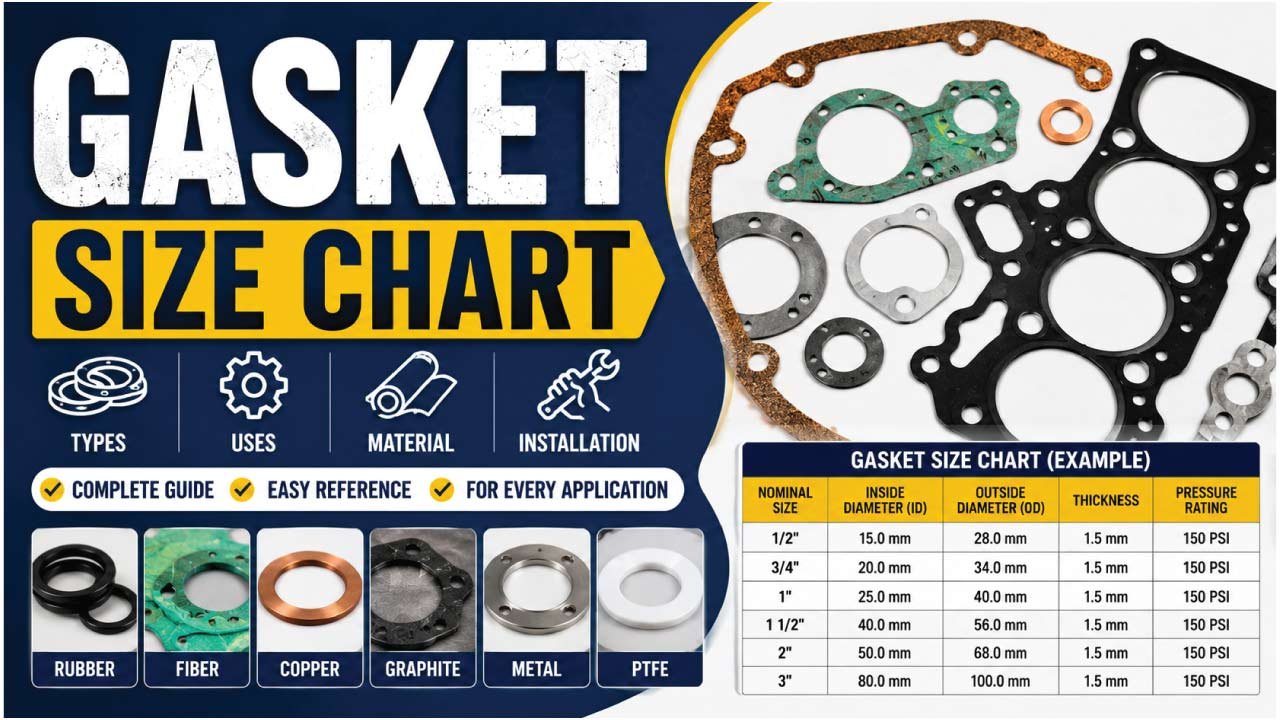
Gaskets are essential sealing components used in engines, pipelines, machinery, plumbing systems, and industrial equipment. They prevent leaks between two connected surfaces by creating a tight seal against liquids, gases, pressure, and contaminants. Choosing the correct gasket size, material, and type is extremely important for safety, performance, and long-term durability.
In this complete guide, you will learn about gasket size charts, gasket types, gasket materials, uses, applications, and how to select the right gasket for different systems.
What Is a Gasket?
A gasket is a mechanical sealing component placed between two mating surfaces to prevent leakage of fluids or gases when the parts are compressed together. It fills small gaps and surface imperfections, ensuring a tight and reliable seal in mechanical assemblies and industrial systems.
Gaskets are widely used across many industries where secure sealing is essential for safe and efficient operation. They help maintain pressure, prevent contamination, and improve the overall performance and durability of machines and piping systems.
They are commonly used in:
- Automotive engines
- Pipe flanges
- Pumps
- Compressors
- Hydraulic systems
- Plumbing connections
- Industrial machinery
Gaskets work under various conditions including:
- High pressure
- High temperature
- Chemical exposure
- Vibration
Why Gaskets Are Important
Gaskets play a crucial role in ensuring the safe and efficient operation of mechanical systems by creating a reliable seal between two mating surfaces. They help prevent leaks and maintain system stability under pressure, temperature changes, and vibration, which is essential for long-term performance and safety.
Their proper use reduces mechanical failures, improves efficiency, and protects internal components from damage caused by leaks or contamination. Without effective gaskets, many machines, engines, and pipelines would lose pressure, become unsafe, or fail prematurely.
Main benefits include:
- Prevent fluid leakage
- Prevent gas leakage
- Maintain pressure
- Reduce vibration
- Improve equipment lifespan
- Protect against contamination
Without proper gaskets, machines and pipelines can fail quickly.
Main Parts of a Gasket System
A gasket system is designed to create a secure, leak-proof seal between two mating surfaces in mechanical and industrial applications. Each component plays an important role in ensuring proper compression, pressure distribution, and long-term sealing performance. Understanding these parts helps improve installation accuracy and system reliability.
1. Gasket Material
The gasket material is the core sealing element of the system. It is placed between two surfaces to prevent leaks of liquids, gases, or pressure. Depending on the application, it can be made from rubber, metal, graphite, or composite materials. The material must withstand temperature, pressure, and chemical exposure to ensure a reliable seal.
2. Flanges or Mating Surfaces
Flanges or mating surfaces are the two rigid parts between which the gasket is placed. These surfaces must be smooth, clean, and properly aligned to ensure effective sealing. When the gasket is compressed between them, it fills surface irregularities and creates a tight barrier that prevents leakage under pressure.
3. Bolts and Fasteners
Bolts and fasteners are used to apply controlled pressure on the gasket by tightening the flanges together. This compression activates the sealing ability of the gasket material. Proper bolt tightening is important because uneven or excessive pressure can damage the gasket or lead to leaks in the system.
4. Sealing Surface
The sealing surface is the actual contact area where the gasket and flanges meet. This surface plays a critical role in maintaining an effective seal. Any scratches, dirt, or unevenness can affect performance. A clean and properly prepared sealing surface ensures uniform pressure distribution and long-lasting leak prevention.
Gasket Size Chart
Gasket sizes vary depending on flange size, pipe diameter, and application.
Common Pipe Flange Gasket Size Chart
| Nominal Pipe Size | Inner Diameter | Outer Diameter | Common Application |
|---|---|---|---|
| 1/2 Inch | 0.84 Inch | 2.0 Inch | Small plumbing |
| 3/4 Inch | 1.05 Inch | 2.5 Inch | Water systems |
| 1 Inch | 1.32 Inch | 3.0 Inch | Industrial piping |
| 2 Inch | 2.38 Inch | 4.5 Inch | Pumps and valves |
| 4 Inch | 4.50 Inch | 7.0 Inch | Chemical pipelines |
| 6 Inch | 6.62 Inch | 9.5 Inch | Large fluid systems |
| 8 Inch | 8.62 Inch | 11.75 Inch | Industrial plants |
| 12 Inch | 12.75 Inch | 17.0 Inch | Heavy industries |
Common Gasket Thicknesses
Gasket thickness affects sealing performance.
| Thickness | Common Uses |
|---|---|
| 0.5 mm | Precision sealing |
| 1 mm | Automotive systems |
| 1.5 mm | Pipe flanges |
| 2 mm | General industrial use |
| 3 mm | High-pressure systems |
| 5 mm | Heavy-duty sealing |
Types of Gaskets
Gaskets are available in different types to suit various pressure levels, temperatures, and industrial applications. Each type is designed with specific materials and structures to ensure effective sealing between mating surfaces, preventing leaks and improving system reliability in mechanical, automotive, and piping systems.
1. Full Face Gasket
Full face gaskets cover the entire flange surface, including bolt holes, ensuring maximum contact and alignment between mating surfaces. They provide a strong seal and reduce the risk of leakage, especially in low-pressure systems where uniform sealing is important.
Advantages:
- Better alignment
- Improved sealing
- Reduced leakage risk
Used in:
- Water pipelines
- Low-pressure systems
2. Ring Gasket
Ring gaskets only cover the inner sealing area of a flange, making them more material-efficient and suitable for higher pressure applications. They are widely used in industries where strong, compact sealing is required without covering the full flange face.
Benefits:
- Lower material usage
- Better for high-pressure systems
Common in:
- Oil and gas industries
- Steam systems
3. Spiral Wound Gasket
Spiral wound gaskets are made by alternating metal strips and soft filler materials, giving them excellent strength and flexibility. They perform well under extreme pressure and temperature conditions, making them ideal for demanding industrial environments.
Features:
- Excellent flexibility
- High-temperature resistance
- High-pressure capability
Used in:
- Refineries
- Power plants
- Chemical industries
4. Rubber Gasket
Rubber gaskets are soft, flexible, and widely used for sealing low-pressure systems. They provide good resistance to water and air leakage, making them suitable for household and light industrial applications where flexibility is important.
Suitable for:
- Water systems
- Air systems
- Household plumbing
5. Cork Gasket
Cork gaskets are lightweight and compressible, making them ideal for applications that require vibration absorption and oil resistance. They are commonly used in automotive engines and mechanical covers.
Applications include:
- Engine covers
- Oil pans
- Automotive systems
6. Metal Gasket
Metal gaskets are designed for extreme pressure and temperature conditions where non-metallic materials cannot perform. They are made from strong metals like stainless steel, copper, or aluminum for maximum durability.
Common materials include:
- Stainless steel
- Copper
- Aluminum
Used in:
- Aerospace
- High-pressure piping
- Industrial boilers
7. Non-Asbestos Gasket
Non-asbestos gaskets are modern alternatives to traditional asbestos-based materials, designed for safety and environmental compliance. They offer good resistance to heat, pressure, and chemicals without the health risks associated with asbestos.
Advantages:
- Heat resistance
- Chemical resistance
- Safer handling
Gasket Materials
Gasket material selection is very important because it directly affects sealing performance, durability, and resistance to pressure, temperature, and chemicals. Different materials are used depending on the working environment, ensuring reliable sealing in automotive, industrial, and plumbing applications where conditions can vary widely.
1. Rubber Gasket Materials
Rubber is one of the most commonly used gasket materials due to its flexibility, affordability, and strong sealing ability. It is ideal for low to medium-pressure applications where resistance to fluids, air, and moderate heat is required.
Neoprene Rubber
Features:
- Oil resistance
- Water resistance
- Good flexibility
EPDM Rubber
Advantages:
- Excellent weather resistance
- Heat resistance
- Chemical resistance
Common in outdoor applications.
Nitrile Rubber (NBR)
Best for:
- Fuel systems
- Oil sealing
- Hydraulic equipment
Silicone Rubber
Benefits:
- High-temperature resistance
- Excellent flexibility
Used in:
- Food processing
- Medical equipment
2. Metal Gasket Materials
Metal gaskets are designed for extreme pressure and high-temperature environments where soft materials cannot perform effectively. They provide strong, durable sealing in heavy industrial systems.
Stainless Steel
Advantages:
- Corrosion resistance
- High strength
- Heat resistance
Copper
Copper gaskets offer excellent thermal conductivity and sealing performance, especially in engine and exhaust systems where heat transfer is important.
Common in:
- Automotive engines
- Exhaust systems
Aluminum
Aluminum gaskets are lightweight and corrosion-resistant, making them suitable for various mechanical and automotive applications.
3. Fiber Gasket Materials
Fiber gaskets are made from compressed fibers and binding agents, providing good flexibility and sealing for medium-pressure applications. They are commonly used in industrial environments where chemical and steam resistance is required.
Used for:
- Steam systems
- Industrial piping
- Chemical sealing
4. Graphite Gasket Material
Graphite is a high-performance gasket material known for its ability to withstand extreme conditions. It maintains flexibility while offering strong resistance to heat and chemicals, making it suitable for demanding industrial applications.
Used in:
- High-temperature systems
- Chemical plants
- Industrial machinery
👉 🔧 Pipe Wrench Size Chart: Types, Uses and Complete Guide: This expert guide covers pipe wrench sizes, types, and common uses in plumbing and maintenance work. Learn how to choose the right wrench for different pipe diameters, improve grip, and work more efficiently. Read the full guide to make informed tool selections and achieve better results on every project.
How to Choose the Right Gasket
Selecting the correct gasket is essential for ensuring a reliable seal, preventing leaks, and maintaining safe system performance. The right gasket depends on operating conditions such as temperature, pressure, and the type of fluid being sealed. Careful selection helps improve durability, efficiency, and long-term system reliability in mechanical and industrial applications.
1. Temperature
Temperature is one of the most important factors in gasket selection. High-temperature applications require materials that can withstand heat without breaking down, hardening, or losing sealing ability. Heat-resistant gaskets are commonly used in engines, boilers, and industrial machines where continuous exposure to high temperatures is expected.
2. Pressure
The level of pressure inside a system determines the strength and durability required from a gasket. High-pressure systems need strong, reinforced gasket materials that can maintain a tight seal without being compressed or damaged. Choosing the wrong material for pressure conditions can lead to leaks or system failure.
3. Chemical Exposure
When a system involves chemicals, oils, or corrosive substances, the gasket must be made from chemically resistant materials. These gaskets are designed to resist corrosion, swelling, or degradation caused by harsh chemicals. Proper chemical compatibility ensures long-lasting sealing performance and prevents premature failure of the gasket system.
4. Fluid Type
Different fluids require different gasket materials to ensure proper sealing. Water, oil, gas, and industrial chemicals each interact differently with sealing materials. Selecting the correct gasket based on fluid type helps prevent leaks, contamination, and damage to equipment, ensuring safe and efficient system operation.
5. Surface Finish
The condition and smoothness of the sealing surfaces also affect gasket performance. Rough or uneven surfaces may require softer gasket materials that can fill gaps and irregularities effectively. Smooth surfaces, on the other hand, can use firmer materials for a tighter and more durable seal under operating pressure.
Advantages of Gaskets
Gaskets are essential sealing components used in mechanical, automotive, and industrial systems. They provide a simple and effective way to prevent leakage between two connected surfaces. Their design improves system safety, efficiency, and durability while reducing maintenance costs and operational issues.
1. Leak Prevention
The primary advantage of a gasket is its ability to prevent leaks of fluids, gases, or pressure between two mating surfaces. By filling small gaps and irregularities, it creates a tight seal that ensures the system operates safely and efficiently without loss of material or pressure.
2. Cost-Effective
Gaskets are an economical solution compared to repairing or replacing damaged machinery caused by leaks. They are generally inexpensive, easy to produce, and widely available. Using the right gasket helps reduce maintenance costs and prevents expensive system failures in the long run.
3. Easy Replacement
Most gaskets are designed for quick and simple replacement during maintenance or repair work. They can be removed and installed without complex tools or procedures. This ease of replacement helps reduce downtime in industrial systems and ensures smooth and uninterrupted operation.
4. Vibration Reduction
Many gasket materials are soft and flexible, allowing them to absorb vibrations between connected components. This helps reduce noise, minimize wear, and protect equipment from mechanical stress. Vibration control also improves the overall stability and lifespan of machines and mechanical systems.
5. Pressure Retention
Gaskets play an important role in maintaining consistent system pressure by sealing joints effectively. They prevent pressure loss in pipelines, engines, and hydraulic systems. Proper pressure retention ensures efficient performance, better energy use, and safe operation of mechanical and industrial equipment.
👉 🔨 Hammer Size Chart: Complete Guide to Hammer Types and Sizes: This expert guide explains hammer sizes, types, and their practical applications for construction, woodworking, and repair tasks. Learn how to choose the right hammer weight and style for better accuracy, safety, and efficiency. Read the full guide to select the perfect hammer for every job and improve your workmanship.
Limitations of Gaskets
Although gaskets are essential sealing components in many mechanical and industrial systems, they also have certain limitations. Understanding these drawbacks helps in selecting the right material, improving installation practices, and avoiding system failures caused by poor sealing performance.
1. Wear Over Time
Gasket materials naturally degrade over time due to continuous exposure to heat, pressure, vibration, and environmental conditions. This wear can reduce their sealing ability, leading to leaks or reduced system efficiency. Regular inspection and timely replacement are necessary to maintain proper performance and prevent unexpected failures.
2. Improper Installation Problems
Incorrect installation is a common issue that can significantly reduce gasket effectiveness. Uneven tightening of bolts or misalignment of mating surfaces can create gaps, causing leaks or seal failure. Proper torque application and careful alignment during installation are essential to ensure the gasket functions as intended.
3. Chemical Damage
Some gasket materials are not resistant to certain chemicals, oils, or corrosive substances. When exposed to incompatible chemicals, the gasket may swell, crack, or break down, leading to leakage and system damage. Choosing the correct chemical-resistant material is important to ensure long-term durability and safe operation.
Gasket Installation Tips
Proper gasket installation is essential for achieving a reliable, leak-free seal in mechanical and industrial systems. Even a high-quality gasket can fail if it is installed incorrectly. Following correct procedures helps ensure even pressure distribution, longer service life, and safe system performance.
1. Clean the Surfaces
Before installing a gasket, thoroughly clean both mating surfaces. Remove dirt, rust, grease, and any remnants of the old gasket material. A clean surface ensures proper contact between the gasket and flanges, which helps create a tight and effective seal without weak points or leakage paths.
2. Use Correct Alignment
Proper alignment of flanges or mating surfaces is critical for gasket performance. If the components are misaligned, the gasket may be compressed unevenly, leading to leaks or damage. Careful positioning ensures uniform pressure across the sealing area and improves overall system reliability.
3. Tighten Bolts Evenly
Bolts should always be tightened in a cross or star pattern to distribute pressure evenly across the gasket. Uneven tightening can distort the gasket and create weak sealing points. Gradual and balanced tightening helps maintain consistent compression and ensures a strong, long-lasting seal.
4. Avoid Reusing Old Gaskets
Most gaskets are designed for single use only. Reusing an old gasket can result in poor sealing performance because the material may already be compressed or damaged. Installing a new gasket each time ensures proper fit, reliable sealing, and reduces the risk of leaks or system failure.
5. Follow Torque Specifications
Always follow the manufacturer’s recommended torque specifications when tightening bolts. Proper torque ensures the gasket is compressed just enough to create a secure seal without overloading or damaging it. Using a torque wrench helps achieve accurate tightening and improves the overall safety and efficiency of the system.
👉 🔩 Bolt Size Chart: Complete Guide to Standard Bolt Sizes: This complete guide covers standard bolt sizes, measurements, thread specifications, and common applications. Learn how to identify the correct bolt size for mechanical, construction, and DIY projects. Read the full guide to improve fastener selection, ensure proper fitting, and avoid costly installation mistakes.
Gasket Maintenance Tips
Regular maintenance of gaskets is important to ensure long-term sealing performance and prevent leaks or system failures. Since gaskets operate under pressure, heat, and chemical exposure, routine inspection helps identify early signs of damage and keeps mechanical systems running safely and efficiently.
1. Check for Leaks
Regularly inspect all joints and connections for any signs of leakage. Even small leaks can indicate gasket wear or improper sealing. Early detection helps prevent major system damage, reduces downtime, and ensures that the equipment continues to operate safely and efficiently under normal working conditions.
2. Replace Damaged Gaskets
Any gasket that shows signs of cracking, hardening, compression set, or physical damage should be replaced immediately. Damaged gaskets cannot maintain proper sealing pressure and may lead to system failure. Timely replacement ensures reliable sealing performance and prevents costly repairs or unexpected breakdowns.
3. Monitor Temperature and Pressure
Gasket lifespan is highly affected by operating temperature and pressure levels. Exposure to conditions beyond the recommended limits can cause rapid deterioration. Regular monitoring helps ensure that the system remains within safe operating ranges, reducing stress on the gasket and extending its overall service life.
4. Inspect Bolt Tightness
Loose bolts can reduce the compression force required for effective sealing, leading to leaks or gasket failure. Regularly checking and maintaining proper bolt tightness helps ensure even pressure distribution across the gasket. This improves sealing efficiency and helps maintain system stability during continuous operation.
Difference Between Gasket and Seal
Many people confuse these two components.
| Feature | Gasket | Seal |
|---|---|---|
| Position | Between flat surfaces | Around moving parts |
| Main Purpose | Prevent leakage | Prevent fluid escape |
| Motion | Static sealing | Dynamic sealing |
| Common Use | Flanges, engines | Shafts, bearings |
Common Gasket Standards
Industrial gaskets are manufactured according to specific international standards to ensure proper fit, compatibility, and safety in different mechanical systems. These standards define dimensions, pressure ratings, and material requirements, helping engineers select the correct gasket for reliable sealing performance in various industries.
1. ANSI Gaskets
ANSI (American National Standards Institute) gaskets are widely used in North America. They are commonly applied in piping systems, industrial equipment, and mechanical assemblies. ANSI standards ensure uniform sizing and pressure ratings, making it easier to match gaskets with compatible flanges and fittings in standardized industrial applications.
2. DIN Gaskets
DIN (Deutsches Institut für Normung) gaskets follow German industrial standards and are widely used in Europe and many global industries. These gaskets are known for their precise engineering and strict dimensional accuracy. DIN standards help ensure consistent sealing performance in machinery, pipelines, and manufacturing systems across different regions.
3. JIS Gaskets
JIS (Japanese Industrial Standards) gaskets are commonly used in Japan and other Asian markets. They are designed to meet specific regional requirements for machinery, automotive systems, and industrial equipment. JIS standards ensure compatibility between components, helping maintain reliable sealing performance in various engineering and manufacturing applications.
4. ASME Standards
ASME (American Society of Mechanical Engineers) gaskets are commonly used in pressure piping and high-pressure industrial systems. These standards focus on safety, durability, and performance under extreme conditions. ASME-compliant gaskets are essential in industries like oil and gas, power generation, and chemical processing where reliable sealing is critical.
How Long Do Gaskets Last?
The lifespan of a gasket depends on its material type, working conditions, and installation quality. Gaskets used in high-pressure, high-temperature, or chemically aggressive environments tend to wear out faster than those used in normal conditions. Proper selection and installation can significantly extend their service life.
Gasket durability is also affected by how well the mating surfaces are prepared and whether the correct torque is applied during installation. Poor fitting or uneven pressure can cause early failure, leading to leaks and system inefficiency.
Gasket lifespan depends on:
- Material quality
- Operating temperature
- Pressure
- Chemical exposure
- Installation quality
Some gaskets last several years, while others require regular replacement.
Conclusion
Gaskets are essential sealing components used across countless industries to prevent leaks and maintain pressure. They are available in many sizes, types, and materials to match different operating conditions.
Understanding gasket size charts, gasket materials, and gasket types helps users choose the right sealing solution for automotive systems, industrial pipelines, plumbing, machinery, and high-pressure equipment.
Proper gasket selection, installation, and maintenance improve system safety, reduce downtime, and extend equipment lifespan. Whether using rubber, metal, graphite, or fiber gaskets, selecting the correct gasket ensures reliable and efficient performance.
FAQs About Gaskets
What is the most common gasket material?
Rubber is one of the most commonly used gasket materials due to its flexibility, affordability, and good sealing ability. It works well in low to medium pressure applications such as water systems, engines, and general industrial equipment. Rubber gaskets can easily conform to surface irregularities, making them highly effective for basic sealing needs.
Can gaskets handle high temperatures?
Yes, certain gasket materials are specifically designed for high-temperature environments. Metal, graphite, and composite gaskets can withstand extreme heat without losing their sealing properties. These are commonly used in engines, boilers, turbines, and industrial systems where continuous exposure to high temperatures and pressure is required.
Why do gaskets fail?
Gaskets can fail due to several factors, including excessive heat, incorrect installation, high pressure, vibration, and chemical exposure. Improper torque or uneven tightening can also damage the gasket. Over time, wear and environmental stress reduce sealing efficiency, leading to leaks and system performance issues if not addressed promptly.
Are gaskets reusable?
Most compressed gaskets are designed for single use and should not be reused after removal. Once compressed, their sealing ability is reduced, and reinstallation can lead to leaks or failure. In critical systems, always replace gaskets with new ones to ensure proper sealing and safe operation.
What industries use gaskets the most?
Gaskets are widely used across many industries, especially automotive, plumbing, oil and gas, manufacturing, chemical processing, and power generation. These industries rely on gaskets to prevent leaks, maintain pressure, and ensure safe and efficient operation of machinery, pipelines, and mechanical systems.

Engineer Hassan is a Mechanical Engineer with 16+ years of hands-on experience in mechanical hardware, fasteners, and workshop tools. He focuses on size selection, thread identification, and measurement, helping users choose the correct components with accuracy and safety.