
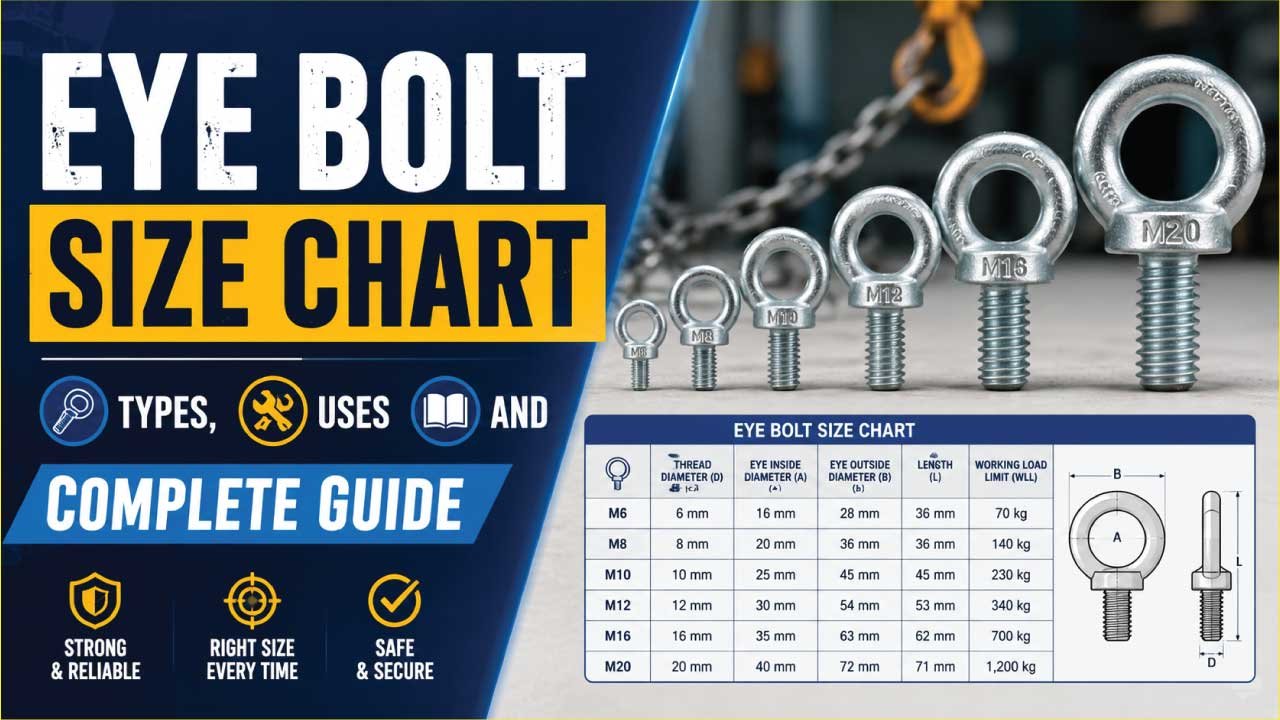
Eye bolts are essential lifting and fastening hardware used in construction, rigging, marine applications, manufacturing, and industrial lifting operations. They provide a secure attachment point for ropes, cables, chains, and lifting equipment. Selecting the correct eye bolt size is critical for safety, load capacity, and performance.
In this complete eye bolt size chart guide, you’ll learn about standard eye bolt dimensions, types, applications, materials, load capacities, and how to choose the right eye bolt for your project.
What Is an Eye Bolt?
An eye bolt is a specialized threaded fastener designed with a circular loop, known as an eye, at one end and threaded shank at the other. This unique design allows the bolt to serve as a secure attachment point for ropes, chains, hooks, cables, and lifting slings. Eye bolts are widely used in industries where lifting, pulling, anchoring, or securing loads is required.
The eye section provides a strong connection point, while the threaded portion allows the fastener to be securely installed into machinery, structures, wood, concrete, or metal components. Depending on the application, eye bolts can be used for both permanent and temporary installations.
Eye bolts are commonly used for:
- Lifting heavy machinery
- Rigging operations
- Securing loads
- Anchoring cables
- Marine hardware installations
- Construction projects
- Industrial equipment handling
They are available in various sizes, thread types, materials, and load ratings to meet different safety and performance requirements across industrial, commercial, and residential applications.
Standard Eye Bolt Size Chart
The following chart shows common eye bolt sizes and dimensions.
| Thread Size | Thread Diameter (mm) | Eye Inside Diameter (mm) | Shank Length (mm) | Typical Working Load Limit |
|---|---|---|---|---|
| M6 | 6 | 16 | 25–40 | 0.05–0.08 Ton |
| M8 | 8 | 20 | 30–50 | 0.08–0.14 Ton |
| M10 | 10 | 25 | 40–60 | 0.23 Ton |
| M12 | 12 | 30 | 50–70 | 0.34 Ton |
| M16 | 16 | 35 | 60–90 | 0.70 Ton |
| M20 | 20 | 40 | 70–100 | 1.20 Ton |
| M24 | 24 | 50 | 90–120 | 1.80 Ton |
| M30 | 30 | 65 | 110–150 | 3.20 Ton |
| M36 | 36 | 75 | 130–180 | 4.60 Ton |
| M42 | 42 | 85 | 150–200 | 6.30 Ton |
Actual dimensions and load ratings may vary by manufacturer and industry standards.
Imperial Eye Bolt Size Chart
In North America, eye bolts are often measured in inches.
| Bolt Size | Thread Diameter | Eye Diameter | Typical Load Capacity |
|---|---|---|---|
| 1/4″ | 6.35 mm | 0.75″ | 220 lbs |
| 5/16″ | 7.94 mm | 0.88″ | 450 lbs |
| 3/8″ | 9.53 mm | 1.00″ | 650 lbs |
| 1/2″ | 12.7 mm | 1.25″ | 1,200 lbs |
| 5/8″ | 15.9 mm | 1.50″ | 2,200 lbs |
| 3/4″ | 19.05 mm | 1.75″ | 3,500 lbs |
| 7/8″ | 22.2 mm | 2.00″ | 5,200 lbs |
| 1″ | 25.4 mm | 2.25″ | 7,200 lbs |
Main Parts of an Eye Bolt
Understanding the main components of an eye bolt helps users choose the correct fastener for lifting, rigging, anchoring, and securing applications. Each part serves a specific purpose and contributes to the overall strength, stability, and performance of the eye bolt under load.
1. Eye
The eye is the circular loop located at the top of the bolt and serves as the primary attachment point. Hooks, ropes, chains, cables, and lifting slings are connected through this opening. The size and shape of the eye determine the type of connections it can safely accommodate during lifting or securing operations.
2. Shoulder
The shoulder is a reinforced section positioned directly beneath the eye on shoulder eye bolts. It provides additional support and helps distribute angled loads more effectively than non-shoulder designs. This feature increases stability and reduces stress concentration, making shoulder eye bolts suitable for many rigging and lifting applications.
3. Shank
The shank is the straight, solid portion that connects the eye to the threaded section of the bolt. It transfers the applied load from the eye to the mounting surface. The shank’s diameter and length play an important role in determining the eye bolt’s overall strength and load-bearing capacity.
4. Threads
The threads are located at the lower end of the eye bolt and allow it to be securely installed into a tapped hole or fastened with a nut. Proper thread engagement is essential for safety, as it ensures the load is evenly distributed and prevents the eye bolt from loosening during use.
Types of Eye Bolts
Different applications require different eye bolt designs. Each type is engineered to handle specific load conditions, installation methods, and working environments. Understanding the various types of eye bolts helps ensure proper selection, improved safety, and maximum performance for lifting, anchoring, rigging, and fastening applications.
1. Shoulder Eye Bolt
Shoulder eye bolts feature a reinforced shoulder located directly beneath the eye. This additional support helps distribute load stress more effectively and allows the bolt to handle both vertical and certain angular loads when installed correctly. They are among the most commonly used eye bolts in heavy-duty industrial lifting operations where strength and reliability are critical.
Features:
- Higher strength
- Suitable for angular lifting
- Better load distribution
- Common in industrial lifting
Applications:
- Hoists
- Rigging systems
- Machinery lifting
2. Plain Eye Bolt
Plain eye bolts, sometimes called non-shouldered eye bolts, have a simple design without the reinforced shoulder beneath the eye. These bolts are primarily intended for straight-line vertical loading applications. Because they are less resistant to side loading, they should not be used for angled lifting unless specifically rated for that purpose.
Features:
- Simpler design
- Lower cost
- Intended for straight vertical loads
Applications:
- Light-duty lifting
- Anchoring
- Cable attachment
3. Screw Eye Bolt
Screw eye bolts use wood screw threads instead of machine threads, allowing them to be installed directly into wooden surfaces without requiring a nut. They are widely used in residential, commercial, and light industrial projects where objects need to be suspended, secured, or supported from wooden structures.
Applications:
- Wood structures
- Hanging objects
- Decorative installations
4. Machinery Eye Bolt
Machinery eye bolts are specifically designed for lifting and moving heavy equipment, engines, molds, and industrial machinery. These eye bolts are manufactured to strict strength standards and are commonly threaded into tapped holes provided by equipment manufacturers. Proper sizing and load ratings are essential for safe operation.
Applications:
- Equipment transportation
- Manufacturing facilities
- Heavy construction
5. Forged Eye Bolt
Forged eye bolts are produced from a single solid piece of metal through a forging process that improves grain structure and strength. This manufacturing method creates a highly durable eye bolt capable of handling demanding lifting and rigging tasks. Forged eye bolts are commonly preferred in critical applications where safety and reliability are priorities.
Advantages:
- Greater strength
- Improved durability
- Reduced failure risk
6. Bent Wire Eye Bolt
Bent wire eye bolts are manufactured by bending steel wire into a loop shape and adding threaded ends. They are generally intended for lighter-duty applications where extreme load capacity is not required. Due to their simpler construction, they are often used for securing cables, organizing wires, and performing basic fastening tasks.
Applications:
- Light-duty tasks
- Cable routing
- Utility projects
👉 Looking for the right bolt size for your project? Our Bolt Size Chart provides a complete guide to standard bolt sizes, dimensions, thread types, and applications. Whether you’re working in construction, automotive repair, or DIY projects, this guide helps you choose the correct bolt with confidence. Read the full post to explore detailed charts, sizing tips, and expert recommendations.
Common Eye Bolt Materials
Material selection directly affects the strength, durability, load capacity, and corrosion resistance of an eye bolt. Choosing the right material is important because eye bolts often operate in demanding environments such as construction sites, marine settings, industrial facilities, and outdoor installations. The material determines how well the eye bolt can withstand heavy loads, weather exposure, moisture, chemicals, and long-term wear.
1. Carbon Steel
Carbon steel eye bolts are among the most widely used fasteners because they offer an excellent balance of strength and affordability. They are suitable for many general-purpose lifting and fastening applications where exposure to moisture and corrosive substances is limited. Carbon steel eye bolts are commonly found in workshops, factories, and construction projects.
Advantages:
- High strength
- Cost-effective
- Easy availability
Applications:
- Construction
- General industrial use
2. Stainless Steel
Stainless steel eye bolts are highly valued for their excellent corrosion and rust resistance. They perform well in wet, humid, and chemically exposed environments where ordinary steel may deteriorate over time. Their clean appearance and durability also make them popular for decorative and architectural installations.
Advantages:
- Rust resistant
- Weather resistant
- Attractive appearance
Applications:
- Marine environments
- Outdoor projects
- Food processing equipment
3. Alloy Steel
Alloy steel eye bolts are engineered for demanding applications that require exceptional strength and durability. By combining steel with additional alloying elements, manufacturers create eye bolts capable of handling higher loads and resisting wear under severe operating conditions. These eye bolts are frequently used in professional lifting and rigging operations.
Advantages:
- Superior strength
- Excellent durability
- High load capacity
Applications:
- Industrial lifting
- Rigging operations
- Heavy machinery
4. Galvanized Steel
Galvanized steel eye bolts are coated with a protective layer of zinc that helps prevent rust and corrosion. This coating significantly extends the service life of the fastener when used outdoors or in environments exposed to moisture. Galvanized eye bolts provide a practical and economical solution for many exterior applications.
Advantages:
- Corrosion resistance
- Long service life
- Outdoor suitability
Applications:
- Utility installations
- Agricultural equipment
- Construction sites
👉 Need help selecting the correct machine screw size? Our Machine Screw Size Chart offers a complete guide to standard machine screw sizes, thread dimensions, head types, and common applications. Whether you’re working with electronics, machinery, or DIY projects, this resource makes screw selection easier. Read the full post to explore detailed size charts, practical tips, and expert guidance.
Eye Bolt Load Capacity Explained
Load capacity is one of the most important factors when selecting an eye bolt.
Several factors affect capacity:
- Bolt size
- Material grade
- Thread engagement
- Installation quality
- Load angle
- Environmental conditions
Always use the manufacturer’s Working Load Limit (WLL) instead of estimating capacity.
Effect of Load Angle on Eye Bolt Strength
Eye bolts are strongest when loaded vertically.
As the lifting angle increases:
- Capacity decreases
- Stress increases
- Failure risk rises
Approximate capacity reduction:
| Load Angle | Remaining Capacity |
|---|---|
| 0° Vertical | 100% |
| 30° | 65% |
| 45° | 50% |
| 60° | 25% |
Never exceed the recommended angle specified by the manufacturer.
How to Choose the Right Eye Bolt Size
Selecting the correct eye bolt size is essential for safety, durability, and reliable performance. The right choice depends on factors such as load weight, lifting angle, installation method, and environmental conditions. Evaluating these factors carefully helps prevent equipment failure and ensures safe lifting or anchoring operations.
1. Determine Load Weight
Start by calculating the maximum weight the eye bolt will be required to support. Always consider the heaviest possible load, including any additional forces created during lifting or movement. Choose an eye bolt with a working load limit that safely exceeds the expected load.
2. Consider Load Direction
The direction of the applied load significantly affects eye bolt capacity. Eye bolts generally provide their highest load ratings when used for straight vertical lifting. When loads are applied at an angle, the effective capacity decreases, so a larger or specially designed eye bolt may be required.
3. Choose the Correct Material
Select an eye bolt material that matches the operating environment and application requirements. Important factors include:
- Corrosion exposure
- Temperature conditions
- Environmental factors such as moisture, chemicals, or saltwater
Choosing the proper material improves service life and helps maintain safe load-carrying performance.
4. Verify Thread Engagement
Ensure the threaded portion of the eye bolt engages fully and securely with the mounting surface or nut. Adequate thread engagement distributes loads properly, increases holding strength, and reduces the risk of thread stripping or loosening during operation.
5. Follow Safety Standards
Always use eye bolts that comply with applicable lifting, rigging, and safety standards. Certified products are tested to meet specific performance requirements and provide greater confidence in demanding applications. Following industry regulations also helps reduce workplace risks and ensures safe operation.
👉 Choosing the right screw size is essential for a secure and reliable connection. Our Screw Size Chart provides a complete guide to screw sizes, thread measurements, gauge numbers, lengths, and common applications. Whether you’re working on woodworking, construction, metalworking, or DIY projects, this guide simplifies screw selection. Read the full post to explore detailed charts, sizing tips, and expert recommendations.
Common Uses of Eye Bolts
Eye bolts are used across a wide range of industries because they provide a reliable attachment point for lifting, securing, pulling, and anchoring loads. Their versatility, strength, and ease of installation make them valuable in applications ranging from heavy industrial operations to everyday equipment handling. The specific use of an eye bolt often depends on its size, material, and load rating.
1. Construction Industry
The construction industry relies heavily on eye bolts for lifting and positioning heavy materials, machinery, and structural components. They help improve safety and efficiency during building projects by providing secure connection points for cranes, hoists, and rigging equipment. Properly rated eye bolts are essential when handling large loads on construction sites.
Used for:
- Structural lifting
- Equipment handling
- Temporary anchor points
2. Manufacturing Plants
Manufacturing facilities use eye bolts during equipment installation, maintenance, and production processes. They provide convenient lifting points for moving machinery, replacing components, and performing repairs. Heavy-duty eye bolts are commonly integrated into industrial equipment to simplify transportation and servicing.
Applications include:
- Machine installation
- Production equipment lifting
- Maintenance operations
3. Marine Industry
Marine environments require eye bolts that can withstand moisture, saltwater exposure, and harsh weather conditions. Stainless steel eye bolts are especially popular for marine applications because of their corrosion resistance. They play an important role in securing vessels, equipment, and marine structures.
Used for:
- Boat rigging
- Dock equipment
- Mooring systems
4. Agriculture
Eye bolts are widely used in agricultural settings for attaching, securing, and lifting farming equipment. They help support daily farm operations by providing strong attachment points for machinery, trailers, gates, and livestock handling systems. Their durability makes them suitable for demanding outdoor environments.
Applications include:
- Farm machinery
- Livestock equipment
- Utility trailers
5. Transportation Industry
The transportation industry uses eye bolts to secure cargo, recover vehicles, and safely transport heavy equipment. They provide dependable tie-down points that help prevent load movement during transit. Properly installed eye bolts contribute to safer transportation and compliance with cargo-securing requirements.
Used for:
- Cargo securing
- Vehicle recovery
- Equipment transport**
Eye Bolt Installation Tips
Proper installation is critical for ensuring the safety, strength, and longevity of an eye bolt. Even a high-quality eye bolt can fail if installed incorrectly. Following recommended installation practices helps maintain load capacity, prevents damage, and reduces the risk of accidents during lifting and securing operations.
1. Tighten Properly
Install the eye bolt securely and tighten it according to the manufacturer’s recommendations. For shoulder eye bolts, the shoulder should sit flush against the mounting surface without gaps. Proper seating ensures the load is distributed evenly and minimizes unnecessary stress on the bolt.
2. Avoid Side Loading
Standard eye bolts are primarily designed for straight vertical loads. Applying force from the side can significantly reduce their load capacity and increase the risk of failure. Only use eye bolts for angled or side loads if they are specifically rated and designed for such applications.
3. Inspect Before Use
Always inspect the eye bolt before each use to identify signs of wear or damage. Look for:
- Cracks
- Corrosion
- Deformation
- Thread damage
Any damaged eye bolt should be removed from service immediately to prevent accidents and equipment failure.
4. Use Appropriate Hardware
Ensure that nuts, washers, anchors, and mounting surfaces are compatible with the eye bolt’s size, material, and load rating. Using correctly matched hardware improves stability, maintains proper load distribution, and helps achieve the intended performance of the fastening system.
5. Follow Load Limits
Never exceed the eye bolt’s rated working load limit (WLL). Overloading can cause permanent deformation, thread failure, or complete bolt breakage. Always consider the weight of the load, lifting angle, and dynamic forces when determining whether an eye bolt is suitable for the application.
👉 Finding the correct tube size is easier with our Tube Size Chart. This comprehensive guide covers standard tube dimensions, outside diameters, wall thicknesses, tubing schedules, and common applications across construction, manufacturing, automotive, and engineering projects. Whether you’re selecting steel, aluminum, or stainless steel tubing, this resource helps you make the right choice. Read the full post for detailed charts, sizing information, and practical selection tips.
Common Eye Bolt Standards
Eye bolts are manufactured according to established industry standards to ensure consistent quality, safety, and performance. These standards specify dimensions, materials, testing methods, load ratings, and manufacturing requirements. Understanding the most common standards helps users select eye bolts that meet regulatory and application-specific requirements.
1. DIN 580
DIN 580 is one of the most widely recognized standards for metric lifting eye bolts. It defines dimensions, thread sizes, material specifications, and load capacities for forged lifting eye bolts. DIN 580 eye bolts are commonly used in industrial lifting, machinery handling, and construction applications throughout many countries.
2. ASME Standards
The American Society of Mechanical Engineers (ASME) develops standards widely used in North America. These standards provide guidelines for the design, manufacturing, testing, and safe use of lifting hardware. ASME-compliant eye bolts are commonly found in industrial facilities, manufacturing plants, and heavy lifting operations.
3. ASTM Standards
ASTM standards focus primarily on material quality, mechanical properties, and testing procedures. They help ensure that eye bolts are manufactured from suitable materials capable of meeting strength and durability requirements. ASTM specifications are often referenced alongside other lifting and rigging standards.
4. ISO Standards
The International Organization for Standardization (ISO) develops globally recognized standards for dimensions, performance, testing, and quality management. ISO-compliant eye bolts offer consistency across international markets, making them suitable for projects and equipment that require standardized components worldwide.
Advantages of Eye Bolts
Eye bolts offer numerous benefits that make them one of the most popular fastening and lifting solutions across industrial, commercial, marine, agricultural, and construction applications. Their simple yet effective design provides a secure attachment point for lifting equipment, chains, ropes, and cables while maintaining strength and reliability under load. When selected and installed correctly, eye bolts can significantly improve safety and efficiency.
Advantages:
- Strong attachment point
- Easy installation
- Reliable lifting capability
- Wide size availability
- Various material options
- Long service life
- Versatile applications
These benefits make eye bolts one of the most widely used lifting and anchoring fasteners. Their ability to serve multiple purposes, combined with a broad range of sizes, materials, and load capacities, allows them to meet the requirements of both light-duty and heavy-duty applications.
Common Eye Bolt Mistakes to Avoid
Improper eye bolt selection, installation, or usage can create serious safety hazards and increase the risk of equipment damage, load failure, or workplace accidents. Understanding common mistakes helps ensure safe operation and extends the service life of the hardware. Regular inspections and adherence to manufacturer guidelines are essential for maintaining lifting safety.
1. Using Damaged Eye Bolts
Eye bolts that show signs of bending, cracking, deformation, excessive wear, or thread damage should never be used. Even minor defects can significantly reduce load capacity and increase the risk of sudden failure during lifting or anchoring operations.
2. Exceeding Load Ratings
Every eye bolt is designed with a specific working load limit (WLL). Exceeding the rated capacity can overstress the fastener and lead to structural failure. Always verify load ratings before lifting or securing heavy objects.
3. Side Loading Plain Eye Bolts
Plain eye bolts are generally intended for straight vertical loading only. Applying side or angular loads can place excessive stress on the eye and threaded section, increasing the likelihood of bending or breakage.
4. Insufficient Thread Engagement
Installing an eye bolt without adequate thread engagement reduces holding strength and stability. The threaded portion should be fully engaged according to manufacturer recommendations to ensure maximum load-bearing performance.
5. Mixing Incompatible Hardware
Using hooks, chains, shackles, or lifting accessories that are not compatible with the eye bolt’s size or load rating can create unsafe lifting conditions. All lifting components should be properly matched and rated for the intended application.
6. Ignoring Corrosion Damage
Rust, pitting, and corrosion can weaken the metal structure of an eye bolt over time. Corroded hardware should be inspected carefully and replaced when necessary, especially in outdoor or marine environments.
7. Using Uncertified Lifting Hardware
For critical lifting operations, only certified and properly rated eye bolts should be used. Uncertified or low-quality hardware may not meet required safety standards and can pose significant risks during operation.
Regular inspection, proper installation, correct load handling, and routine maintenance help prevent failures and ensure eye bolts perform safely and reliably throughout their service life.
Conclusion
Understanding eye bolt sizes, load capacities, materials, and installation requirements is essential for safe lifting and anchoring applications. Whether you’re working in construction, manufacturing, marine environments, or general maintenance, selecting the correct eye bolt size ensures reliability and safety.
Always verify the working load limit, choose the proper material, inspect eye bolts regularly, and follow manufacturer recommendations. Using the right eye bolt for the job helps prevent accidents, protects equipment, and ensures successful lifting operations.
Frequently Asked Questions
What materials are eye bolts commonly made from?
Eye bolts are commonly manufactured from carbon steel, alloy steel, stainless steel, and galvanized steel. Carbon steel offers strength for general applications, while stainless steel provides excellent corrosion resistance. Material selection depends on load requirements, environmental conditions, and the intended application.
Can I reuse an eye bolt after lifting heavy loads?
Yes, eye bolts can often be reused if they pass a thorough inspection. Check for signs of bending, cracks, thread damage, corrosion, or deformation. Any eye bolt showing visible wear or structural damage should be removed from service immediately for safety reasons.
How do I install an eye bolt correctly?
Proper installation requires fully engaging the threads and ensuring the shoulder, if present, sits flush against the mounting surface. The eye should be aligned with the direction of the load whenever possible. Incorrect installation can significantly reduce the eye bolt’s load capacity.
What is the difference between a shoulder and non-shoulder eye bolt?
A shoulder eye bolt includes a reinforced shoulder beneath the eye, allowing it to handle limited angular loading when installed correctly. Non-shoulder eye bolts lack this reinforcement and are generally designed only for straight vertical lifts and light-duty applications.
Are eye bolt sizes standardized worldwide?
Most eye bolts follow recognized standards such as metric (M-series) or imperial thread systems. However, dimensions, thread pitches, and load ratings may vary by manufacturer and standard specification. Always verify product documentation before selecting an eye bolt for lifting operations.
Can eye bolts be used outdoors?
Yes, eye bolts are frequently used outdoors, especially in construction, marine, and industrial environments. Stainless steel and galvanized eye bolts are preferred because they resist rust and corrosion. Regular inspections remain important to ensure long-term safety and performance.
What happens if an eye bolt is overloaded?
Overloading an eye bolt can cause bending, thread failure, cracking, or complete structural failure. This may result in dropped loads, equipment damage, and serious injuries. Always follow the specified Working Load Limit (WLL) and apply appropriate safety factors during lifting operations.

Engineer Hassan is a Mechanical Engineer with 16+ years of hands-on experience in mechanical hardware, fasteners, and workshop tools. He focuses on size selection, thread identification, and measurement, helping users choose the correct components with accuracy and safety.