
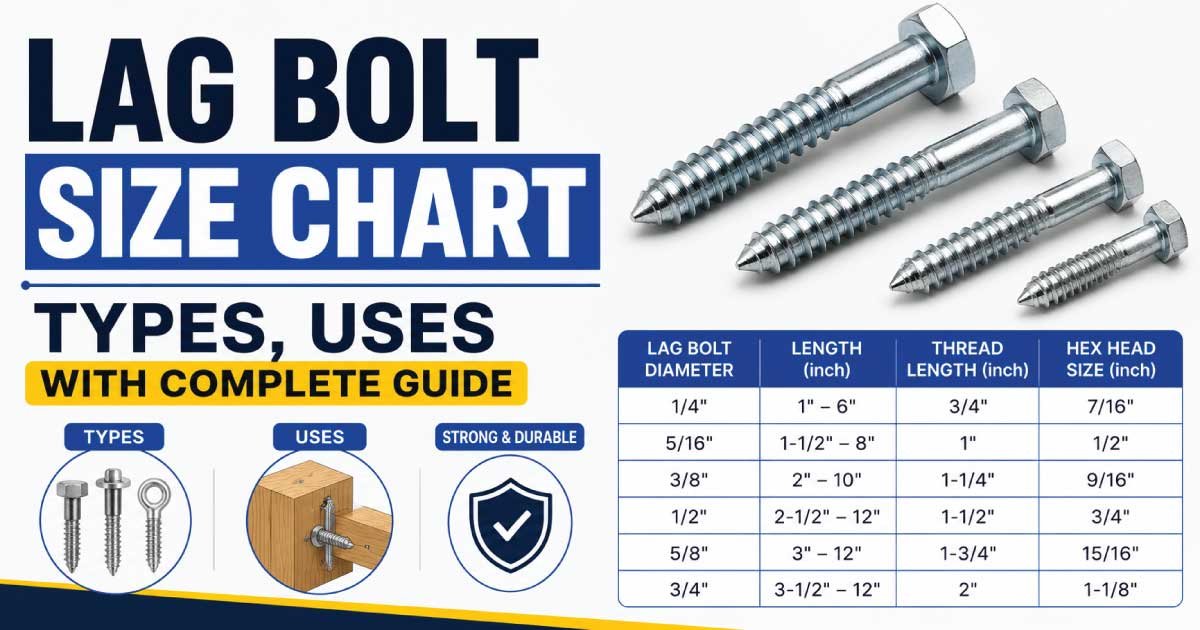
Lag bolts, also known as lag screws or lag lags, are heavy-duty fasteners designed to create strong and secure connections in wood, masonry, and structural applications. Unlike standard screws, lag bolts feature a thick shank and deep threads that provide superior holding power for demanding projects.
They are commonly used in deck construction, timber framing, fence installation, retaining walls, heavy machinery mounting, and structural wood connections. Choosing the correct lag bolt size is essential for ensuring strength, safety, and long-term durability.
This complete guide explains lag bolt sizes, dimensions, applications, materials, and how to select the right lag bolt for your project.
What Is a Lag Bolt?
A lag bolt is a large wood screw with a hexagonal head that is tightened using a wrench or socket. It is designed to penetrate deeply into wood and provide strong clamping force.
Key features include:
- Hex head for high torque installation
- Coarse threads for excellent grip
- Large diameter for heavy loads
- Available in various lengths and materials
- Suitable for structural applications
Lag bolts are often used when standard wood screws cannot provide sufficient strength.
Lag Bolt Size Chart
The following chart shows common lag bolt sizes used in construction and woodworking.
| Lag Bolt Diameter | Diameter (Inches) | Common Length Range |
|---|---|---|
| #10 | 0.190″ | 1″ – 4″ |
| 1/4″ | 0.250″ | 1″ – 6″ |
| 5/16″ | 0.312″ | 1-1/2″ – 8″ |
| 3/8″ | 0.375″ | 2″ – 10″ |
| 1/2″ | 0.500″ | 2″ – 12″ |
| 5/8″ | 0.625″ | 3″ – 16″ |
| 3/4″ | 0.750″ | 4″ – 18″ |
| 7/8″ | 0.875″ | 4″ – 20″ |
| 1″ | 1.000″ | 6″ – 24″ |
These dimensions may vary slightly depending on manufacturer specifications.
Common Lag Bolt Length Chart
Length selection depends on material thickness and required thread engagement.
| Length | Typical Application |
|---|---|
| 1″ | Light-duty fastening |
| 1-1/2″ | Cabinets and brackets |
| 2″ | Small wood connections |
| 2-1/2″ | Fence assemblies |
| 3″ | Deck framing |
| 4″ | Structural lumber |
| 5″ | Heavy timber joints |
| 6″ | Posts and beams |
| 8″ | Large structural members |
| 10″ – 24″ | Industrial and heavy construction |
A general rule is that at least half the lag bolt length should penetrate the receiving material.
Understand The Lag Bolt Dimensions
Selecting the correct lag bolt size requires understanding the key dimensions that affect strength, holding power, and overall performance. Diameter, length, and thread length all play important roles in determining whether a lag bolt can safely handle the demands of a specific application.
1. Diameter
The diameter refers to the thickness of the lag bolt’s shank and is one of the most important factors affecting strength. Larger diameters provide greater resistance to bending and shearing forces, making them suitable for heavy-duty structural connections. Choosing the correct diameter helps ensure a secure and long-lasting installation.
Benefits of Larger Diameters:
- Higher shear strength
- Greater pull-out resistance
- Increased load capacity
- Better performance in structural applications
Common Lag Bolt Diameters Include:
- 1/4 inch
- 5/16 inch
- 3/8 inch
- 1/2 inch
- 5/8 inch
2. Length
Lag bolt length is measured from the underside of the head to the tip of the bolt. The proper length depends on the thickness of the materials being fastened and the required embedment depth. Using an adequately sized lag bolt improves holding strength and helps create a more secure connection.
Advantages of Longer Lag Bolts:
- Increased holding power
- Deeper penetration into the base material
- Improved resistance to pull-out forces
- Better support for heavier loads
3. Thread Length
Many lag bolts are manufactured with partial threading rather than threads running the entire length of the shank. This design allows the smooth portion of the bolt to pull materials tightly together, creating a stronger and more stable connection while reducing the chance of material movement.
Benefits of Partial Threading:
- Better clamping force between materials
- Reduced material separation
- Improved load distribution
- Enhanced structural performance and durability
Understanding these lag bolt dimensions helps you select the right fastener for woodworking, construction, deck building, and structural projects, ensuring maximum strength, safety, and long-term reliability.
Lag Bolt Head Sizes
Lag bolts use hex heads that require a wrench or socket.
| Lag Bolt Diameter | Hex Head Size |
|---|---|
| 1/4″ | 7/16″ |
| 5/16″ | 1/2″ |
| 3/8″ | 9/16″ |
| 1/2″ | 3/4″ |
| 5/8″ | 15/16″ |
| 3/4″ | 1-1/8″ |
| 1″ | 1-1/2″ |
Using the correct socket size helps prevent damage during installation.
Metric Lag Bolt Size Chart
Some manufacturers provide lag bolts in metric dimensions.
| Diameter (mm) | Approximate Inch Equivalent |
|---|---|
| M6 | 1/4″ |
| M8 | 5/16″ |
| M10 | 3/8″ |
| M12 | 1/2″ |
| M16 | 5/8″ |
| M20 | 3/4″ |
| M24 | 1″ |
Metric lag bolts are common in international construction projects.
Lag Bolt Types
Lag bolts (also known as lag screws) are available in several types based on head design, material, and protective coating. Each type is engineered for specific strength requirements, installation methods, and environmental conditions, making proper selection important for safety and durability.
1. Hex Head Lag Bolts
Hex head lag bolts are the most commonly used type in construction and woodworking. They feature a six-sided head that allows easy tightening with a socket or wrench, providing excellent torque control. These bolts are widely used in structural applications where strong and secure fastening is required.
Common Uses:
- Deck construction
- Timber framing
- Heavy wood connections
- Structural support systems
2. Square Head Lag Bolts
Square head lag bolts have a traditional square-shaped head that provides a strong grip for hand or power tools. They are often used in restoration projects or applications where a classic or industrial appearance is desired. Their design also helps reduce tool slippage during tightening.
Common Uses:
- Traditional construction work
- Restoration and repair projects
- Rustic or industrial-style builds
- Heavy timber connections
3. Round Head Lag Bolts
Round head lag bolts feature a smooth, dome-shaped top that offers a clean and finished appearance. They are typically used in decorative or light-duty applications where aesthetics are important. While not as common in heavy structural work, they are useful in visible installations.
Common Uses:
- Decorative woodwork
- Light-duty assemblies
- Visible hardware installations
- Furniture and interior projects
4. Countersunk Lag Bolts
Countersunk lag bolts are designed to sit flush with or below the surface of the material, creating a smooth finish. They require precise drilling to ensure proper seating. These bolts are commonly used in applications where appearance and a clean surface are important.
Common Uses:
- Cabinetry and furniture
- Flush wood joints
- Finish carpentry
- Interior design projects
5. Stainless Steel Lag Bolts
Stainless steel lag bolts are highly resistant to rust and corrosion due to their chromium content. They are ideal for harsh environments where moisture exposure is constant. Although more expensive, they offer excellent long-term durability and minimal maintenance requirements.
Common Uses:
- Coastal environments
- Marine applications
- Outdoor structures
- High-moisture areas
6. Hot-Dip Galvanized Lag Bolts
Hot-dip galvanized lag bolts are coated with a thick layer of zinc that provides strong protection against rust and weather damage. They are widely used in outdoor construction where long-term exposure to moisture is expected.
Common Uses:
- Decks and patios
- Fence installation
- Outdoor timber structures
- Landscaping projects
7. Zinc-Plated Lag Bolts
Zinc-plated lag bolts have a thin protective coating that offers basic corrosion resistance at an affordable cost. They are best suited for indoor or mildly exposed environments where heavy weather protection is not required.
Common Uses:
- Interior woodworking
- Furniture assembly
- Light construction work
- Dry environment applications
Choosing the correct lag bolt type ensures better performance, longer service life, and improved safety in both structural and non-structural applications.
Lag Bolt Materials
Lag bolts are manufactured from different materials to meet various strength, durability, and corrosion-resistance requirements. Choosing the right material is important because environmental conditions and application demands can significantly affect the fastener’s performance and lifespan.
1. Zinc-Plated Steel
Zinc-plated steel lag bolts are among the most commonly used fasteners for general-purpose applications. The zinc coating provides a protective barrier against moisture and light corrosion, making these bolts a cost-effective choice for indoor projects where exposure to harsh weather conditions is limited.
Benefits:
- Economical and widely available
- Good corrosion resistance for indoor environments
- Suitable for dry conditions
- Reliable for light- to medium-duty applications
Common Applications:
- Interior woodworking projects
- Furniture assembly
- Shelving systems
- Indoor framing and construction
2. Hot-Dip Galvanized Steel
Hot-dip galvanized lag bolts feature a thick zinc coating that offers enhanced protection against rust and corrosion. They are specifically designed for outdoor environments where fasteners are exposed to rain, humidity, and changing weather conditions for extended periods.
Benefits:
- Excellent rust and corrosion protection
- Suitable for outdoor exposure
- Longer service life in wet environments
- Durable protective coating
Common Applications:
- Deck construction
- Fence installation
- Outdoor structures
- Landscaping and garden projects
3. Stainless Steel
Stainless steel lag bolts provide outstanding corrosion resistance and durability. Unlike coated fasteners, stainless steel contains chromium that forms a protective layer on the surface, helping prevent rust. These bolts are ideal for harsh environments where long-term performance is essential.
Benefits:
- Superior corrosion resistance
- Long service life
- Minimal maintenance requirements
- Excellent performance in harsh weather
Common Applications:
- Coastal environments
- Marine structures
- Outdoor construction projects
- Docks, piers, and waterfront installations
4. Silicon Bronze
Silicon bronze lag bolts are highly valued for their excellent corrosion resistance and attractive appearance. Their distinctive bronze color makes them popular for projects where both durability and aesthetics are important. They are often chosen for specialized marine and decorative applications.
Benefits:
- Outstanding corrosion resistance
- Attractive decorative finish
- Strong and durable material
- Performs well in marine environments
Common Applications:
- Marine woodworking projects
- Boat construction and repair
- Decorative woodwork
- High-end outdoor installations
Selecting the proper lag bolt material helps maximize strength, prevent corrosion-related failures, and ensure long-term reliability in both indoor and outdoor applications.
🔗 Eye Bolt Size Chart is a complete guide explaining types, sizes, and uses of eye bolts in lifting, rigging, and mechanical applications. Read the full post to understand proper selection, load handling, and installation tips for safe and reliable performance in every project.
Common Uses of Lag Bolts
Lag bolts are widely used in construction, woodworking, and industrial applications because of their exceptional holding power and ability to create strong, secure connections. Their large threads and heavy-duty design make them ideal for fastening wood and other materials where strength and durability are essential.
1. Deck Construction
Lag bolts play a critical role in deck building by providing strong structural connections that can withstand heavy loads and outdoor conditions. They are commonly used in areas where standard screws may not provide enough strength for long-term performance.
They Secure:
- Ledger boards attached to buildings
- Support beams and joists
- Structural framing components
- Load-bearing deck connections
2. Timber Framing
Timber-framed structures rely on lag bolts to connect large wooden members securely. Their deep threads penetrate thick lumber, creating strong joints capable of handling substantial structural loads while maintaining stability over many years of service.
Common Uses Include:
- Beam-to-beam connections
- Post assemblies
- Structural joints
- Heavy wood construction projects
3. Fence Installation
Lag bolts are frequently used in fence construction because they provide a durable and reliable fastening solution. They help keep fence components firmly attached, even when exposed to wind, weather, and repeated use over time.
Applications Include:
- Gate hinge attachment
- Fence post reinforcement
- Structural support brackets
- Heavy-duty fence hardware installation
4. Machinery Mounting
Industrial and commercial equipment often requires secure anchoring to prevent movement and vibration. Lag bolts are commonly used to fasten machinery to wooden bases, platforms, or structural supports, helping improve safety and operational stability.
Used to Anchor:
- Compressors
- Industrial equipment
- Heavy machinery
- Mechanical systems and support frames
5. Retaining Walls
Retaining walls built from large timbers require strong fasteners to maintain structural integrity. Lag bolts create secure connections between timber sections, helping the wall resist soil pressure and environmental forces while extending the life of the structure.
Benefits in Retaining Walls:
- Strong timber-to-timber connections
- Improved structural stability
- Enhanced load-bearing capability
- Long-lasting performance in outdoor environments
Because of their strength, durability, and excellent holding power, lag bolts remain one of the most trusted fasteners for heavy-duty construction, structural woodworking, and industrial applications.
How to Choose the Correct Lag Bolt Size
Selecting the right lag bolt size is essential for ensuring a safe, durable, and reliable connection. The correct choice depends on several factors, including load requirements, material thickness, environmental exposure, and applicable building codes. Evaluating these factors carefully helps prevent fastening failures and improves long-term performance.
1. Consider Load Requirements
The amount of weight or force that the connection must support is one of the most important considerations when choosing a lag bolt. Heavier loads require stronger fasteners with greater holding power, while lighter applications can often use smaller sizes without compromising safety.
Heavy Loads Typically Require:
- Larger diameters
- Longer bolts
- Stronger material grades
- Increased pull-out and shear strength
For many light-duty projects such as shelving, small brackets, or basic woodworking, 1/4-inch or 5/16-inch lag bolts are often sufficient. Larger structural projects generally require larger diameters for added strength.
2. Evaluate Material Thickness
The lag bolt must penetrate deeply into the base material to create a secure and stable connection. If the bolt is too short, it may not develop enough holding power. If it is excessively long, installation may become difficult or unnecessary.
Example:
When fastening a 2-inch board to a wooden beam, a 4-inch lag bolt may provide adequate embedment depth while maintaining strong holding power. Proper penetration helps maximize load capacity and connection reliability.
3. Consider Environmental Conditions
Environmental exposure can significantly affect the lifespan of a lag bolt. Moisture, humidity, salt air, and chemicals can cause corrosion that weakens the fastener over time. Selecting the appropriate material helps ensure long-term durability.
For Outdoor Applications:
Hot-dip galvanized steel provides excellent rust protection and is commonly used for decks, fences, and exterior structures.
Stainless steel offers superior corrosion resistance and is ideal for coastal, marine, and high-moisture environments.
Choosing the correct material can greatly extend the service life of the connection.
4. Check Building Codes
Many structural projects are subject to local building codes and engineering requirements. These regulations often specify minimum lag bolt diameters, lengths, spacing, and installation methods to ensure structural safety.
Before Installation:
- Verify local building code requirements
- Follow manufacturer recommendations
- Confirm required spacing and edge distances
- Use approved fasteners for structural applications
Compliance with building codes helps ensure the project meets safety standards and reduces the risk of structural failures.
By carefully considering load requirements, material thickness, environmental conditions, and code requirements, you can select the correct lag bolt size for your project and achieve a strong, long-lasting connection.
📌 Bolt Size Chart is a complete guide explaining standard bolt sizes, types, and uses in mechanical, construction, and industrial applications. Read the full post to understand proper sizing, thread standards, and selection tips for strong, safe, and accurate fastening in every project.
Pilot Hole Size for Lag Bolts
Drilling pilot holes prevents wood splitting and improves installation.
Typical Pilot Hole Chart
| Lag Bolt Diameter | Pilot Hole Diameter |
|---|---|
| 1/4″ | 3/16″ |
| 5/16″ | 7/32″ |
| 3/8″ | 1/4″ |
| 1/2″ | 5/16″ |
| 5/8″ | 7/16″ |
| 3/4″ | 1/2″ |
Pilot hole requirements may vary depending on wood species and manufacturer recommendations.
How to Install a Lag Bolt
Proper lag bolt installation is essential for achieving a strong, secure, and long-lasting connection. Unlike standard screws, lag bolts are designed for heavy-duty fastening and require a pilot hole before installation. Following the correct installation procedure helps prevent material damage, improves holding strength, and ensures reliable performance in structural applications.
Step 1: Mark the Location
Begin by measuring and marking the exact location where the lag bolt will be installed. Accurate positioning is important because misaligned fasteners can weaken the connection and create unnecessary stress on the materials being joined. Double-check all measurements before drilling.
Step 2: Drill a Pilot Hole
Use the correct drill bit size to create a pilot hole for the lag bolt. A properly sized pilot hole reduces installation resistance, minimizes the risk of splitting wood, and helps protect the bolt threads during installation. The pilot hole depth should be sufficient to accommodate the threaded portion of the bolt.
Step 3: Position Components
Carefully align all materials and components before inserting the lag bolt. Ensuring proper alignment at this stage helps create a secure connection and prevents the need for adjustments after tightening. Misalignment can reduce fastening effectiveness and cause uneven load distribution.
Step 4: Insert the Lag Bolt
Place the lag bolt into the pilot hole and begin threading it by hand. Starting the bolt manually helps ensure that it enters the hole straight and reduces the chance of cross-threading or damaging the surrounding material before final tightening.
Step 5: Tighten
Use a wrench, ratchet, or socket to tighten the lag bolt securely. Apply steady pressure until the connection is firm and the materials are held tightly together. Proper tightening ensures maximum holding power and structural stability.
Avoid over-tightening, which can strip the threads, crush the material, or weaken the connection. Tighten only to the recommended torque level for the specific application and bolt size.
Lag Bolt vs Carriage Bolt
| Feature | Lag Bolt | Carriage Bolt |
|---|---|---|
| Threads | Wood screw threads | Machine threads |
| Nut Required | No | Yes |
| Installation | One-sided access | Access to both sides |
| Best For | Wood fastening | Through-bolted connections |
| Holding Power | Excellent in wood | Excellent with nuts |
Lag bolts are ideal when only one side of the assembly is accessible.
Lag Bolt vs Structural Screws
Modern structural screws have become a popular alternative to traditional lag bolts in many construction and woodworking projects. While both fasteners are designed for heavy-duty applications, each offers unique advantages depending on the installation requirements, load conditions, and project goals.
1. Lag Bolt Advantages
Lag bolts have been used for decades in structural construction and remain a trusted fastening solution. Their proven performance and widespread acceptance make them a preferred choice for many builders, contractors, and engineers working on load-bearing applications.
Key Advantages of Lag Bolts:
- Higher traditional acceptance in the construction industry
- Strong and reliable structural performance
- Excellent holding power in wood applications
- Widely available in many sizes and materials
- Commonly specified in building plans and engineering designs
Because of their long history of use, lag bolts are often the standard choice for decks, timber framing, retaining walls, and other structural wood connections.
2. Structural Screw Advantages
Structural screws are engineered to provide comparable strength while simplifying installation. Advances in fastener technology have made them increasingly popular for both professional contractors and DIY users seeking faster project completion.
Key Advantages of Structural Screws:
- Faster installation compared to lag bolts
- No pilot hole required in many applications
- Reduced labor and installation time
- Easier to drive using standard power tools
- Less effort required during assembly
These benefits can significantly improve productivity, especially on large projects involving hundreds of fasteners.
3. Which Option Should You Choose?
The best choice depends on the specific project requirements. Lag bolts are often preferred when traditional building methods, engineering specifications, or local codes call for their use. Structural screws may be a better option when installation speed and labor efficiency are priorities.
Consider Lag Bolts When:
- Following traditional construction practices
- Working on code-specified projects
- Maximum holding power is required
- Using large timber connections
Consider Structural Screws When:
- Faster installation is important
- Labor costs need to be reduced
- Power-tool installation is preferred
- Project schedules are tight
Both lag bolts and structural screws can provide excellent structural performance when properly sized, installed, and selected for the intended application. The final decision should be based on load requirements, building code compliance, installation conditions, and manufacturer recommendations.
⚙️ Machine Screw Size Chart is a complete guide explaining standard machine screw sizes, types, and uses in mechanical and industrial applications. Read the full post to understand proper sizing, thread types, and selection tips for strong, accurate, and reliable fastening in every project.
Common Lag Bolt Selection Mistakes
Choosing the correct lag bolt is essential for safety, strength, and long-term durability. Many failures in wood and structural connections happen due to simple selection or installation errors. Avoiding these common mistakes helps ensure reliable performance and prevents costly structural problems.
1. Choosing a Bolt That Is Too Short
A short lag bolt does not penetrate deeply enough into the base material, which reduces holding strength and increases the risk of pull-out. Proper embedment is necessary for load transfer. Always ensure the bolt is long enough to pass through the material and securely anchor into the supporting structure.
2. Using Undersized Diameters
Selecting a lag bolt with too small a diameter significantly reduces its load-bearing capacity. Undersized bolts may bend, shear, or loosen under pressure. Larger diameters provide better resistance to structural forces and improve safety. Always match the bolt diameter with the expected load requirements of the application.
3. Ignoring Corrosion Protection
Failing to consider corrosion resistance can lead to premature failure, especially in outdoor or high-moisture environments. Unprotected steel may rust over time, weakening the connection. Using galvanized, stainless steel, or coated fasteners helps ensure long-term durability and prevents structural degradation caused by environmental exposure.
4. Skipping Pilot Holes
Not drilling pilot holes can cause wood splitting, misalignment, or excessive driving resistance. Pilot holes help guide the lag bolt, reduce stress on the material, and improve installation accuracy. They are especially important in hardwoods and larger diameter bolts to ensure smooth and safe fastening.
5. Over-Tightening Fasteners
Applying too much torque can strip threads, crush wood fibers, or damage the bolt itself. Over-tightening reduces the effectiveness of the connection and may weaken the joint. Lag bolts should be tightened firmly but carefully to achieve proper clamping without causing material or thread failure.
6. Using Indoor-Grade Hardware Outdoors
Indoor-grade lag bolts are not designed to withstand moisture, temperature changes, or weather exposure. Using them outdoors leads to rapid corrosion and reduced strength. Outdoor applications require galvanized or stainless steel fasteners to maintain structural integrity and ensure long-lasting performance in harsh conditions.
7. Failing to Follow Building Codes
Ignoring local building codes can result in unsafe structures and failed inspections. Codes specify correct bolt sizes, spacing, and installation methods for structural safety. Following these guidelines ensures compliance, improves reliability, and reduces the risk of structural failure in load-bearing applications.
Proper lag bolt selection and installation significantly improve safety, strength, and durability, making attention to these common mistakes essential for any successful project.
Maintenance and Inspection
Proper maintenance and regular inspection of lag bolts are essential for ensuring long-term safety, strength, and reliability—especially in critical structural applications. Over time, exposure to load stress, vibration, moisture, and environmental conditions can weaken fasteners. Routine checks help identify issues early and prevent structural failure or costly repairs.
For critical structural applications:
- Inspect bolts regularly
- Check for rust or corrosion
- Retighten if necessary
- Replace damaged fasteners immediately
- Monitor outdoor installations annually
1. Inspect Bolts Regularly
Lag bolts should be inspected at scheduled intervals to identify any signs of loosening, bending, or material stress. Regular inspections help ensure that the fastening system continues to perform safely under load conditions.
2. Check for Rust or Corrosion
Corrosion is one of the most common issues affecting lag bolts, especially in outdoor or high-moisture environments. Look for rust, pitting, or coating damage, as these can reduce the bolt’s strength and compromise the connection.
3. Retighten If Necessary
Vibration, temperature changes, and long-term load stress can cause lag bolts to loosen over time. Retightening ensures that the connection remains secure and maintains proper clamping force for safe operation.
4. Replace Damaged Fasteners Immediately
Any lag bolt showing signs of stripping, deformation, severe rust, or structural damage should be replaced immediately. Continuing to use damaged fasteners can significantly increase the risk of failure.
5. Monitor Outdoor Installations Annually
Outdoor installations are exposed to weather, moisture, and temperature fluctuations, which can accelerate wear and corrosion. Annual monitoring helps ensure long-term durability and safe performance in external environments.
Regular maintenance helps ensure long service life by preserving strength, stability, and safety in all lag bolt applications.
Conclusion
Lag bolts are among the strongest and most reliable fasteners for wood construction and heavy-duty structural applications. Understanding lag bolt diameters, lengths, head sizes, materials, and installation methods helps ensure safe and durable connections.
Whether you are building a deck, installing fence posts, securing heavy equipment, or constructing timber structures, selecting the correct lag bolt size is critical. By following the lag bolt size chart and choosing the proper material for your environment, you can achieve strong, long-lasting fastening performance for any project.
FAQs (Lag Bolts)
What is the most common lag bolt size?
The most common lag bolt sizes are 3/8-inch and 1/2-inch. These sizes are widely used in decks, fences, and heavy wood construction projects. They provide strong holding power for structural connections and are suitable for both residential and commercial applications where durability and load-bearing strength are required in practice.
Do lag bolts require pilot holes?
Yes, lag bolts require pilot holes before installation. Drilling a properly sized pilot hole reduces the risk of wood splitting and ensures smoother driving of the bolt. It also improves accuracy, reduces installation effort, and helps maintain structural integrity, especially when working with hardwoods or large diameter lag bolts.
Can lag bolts be used outdoors?
Yes, lag bolts can be used outdoors when made from corrosion-resistant materials. Hot-dip galvanized and stainless steel lag bolts are the best choices for outdoor environments. They resist rust, moisture damage, and weather exposure, making them ideal for decks, fences, pergolas, and other exterior structural wood applications safely.
How deep should a lag bolt penetrate?
A general rule is that at least 50% of the lag bolt length should penetrate into the receiving material. This ensures strong load transfer and stable fastening. Proper penetration depth improves holding strength and prevents loosening under stress, making the connection more reliable in structural wood and framing applications overall.
Are lag bolts stronger than wood screws?
Yes, lag bolts are generally stronger than standard wood screws. Their larger diameter, deeper threads, and robust design provide superior holding strength in heavy-duty applications. They are specifically designed for structural connections where high load capacity is required, making them a preferred choice for beams, posts, and framing work.
Can lag bolts be reused?
Lag bolts can sometimes be reused if they are not bent, stripped, or corroded. However, reuse is not recommended for critical structural applications because thread wear may reduce strength. For safety and reliability, it is better to use new lag bolts when reinstalling or working on important load-bearing structures.
What wrench is used for lag bolts?
A socket wrench or a box-end wrench is commonly used for installing lag bolts. The wrench size must match the bolt’s hex head. Using the correct tool ensures proper torque application, prevents rounding of the bolt head, and makes installation easier, especially in tight or hard-to-reach construction areas.

Engineer Hassan is a Mechanical Engineer with 16+ years of hands-on experience in mechanical hardware, fasteners, and workshop tools. He focuses on size selection, thread identification, and measurement, helping users choose the correct components with accuracy and safety.