
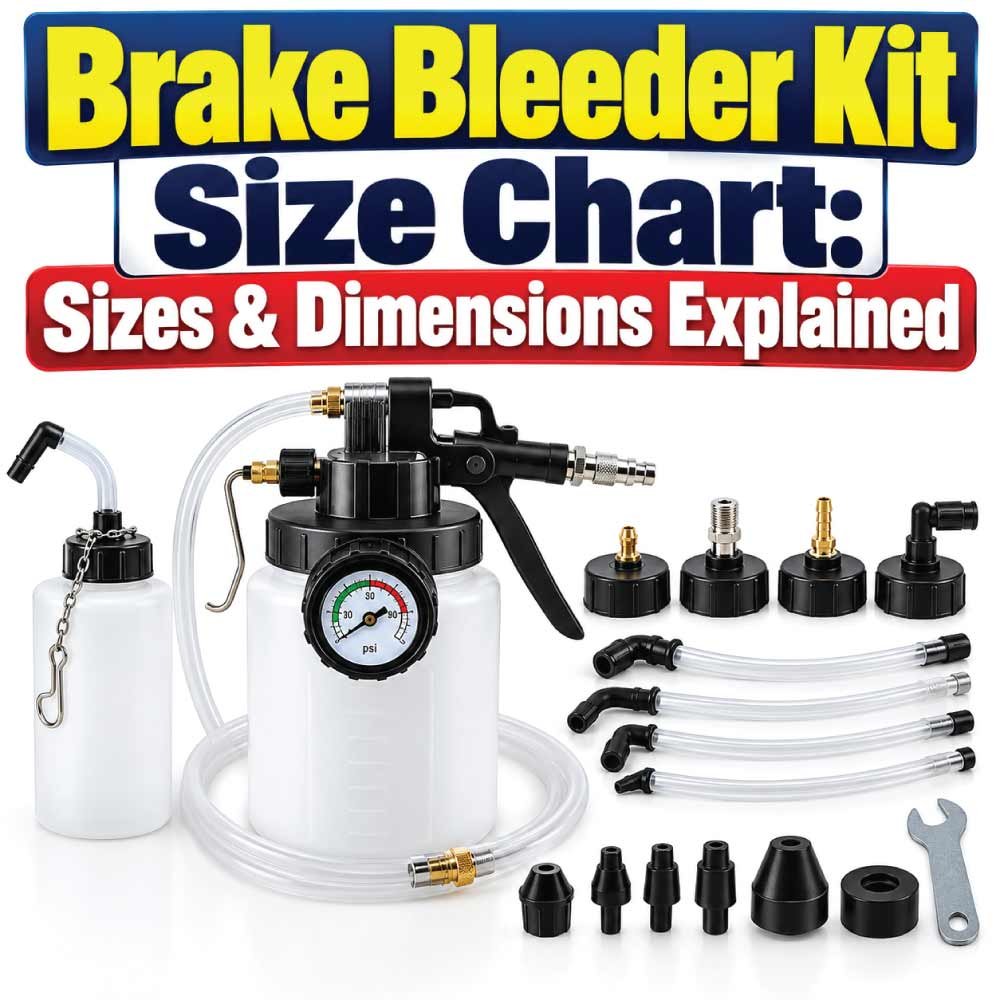
Choosing a brake bleeder kit is easier when you understand the different sizes involved. A brake bleeding setup may include bleeder screw fittings, hoses, adapters, vacuum ports, collection bottles, and wrench sizes, and these dimensions are not always universal across vehicles.
The most important point is that there is no single standard brake bleeder kit size. Bleeder screw dimensions vary by vehicle, brake component, manufacturer, and application. A kit that fits one caliper may require a different adapter or hose connection on another.
This brake bleeder kit size chart explains common fitting and wrench sizes, how the measurements relate to brake bleeding equipment, how to identify the correct size, and what to check before purchasing or using a kit. It also covers vacuum, pressure, and manual bleeding setups so you can select equipment that matches your brake system.
What Is a Brake Bleeder Kit?
A brake bleeder kit is a collection of tools used to remove air and old brake fluid from a hydraulic brake system. Depending on the design, the kit may use vacuum, pressure, or manual bleeding methods.
A typical kit can contain:
- Clear bleeding hose
- Collection bottle or reservoir
- Bleeder screw adapters
- Vacuum pump
- Pressure bleeder
- Master-cylinder reservoir adapters
- Hose connectors
- Wrenches or bleeder screw tools
- Seals and replacement fittings
During brake bleeding, the bleeder screw is opened while fluid is allowed to flow through a hose into a container. The correct connection between the bleeder screw and bleeding hose is important because a loose connection can allow air to enter the hose or cause fluid leakage.
The kit size therefore refers to several different dimensions rather than one measurement.
Brake Bleeder Kit Size Chart
The following chart provides common dimensions encountered when selecting brake bleeding equipment. These are common sizes and not a universal specification for every vehicle.
| Component | Common Size or Range | Measurement Basis | Typical Use |
|---|---|---|---|
| :—: | :—: | :—: | :—: |
| Bleeder wrench | 7 mm | Across flats | Common metric applications |
| Bleeder wrench | 8 mm | Across flats | Common metric applications |
| Bleeder wrench | 9 mm | Across flats | Some metric brake systems |
| Bleeder wrench | 10 mm | Across flats | Common automotive applications |
| Bleeder wrench | 11 mm | Across flats | Some European and other applications |
| Bleeder wrench | 1/4 in | Across flats | Some SAE applications |
| Bleeder wrench | 5/16 in | Across flats | Some SAE applications |
| Bleeder wrench | 3/8 in | Across flats | Some SAE applications |
| Bleeder wrench | 7/16 in | Across flats | Some SAE applications |
| Bleeding hose | Approx. 3–6 mm ID | Inside diameter | Common small brake bleeder connections |
| Bleeder screw thread | Varies | Thread diameter and pitch | Vehicle-specific |
| Hose adapter | Varies | Port/fitting dimensions | Kit-specific |
| Reservoir adapter | Varies | Reservoir opening | Master-cylinder specific |
The wrench size is usually measured across the flat sides of the bleeder screw head, while the thread size refers to the threaded portion that screws into the caliper or wheel cylinder.
These two dimensions should not be confused. For example, a bleeder screw requiring a particular wrench does not necessarily mean that its threaded portion has the same diameter.
Understanding the Different Brake Bleeder Kit Sizes
Bleeder Screw Wrench Size
The wrench size is one of the easiest dimensions to identify. It describes the distance across the flat sides of the bleeder screw head.
Common sizes include 7 mm, 8 mm, 9 mm, 10 mm, and 11 mm, while SAE brake systems may use fractional-inch sizes such as 1/4 inch, 5/16 inch, 3/8 inch, or 7/16 inch.
The correct wrench should fit the screw head securely. A loose wrench can round the flats, especially when the bleeder screw has been exposed to corrosion.
A six-point wrench or dedicated bleeder wrench can provide a more secure grip than an improperly sized open-end tool.
Bleeder Screw Thread Size
The thread is the portion of the bleeder screw that enters the brake caliper, wheel cylinder, or other hydraulic component.
Thread dimensions can include:
- Thread outside diameter
- Thread pitch
- Thread form
- Thread length
- Seat design
Metric and SAE threads are not interchangeable simply because they appear similar. A screw with the wrong thread can damage the component or fail to seal correctly.
When replacing a bleeder screw, match the complete specification, not just the wrench size.
Bleeding Hose Size
The clear hose supplied with a brake bleeder kit must fit over the bleeder screw outlet securely.
Hose dimensions are commonly described by:
- Inside diameter (ID)
- Outside diameter (OD)
- Wall thickness
- Overall length
For brake bleeding, the inside diameter is particularly important because the hose must grip the outlet tightly enough to reduce leakage and prevent the hose from falling off.
A hose that is too large may fit loosely, while one that is too small may be difficult to install or may not fit over the bleeder outlet.
Common Bleeder Wrench Sizes
The wrench is used to loosen and tighten the bleeder screw. Because vehicle designs differ, a brake bleeding kit containing several wrench sizes is often more practical than a single-size tool.
| Wrench Size | Measurement | System Type | Typical Consideration |
|---|---|---|---|
| :—: | :—: | :—: | :—: |
| 7 mm | Metric | Metric | Small bleeder fittings |
| 8 mm | Metric | Metric | Frequently encountered |
| 9 mm | Metric | Metric | Vehicle-dependent |
| 10 mm | Metric | Metric | Common automotive size |
| 11 mm | Metric | Metric | Vehicle-dependent |
| 1/4 in | SAE | Inch-based | Some older or specific systems |
| 5/16 in | SAE | Inch-based | Common fractional option |
| 3/8 in | SAE | Inch-based | Larger fractional option |
| 7/16 in | SAE | Inch-based | Vehicle/component dependent |
This chart should be treated as a selection reference rather than a vehicle fitment chart. The exact bleeder screw size should be confirmed on the vehicle being serviced.
How to Measure a Brake Bleeder Screw
Measuring the existing bleeder screw is useful when the original component must be replaced or when you need to identify the correct tool.
Measure the Wrench Size
Place a suitable caliper across the two opposite flat sides of the bleeder screw head.
This measurement gives the across-flats dimension.
For example, if the measurement is approximately 10 mm, the screw is designed for a 10 mm wrench. The wrench dimension does not identify the thread specification by itself.
Measure the Thread Diameter
If the bleeder screw is removed and safe to inspect, measure the outside diameter of the threaded section with a caliper.
Do not rely on visual appearance alone. Metric and inch threads can sometimes look similar when viewed without measurement.
Determine the Thread Pitch
For metric threads, pitch is normally expressed as the distance between adjacent thread peaks in millimeters.
For example, a specification may be written as:
M × pitch
For inch threads, thread pitch is commonly expressed as threads per inch (TPI).
A thread pitch gauge is useful when the exact specification is uncertain.
Measure the Thread Length
Thread length is another important dimension. Two bleeder screws may have similar diameters and pitches but different lengths.
Measure only the threaded portion according to the replacement component’s specified measurement method. Also consider the seat and overall screw design.
Brake Bleeder Hose Size Guide
A clear hose is commonly used to connect the bleeder screw to a collection bottle. The hose allows the operator to observe fluid movement and air bubbles during bleeding.
The correct hose should:
- Fit securely over the bleeder outlet
- Resist slipping during bleeding
- Remain flexible enough to route into the container
- Be compatible with the brake fluid and intended application
- Provide a reasonably clear view of the fluid
Inside Diameter vs Outside Diameter
When selecting a replacement hose, inside diameter is usually the most important dimension for fitting over the bleeder outlet.
Outside diameter affects wall thickness and how the hose interacts with clamps, fittings, or other connectors.
Do not assume that a hose’s outside diameter represents the connection size.
Why Clear Hose Is Useful
Transparent tubing allows you to see whether the fluid stream contains air bubbles.
This is particularly useful during manual bleeding because the operator can monitor the fluid leaving the brake system without opening the connection repeatedly.
Brake Bleeder Adapter Sizes
Adapters become particularly important when using vacuum or pressure bleeding equipment.
A universal brake bleeder kit may include several adapters intended for different applications. These adapters can connect hoses to bleeder screws or pressure equipment to the master-cylinder reservoir.
Adapter dimensions may include:
- Hose barb diameter
- Thread size
- Thread pitch
- Port diameter
- Seal diameter
- Reservoir opening size
- Adapter body dimensions
Because master-cylinder reservoirs vary considerably, reservoir adapters are not universally interchangeable.
A pressure bleeder adapter should match the reservoir design and create a secure seal without damaging the cap or reservoir.
Types of Brake Bleeder Kits and Their Size Requirements
Manual Brake Bleeder Kit
A manual kit generally uses a hose and collection container. One person operates the brake pedal while another opens and closes the bleeder screw.
Its size requirements are relatively simple:
- Correct wrench size
- Suitable hose ID
- Secure hose connection
- Appropriate collection container
Manual kits are often straightforward, but coordination between the pedal operator and bleeder-screw operator is important.
Vacuum Brake Bleeder Kit
A vacuum bleeder uses negative pressure to draw brake fluid through the hydraulic circuit.
It commonly includes:
- Hand vacuum pump or powered vacuum source
- Collection container
- Vacuum hose
- Bleeder adapter
- Seals or connectors
The hose and adapter need to form a reliable connection. Excessive leakage around the bleeder screw can introduce air into the hose and make it difficult to determine whether air remains in the brake system.
Pressure Brake Bleeder Kit
A pressure bleeder applies controlled pressure to the brake-fluid reservoir and pushes fluid through the system.
Pressure kits may include multiple reservoir caps or adapters because reservoir designs vary.
The important dimensions are therefore often associated with the master-cylinder reservoir opening and adapter sealing surface, rather than the bleeder screw itself.
Also Read:
How to Choose the Correct Brake Bleeder Kit Size
Selecting a kit should begin with the vehicle and brake component rather than the kit’s appearance.
Identify the Brake System
Determine whether the vehicle uses:
- Disc brakes
- Drum brakes
- Hydraulic clutch components, where applicable
- Metric fittings
- SAE fittings
Different components can use different hardware.
Check the Bleeder Screw
Identify the required wrench size and, if replacement hardware is needed, determine the thread specification.
Do not purchase a replacement screw based only on the wrench size.
Check the Hose Connection
If using a manual or vacuum system, confirm that the supplied hose fits securely over the bleeder outlet or adapter.
A universal kit is useful only if its included connectors actually match the application.
Check the Reservoir Adapter
For a pressure bleeder, compare the supplied adapter with the vehicle’s master-cylinder reservoir.
A proper seal is essential. If the adapter does not match the reservoir, forcing it into place is not an appropriate solution.
Also Read:
Brake Bleeder Kit Size Comparison
The following comparison shows how the main kit types differ in their size considerations.
| Kit Type | Main Size to Check | Additional Size Considerations | Typical Setup |
|---|---|---|---|
| :—: | :—: | :—: | :—: |
| Manual | Wrench and hose | Hose length | Pedal-operated |
| Vacuum | Hose and adapter | Vacuum-port compatibility | Vacuum pump |
| Pressure | Reservoir adapter | Seal and pressure equipment | Pressurized reservoir |
| Universal | Multiple fittings | Adapter and hose assortment | Mixed applications |
The table highlights why asking for a single “brake bleeder kit size” can be misleading. The correct dimensions depend on which part of the bleeding system is being connected.
Common Brake Bleeder Kit Size Problems
Hose Is Too Loose
A loose hose can leak fluid and may allow air to enter around the connection during vacuum bleeding.
Use a hose with an appropriate inside diameter and secure fit.
Hose Is Too Tight
A hose that is undersized can be difficult to install and may split or become damaged during fitting.
Avoid stretching unsuitable tubing over a connection simply because it appears close to the correct size.
Wrong Wrench Size
Using an approximate wrench can damage the bleeder screw flats.
If a wrench does not seat completely, select the correct size rather than forcing it.
Confusing Thread Size With Wrench Size
This is one of the most common measurement errors.
A 10 mm wrench size does not mean the bleeder screw has a 10 mm thread diameter. The two measurements describe different features.
Using the Wrong Replacement Bleeder Screw
A replacement screw must match the required thread, length, seat, and application.
Even when the wrench size is identical, the replacement may not be suitable if other dimensions differ.
Also Read:
Brake Bleeder Screw Size vs Bleeder Kit Size
These terms are sometimes used interchangeably, but they describe different things.
A bleeder screw size normally refers to the physical dimensions and thread specification of the screw.
A brake bleeder kit size refers more broadly to the compatibility of the equipment used to service the brake system.
For example, a kit may include:
- Several wrench sizes
- Multiple hose adapters
- Different hose sizes
- A vacuum pump
- A collection bottle
- Reservoir caps
Therefore, a kit described as “universal” should not automatically be assumed to fit every brake system.
How to Use a Brake Bleeder Kit
The exact procedure depends on the vehicle and bleeding equipment, so the vehicle’s service instructions should take priority.
A general bleeding workflow is:
- Prepare the vehicle and work area.
- Use the correct brake fluid specified for the system.
- Locate the appropriate bleeder screw.
- Select the correct wrench.
- Attach the bleeding hose securely.
- Route the hose into a suitable collection container.
- Operate the manual, vacuum, or pressure equipment according to its instructions.
- Monitor the fluid and air bubbles.
- Keep the master-cylinder reservoir from running empty.
- Close and secure the bleeder screw correctly.
- Check the system for leaks.
- Verify pedal feel and braking operation before normal driving.
Brake work is safety-critical. If the correct procedure, fluid specification, component condition, or torque requirement is uncertain, consult the applicable service information.
Factors That Affect Brake Bleeder Compatibility
Vehicle Manufacturer
Different manufacturers use different brake component designs. Even vehicles from the same manufacturer can have different brake hardware depending on model, year, engine, brake package, or market.
Brake Component
Front and rear brake assemblies may not always use identical hardware.
Calipers, wheel cylinders, and other hydraulic components can have different bleeder arrangements.
Metric or SAE Hardware
The presence of metric hardware should not be assumed from the vehicle’s country of manufacture alone. Always measure or verify the actual component.
Aftermarket Components
Replacement calipers, wheel cylinders, master cylinders, and other components may have specifications that differ from the original equipment.
For this reason, measuring the installed component can be more reliable than assuming a size based solely on the vehicle model.
Tips for Selecting a Brake Bleeder Kit
A few practical checks can prevent many fitment problems:
- Choose a kit with multiple adapters if you work on different vehicles.
- Check hose ID rather than relying on a general “universal” description.
- Keep metric and SAE tools available when the vehicle specification is unknown.
- Use the correct wrench to reduce the risk of rounding the bleeder screw.
- Verify replacement screw dimensions before installation.
- Inspect hoses and seals for cracking, hardening, or damage.
- Confirm reservoir adapter compatibility before using a pressure bleeder.
- Follow the vehicle-specific bleeding sequence when one is specified.
- Use the specified brake fluid and keep contaminants away from the hydraulic system.
A larger kit is not automatically better. The useful feature is having the correct combination of fittings, hose sizes, adapters, and tools for the applications you service.
Brake Bleeder Kit Size Chart: Quick Reference
For quick selection, this condensed reference can help identify what needs to be measured.
| Part | What to Measure | Why It Matters |
|---|---|---|
| :—: | :—: | :—: |
| Bleeder screw head | Across flats | Selects wrench size |
| Bleeder screw thread | Diameter and pitch | Identifies thread compatibility |
| Bleeder screw | Thread length | Confirms replacement fit |
| Bleeding hose | Inside diameter | Determines hose-to-outlet fit |
| Hose connector | Port/barb diameter | Ensures secure connection |
| Vacuum adapter | Connection dimensions | Prevents leakage |
| Pressure adapter | Reservoir opening and seal | Ensures reservoir compatibility |
| Collection hose | Length and ID | Allows convenient fluid routing |
This approach is more useful than treating the brake bleeder kit as one standardized size.
Frequently Asked Questions
What size is a brake bleeder kit?
There is no single standard brake bleeder kit size. Kits contain different combinations of wrenches, hoses, adapters, fittings, and reservoir connections. Compatibility depends on the vehicle and bleeding method.
What are common brake bleeder wrench sizes?
Common sizes include 7 mm, 8 mm, 9 mm, 10 mm, and 11 mm on many metric applications. Some systems use fractional-inch sizes such as 1/4 inch, 5/16 inch, 3/8 inch, and 7/16 inch.
These should be treated as common examples rather than guaranteed vehicle fitment.
How do I know what size brake bleeder screw I have?
Measure the across-flats dimension of the screw head to determine the wrench size. If you need the complete screw specification, also measure the thread diameter, pitch, and thread length.
Is brake bleeder hose size universal?
No. Brake bleeding hoses are available in different inside diameters and connector arrangements. The hose should fit securely over the bleeder outlet or adapter without being excessively loose or difficult to install.
Are metric and SAE brake bleeder sizes interchangeable?
No. Metric and SAE dimensions and thread specifications are different systems. Some sizes can appear visually similar, so measuring the actual component is preferable to guessing.
Can I use a universal brake bleeder kit on any vehicle?
A universal kit is designed to cover multiple applications, but it does not guarantee compatibility with every vehicle. Check the supplied hose, adapters, wrench sizes, and reservoir connections against the brake system being serviced.
Does bleeder screw wrench size equal thread size?
No. Wrench size and thread size are separate measurements. The wrench size describes the screw head across its flats, while thread size describes the threaded portion that installs into the brake component.
What size hose is used for brake bleeding?
There is no single hose size for every brake system. A small clear hose with an inside diameter that securely fits the bleeder outlet is commonly used, but the actual connection should be measured or verified for the application.
Do all brake calipers use the same bleeder screw?
No. Bleeder screws can vary in thread specification, length, head size, seat design, and application. Always verify the replacement part against the specific brake component.
What should I check before buying a brake bleeder kit?
Check the bleeder wrench sizes, hose dimensions, adapters, vacuum or pressure connections, and reservoir compatibility. If you service multiple vehicles, a kit with a broader selection of fittings can provide greater coverage.
Final Takeaway
A brake bleeder kit does not have one universal dimension. The important measurements include the bleeder screw wrench size, thread specification, hose inside diameter, adapter dimensions, and master-cylinder reservoir connection.
Common wrench sizes such as 7 mm through 11 mm and several fractional-inch sizes can cover many applications, but they should not be treated as guaranteed specifications for every vehicle. The safest approach is to identify the actual brake component, measure the relevant dimensions, and verify the required specifications before installation or service.
When selecting a brake bleeder kit, focus on complete compatibility rather than the word “universal.” The right combination of tools and fittings makes bleeding more controlled, reduces connection problems, and helps you work with the brake system according to the vehicle and equipment manufacturer’s instructions.

Engineer Hassan is a Mechanical Engineer with 16+ years of hands-on experience in mechanical hardware, fasteners, and workshop tools. He focuses on size selection, thread identification, and measurement, helping users choose the correct components with accuracy and safety.